The neglected causes of maternal mortality and how we can tackle them
Every two minutes, a woman dies of pregnancy-related causes worldwide (1).
Despite decades of progress, maternal mortality remains an urgent global health problem, particularly in low-resource regions. Understanding the reasons for these deaths is complex: the causes are often multifactorial, involving both direct complications of pregnancy and indirect conditions that worsen during pregnancy.
Direct causes, such as haemorrhage or hypertensive disorders, are well documented. However, indirect factors, such as malaria, HIV, anaemia or malnutrition, often exacerbate these complications and contribute significantly to maternal deaths, particularly in vulnerable populations.
In this article, we examine how direct and indirect causes interact to cause maternal mortality, why it is essential to tackle indirect causes and how targeted interventions can save lives.
Direct and indirect causes of death in pregnant women
Direct causes
Direct causes of maternal death are those that result directly from complications related to pregnancy, childbirth or the postnatal period.
These include medical emergencies such as severe haemorrhage, hypertensive disorders, infections or unsafe abortions, which can rapidly lead to death if adequate care is not provided in time.
Worldwide, direct causes account for the majority of maternal deaths. However, recording only the direct cause often obscures the complex network of factors contributing to each fatal event.
For example, haemorrhage is often cited as the main cause of maternal death. But why does haemorrhage become fatal? Underlying factors such as anaemia, malnutrition, pre-existing hypertension or infections can make women much more vulnerable to these complications.
Let’s take the example of an accident. While the accident itself may be considered the cause of death, contributory factors such as alcohol, speeding or driver fatigue are often at the root of the probability or fatality of the accident. Similarly, to understand maternal deaths, we need to look beyond the immediate medical emergency to the wider health context.
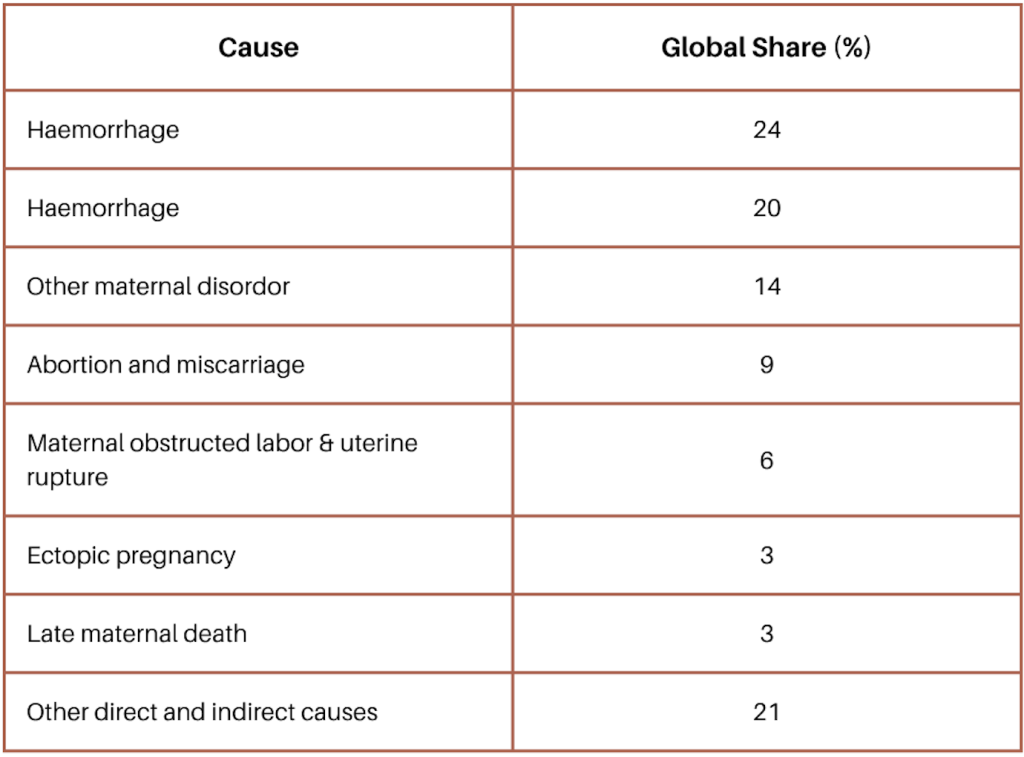
Summary table: main causes of maternal death worldwide (2)
Causes indirectes
Indirect causes of maternal death are pre-existing or concurrent medical conditions that are aggravated by pregnancy but not directly caused by it. Worldwide, it is estimated that indirect causes contribute to around 23% of maternal deaths and, in some contexts, this proportion may be even higher.
Unlike direct causes, which are often well documented, indirect causes can be more difficult to quantify as they involve complex interactions between multiple factors. However, understanding and addressing these underlying conditions is essential to reducing maternal mortality and improving maternal health outcomes.
The most common indirect causes are
- Malaria, particularly in endemic regions, which contributes to between 4% and 17% of maternal deaths worldwide, and up to 25% in certain regions with a high burden of disease. Malaria increases the risk of anaemia, premature delivery and stillbirth.
- HIV/AIDS, responsible for around 12% of maternal deaths worldwide. HIV weakens the immune system, making pregnant women more vulnerable to infections and other complications.
- Severe anaemia, which accounts for around 12.8% of maternal deaths. Anaemia is often exacerbated by malaria and nutritional deficiencies, and increases the risk of complications such as haemorrhage and septicaemia.
- Tuberculosis and other chronic diseases, including cardiovascular disease, diabetes and respiratory illnesses, contribute variably to maternal mortality, with estimates ranging from 6% to 15% depending on the region.
These indirect causes not only increase the likelihood of maternal death, but also amplify the severity of direct complications, creating a dangerous cycle that is often overlooked in maternal health interventions.
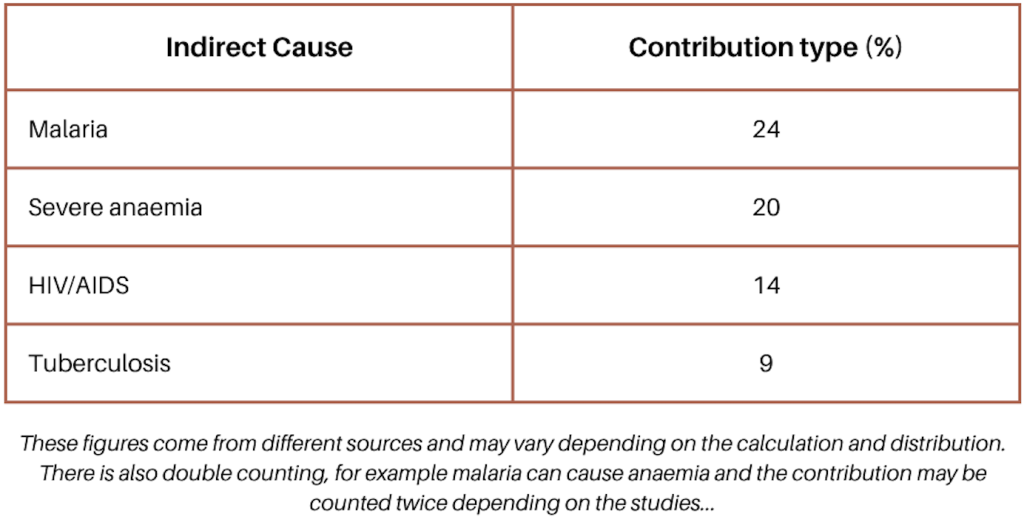
Summary table: indirect causes of maternal death (3)
Malaria: one of the main causes of death among pregnant women
According to the World Health Organisation (WHO), malaria is responsible for around 10,000 maternal deaths a year worldwide, with the burden being particularly heavy in sub-Saharan Africa, where malaria transmission remains endemic. Wider estimates suggest that malaria-related complications may cause up to 50,000 deaths in pregnant women each year, underlining the severe impact of the disease on maternal health.
Pregnant women are more vulnerable to severe malaria, which can lead to anaemia, haemorrhage, premature delivery and even stillbirth. Malaria also exacerbates anaemia, which in turn increases the risk of haemorrhage – one of the main direct causes of maternal death.
But here’s the crucial point: malaria is highly preventable, and this preventability makes it all the more tragic that women are still dying from it. Simple, cost-effective interventions such as insecticide-treated bed nets, which cost only around €5 and can protect a person for two years, can make all the difference. By preventing the transmission of malaria, we can save countless lives, but all too often women in high-risk areas do not have access to these life-saving measures.
This situation is exacerbated in regions where access to healthcare is poor and resources for malaria prevention and treatment remain limited. Yet the solution is simple, and closing this gap could significantly reduce maternal and child mortality rates, save lives and improve health outcomes with very little investment.
Nutrition: A meta-cause of maternal mortality
Nutrition can be seen as an indirect meta-cause of maternal mortality, influencing a range of conditions that contribute significantly to mortality. While diseases such as malaria, HIV andanaemia are often cited as indirect causes, nutrition is the fundamental element that can exacerbate these conditions. Poor maternal nutrition weakens the body’s ability to fight infection, exacerbates pre-existing health problems and compromises the overall outcome of pregnancy. Charities such as Fortify Health (4) pursue interventions that aim to prevent denutrition.
Malnutrition can contribute toanaemia,gestational hypertension, pre-eclampsia andlow birth weight, all of which contribute to maternal death. In addition, inadequate nutrition during pregnancy increases vulnerability to infections and complications such as sepsis andhaemorrhage. In regions where malnutrition and food insecurity are widespread, improving maternal nutrition is essential to reduce overall maternal risk and improve outcomes for mothers and their babies.
Tackling the direct and indirect causes of maternal death
While haemorrhage, hypertension and sepsis remain the main direct causes of maternal death worldwide, indirect factors such as malaria, HIV, anaemia and poor nutrition interact with the direct causes to amplify the risk of maternal death, particularly in resource-poor settings. In regions such as sub-Saharan Africa, where these conditions overlap, the fight against maternal mortality requires a comprehensive approach that goes beyond the management of acute obstetric emergencies.
Targeted interventions, including malaria prevention and treatment, nutritional support, management of chronic infections, and strengthened healthcare systems, are essential to saving lives. Ultimately, improving maternal health outcomes means tackling both the visible direct causes and the often underestimated indirect factors that contribute to this complex and preventable global challenge.
If you’d like to find out more about how targeted interventions and effective donations can help reduce maternal mortality and improve health outcomes around the world, sign up to our newsletter.
We share information about high-impact programmes, evidence-based donation strategies and ways to help make a real difference to mothers and their babies around the world.