


The happiest countries and findings from the World Happiness Report 2026
Finland, Iceland, Denmark lead the 2026 ranking. Full list of 147 countries, key findings on social media and wellbeing, and how your donations create happiness.

Co-founder and Director of Mieux Donner
Reading time: 16 min.
France stands as a major leader in global development assistance, ranking as the 5th highest donor among the Development Assistance Committee with roughly €14 billion in official development assistance (ODA) in 2023. France now intends to ‘refocus its action where it is most useful and renew its support for the most effective organisations’, according to a decision statement [1] issued by the Élysée Palace on April 6. We salute the direction of the presidency toward more effective and impactful aid, and offer concrete proposals for how the country can achieve this new focus in the report.
France has significant opportunities to enhance its national reach and impact, such as better targeting of low-income countries and investing in health interventions. Several unique policy windows in 2025, such as multilateral replenishments and shifts in U.S. policy, present France with opportunities to optimize its assistance and strengthen its global leadership position. By strategically adjusting its aid toward more optimal allocations and leveraging these policy windows, France can significantly amplify its global impact while enhancing its diplomatic influence.
To evaluate French foreign aid, we review several key characteristics of the country’s ODA which serve as proxies for its impact. These components can indicate the reach of France’s ODA and how many lives it touches, improves, and saves. By extending this reach, France can generate more benefits, both for recipient countries and itself, with its precious resources.
We also look at Overall ODA Level: The absolute level and share of national income dedicated to aid reflects commitments to assistance and provides a foundation for understanding the magnitude of the impact of improving ODA (i.e. increasing the effectiveness of ODA generates absolute benefits proportional to the overall level of ODA spending).
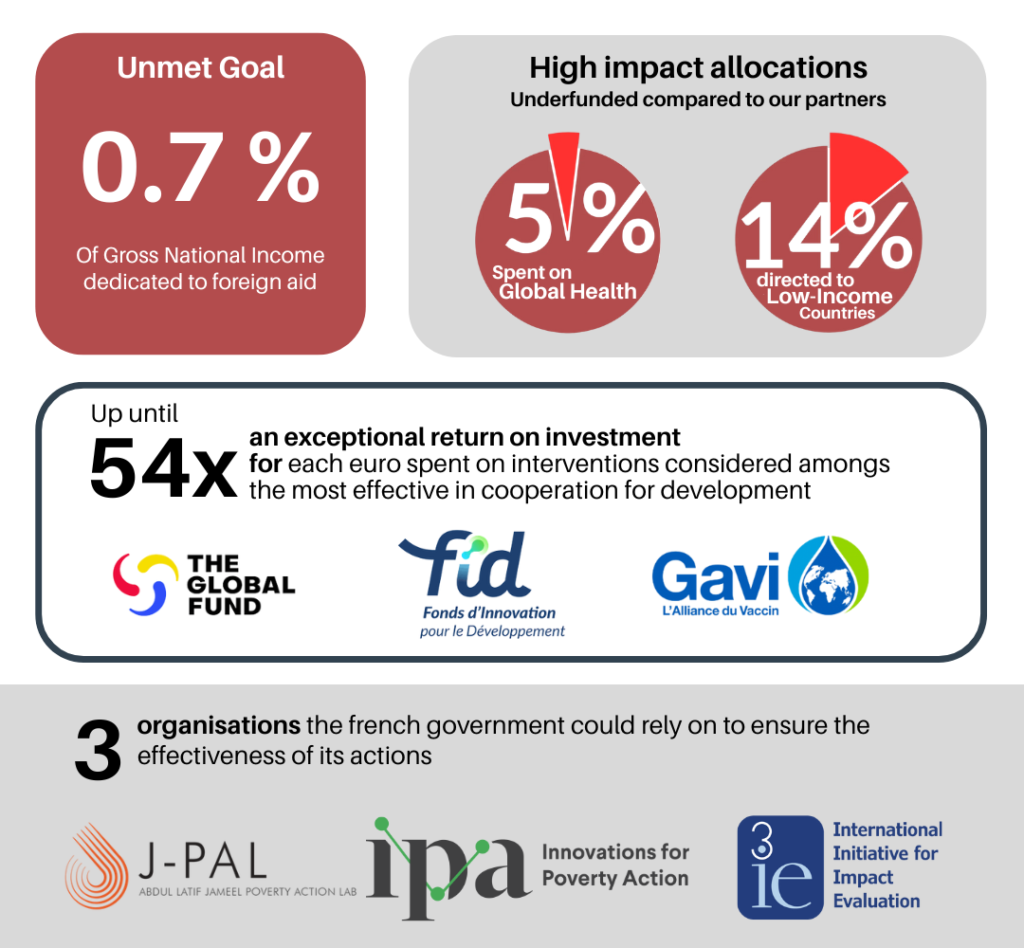
A core element of our methodology is the “smart buys” approach. This strategy identifies interventions that deliver exceptional social returns on each euro spent on assistance. Evidence indicates that investments in Gavi-supported immunization programs [7] and the Global Fund’s disease prevention initiatives are among the most effective in development cooperation [8]. Similarly, the French Innovation Fund—which drives innovative, evidence-based solutions—should be regarded on an equal footing [9]. The cost-effectiveness of these programs is typically assessed using metrics such as cost per life saved and disability-adjusted life years (DALYs) averted or return on investment.
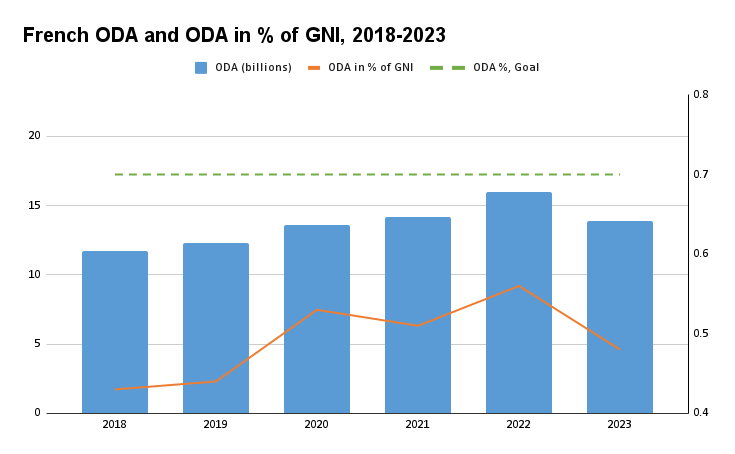
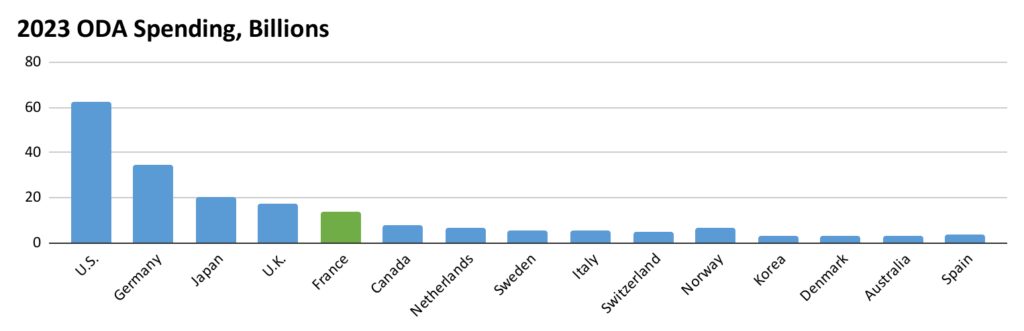
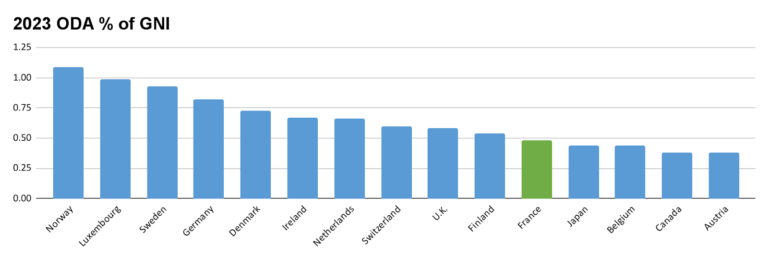
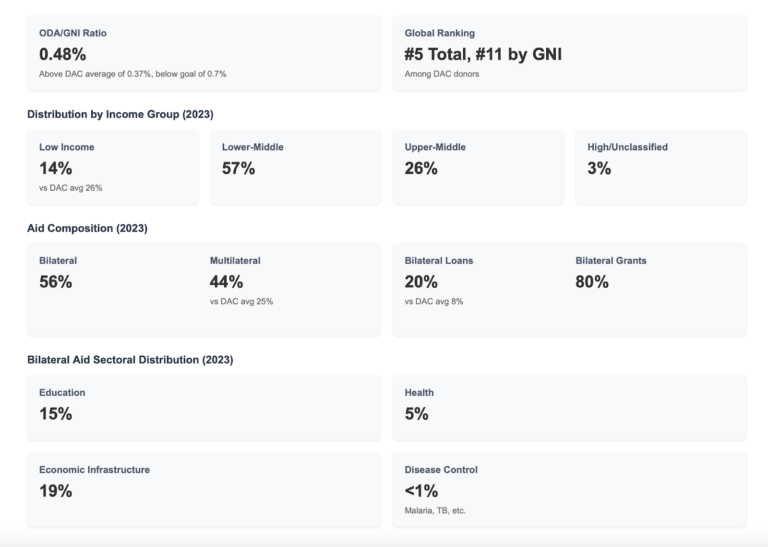
France stands as a significant contributor to global development assistance, ranking as the 5th highest donor among Development Assistance Committee (DAC) [10] members with approximately €14 billion [11] in ODA spending for 2023 [12]. While it ranks 11th when measuring assistance as a percentage of Gross National Income (GNI), France’s contribution of 0.48% remains above the average for DAC members (0.37%) [13]. France continues to be a global leader in ODA, but France is us lagging behind its aims to provide 0.7% of GNI in assistance [14] and the 37% cut in foreign aid for 2025 threatens to undermine progress [15].
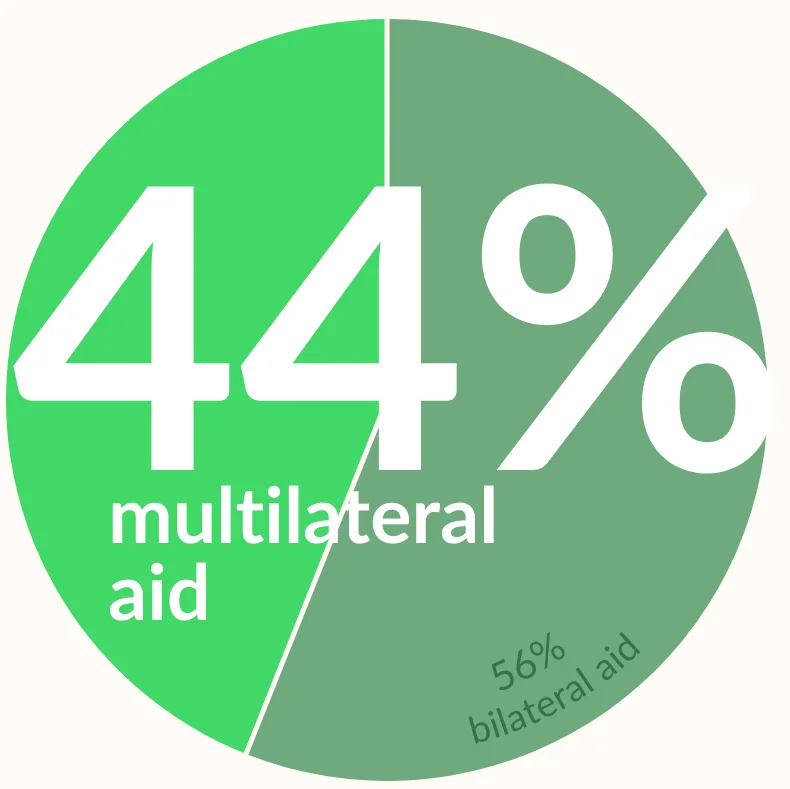
France demonstrates this leadership by supporting key multilateral institutions. The country directs 44% of its assistance through multilaterals, well above the DAC average of 25% [16]. By supporting these global platforms, France is able to lead the world in delivering effective, targeted assistance to recipients all around the world.
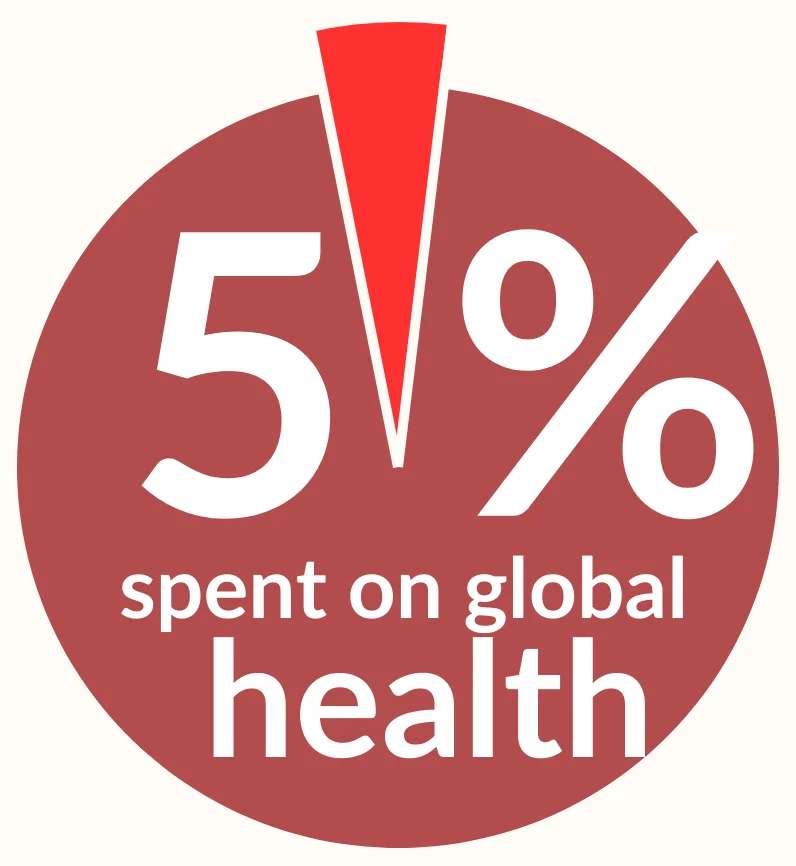
The sectoral distribution of French bilateral aid shows a clear prioritization of economic development and human capital. Economic infrastructure commands a large share at 19%, followed by education as a key priority at 15%. Meanwhile, health sector support receives a more modest allocation of 5%, while disease-specific interventions for Malaria, Tuberculosis, and infectious disease control receive less than 1% of bilateral assistance [17]. This is far below the proportion other peer nations are spending on health [18]. Investments in global health are a significant opportunity for improving lives abroad, as well as advancing national security by helping to prevent, monitor, and treat potential pandemic outbreaks [19] .
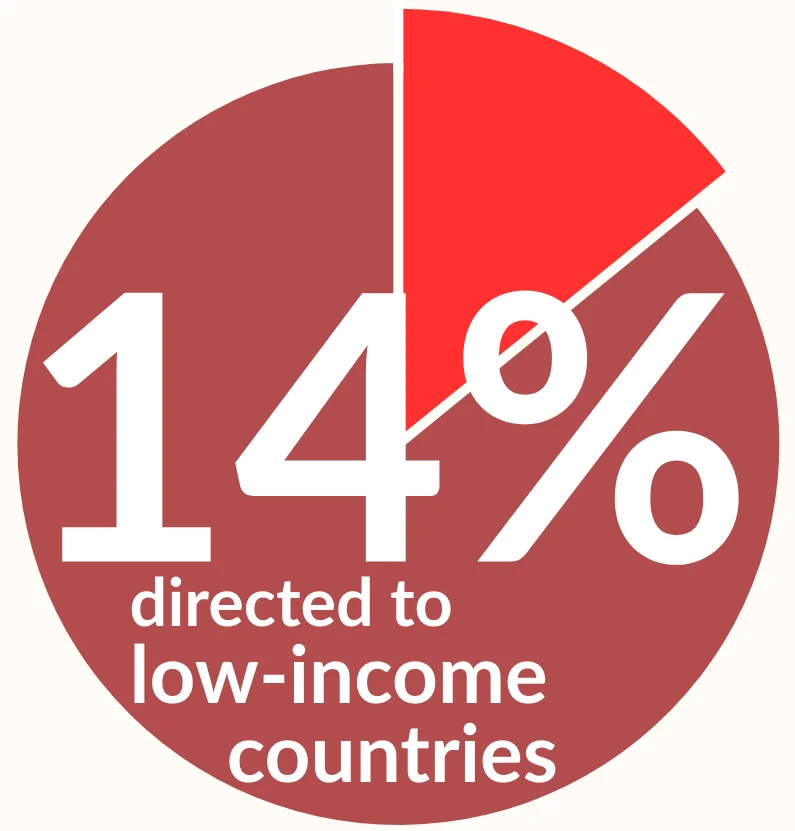
Most of France’s assistance is directed toward lower-middle income countries, where over 10% of the population live on less than $2.15 a day [20]. This means France is ensuring the majority of its development assistance is reaching places that are relatively poor, with a GDP per capita between $1,136 and $4,465, so it can have a meaningful impact. However, France only dedicates 14% of its aid to low-income countries [21], where almost half of people live in extreme poverty [22], which falls notably below the DAC average of 26%. While the majority of French aid is still directed toward relatively poor countries, this does raise questions about whether assistance can be more optimally targeted towards the poorest states.
France has just declared “the French government is now committed to devoting at least 60% of its donations to the most vulnerable countries, including the least developed countries and those particularly vulnerable to climate change or in situations of great financial fragility, based in particular on the UN’s Multidimensional Vulnerability Index (MVI).” [1] While this points in a promising direction, it’s unclear which nations will be defined as “most vulnerable countries” as it is not an official denomination. To reach those most in need and achieve the biggest impact possible, France should be specific about where it will orient the assistance.
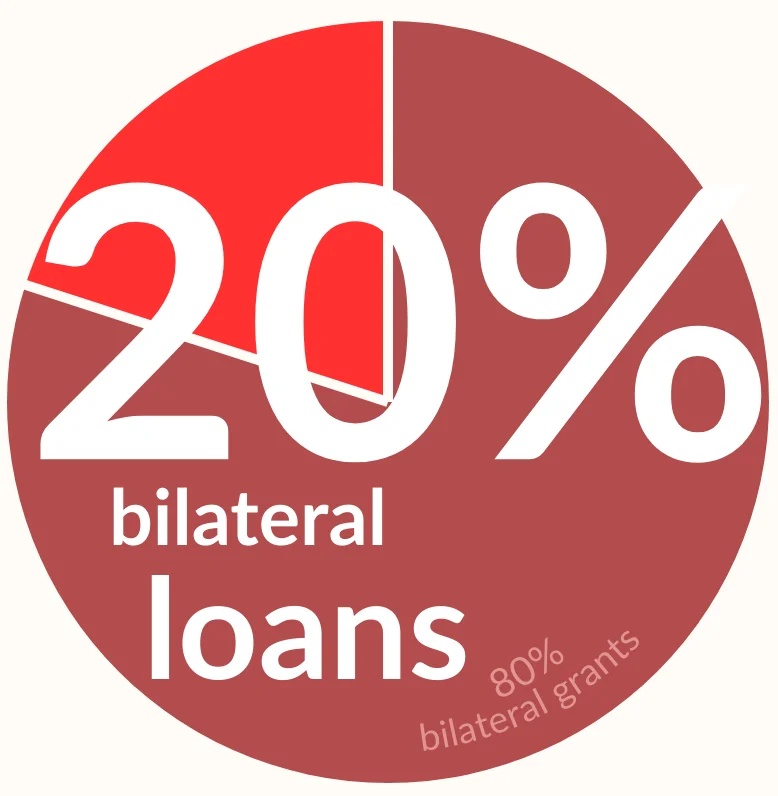
Within its bilateral aid portfolio, France has an elevated preference for loans, which comprise 20% of bilateral assistance. This is more than double the DAC average of 8%. While loans can be valuable for financing infrastructure and other development projects, this approach can sometimes create debt burdens for recipient countries, particularly those already facing economic challenges [23]. This raises concerns about the long-term sustainability of development efforts and the potential for exacerbating debt vulnerabilities in recipient countries.
France should ensure the programming it supports is based on rigorous evidence. By funding programs based on evidence from randomized controlled trials and rigorous social science research, which is made readily available by organizations such as 3ie [24], J-PAL [25] and Innovations for Poverty Action [26] (IPA), France can ensure its ODA generates the biggest impact possible. Similar initiatives in the U.S. returned $17 for every $1 spent [27], a return on investment hard to match in foreign assistance.

Effective impact assessments are essential to ensure funds are spent effectively, best practices are continuously identified and replicated, and impactful programs are successfully scaled up. The AFD aims to evaluate 50% of their projects, accomplishing 53% in 2022 [28]. However, the organization’s evaluation strategy [29] often does not rely sufficiently on quantitative assessments and comparison with the baseline scenario [30]. Current evaluations are more focused on program monitoring than impact evaluation and rigorous prioritisation.
France can seize on a number of unique opportunities for ODA this year, which offer the chance for the country to make an outsized positive impact and position itself as a global leader.
The recent shifts in U.S. global health engagement, including reduced USAID funding [34] and WHO participation [35] changes, present a significant opportunity for other nations to step into leadership roles in global health. This transition period opens possibilities for countries to expand their influence and impact in international health governance and funding. The vacuum created in global health leadership could allow France to strengthen their diplomatic relationships with developing countries while advancing critical health initiatives.
These changes may create particular opportunities in key, cost-effective areas where the U.S. has historically been a major funder, including routine immunization programs, disease control, and emergency preparedness. France can increase their technical assistance and funding to fill gaps in these crucial health domains, potentially saving millions of lives [36]. The situation also presents an opening for the country to demonstrate leadership in multilateral health institutions by increasing their financial contributions and taking more active roles in governance.
From a strategic perspective, stepping forward during this period could significantly enhance France’s soft power and diplomatic influence while advancing global health security. In view of the decisions published on 6 April by the Élysée [1], it would appear that this is the direction in which France is heading. By maintaining and potentially expanding support for proven, cost-effective health interventions, the country can position itself as a reliable partner in global health while building goodwill across the developing world. This could have lasting implications for international cooperation and health diplomacy well beyond the immediate funding impacts. Otherwise, other nations, whose interests may not be well aligned with France’s, may fill the vacuum [37].
In 2025, Gavi, the global vaccine alliance, will be holding a replenishment conference, something that only occurs every five years. The conference typically brings together donor governments, private sector partners, and implementing countries to secure funding for the next strategic period. The replenishment process aims to mobilize resources to support immunization programs in lower-income countries, ensuring sustainable, predictable funding for vaccines and health systems strengthening [38]. Efforts to fulfil the replenishment will be especially important this year as the U.S., which covers 13% of Gavi’s budget, could withdraw its support from the organization.
In terms of cost-effectiveness, Gavi-supported immunization programs have consistently proven to be one of the best buys in global health. Gavi estimates that every dollar invested in immunization delivers $54 in social and economic benefits through reduced healthcare costs, increased productivity, and the broader economic benefits of a healthier population [39]. There are especially pronounced opportunities for impact this year as R21, the newest malaria vaccine, begins rolling out in endemic countries [40]. Estimates suggest supporting the rollout of R21 could save a life for as little as $4,200 [41].
France has a once in a half-decade opportunity to lead the world on the Gavi replenishment. By supporting the funding round, France can mobilize the world to cash in on one of the “smart buys” in development, extending the reach of the country’s positive impact and saving possibly millions of lives.
The Global Fund to Fight AIDS, Tuberculosis and Malaria holds replenishment conferences every three years to secure financial commitments from donors to support its mission. These conferences bring together governments, private sector partners, and civil society organizations to mobilize resources for fighting these three diseases in high-burden countries. The replenishment process is crucial for maintaining consistent funding streams that allow recipient countries to plan and implement long-term health interventions [42]
The Global Fund has demonstrated strong cost-effectiveness in its interventions. The Global Fund estimates that since its creation in 2002, supported programs have saved 50 million lives through comprehensive disease prevention and treatment programs [43]. The Fund’s large-scale procurement also helps reduce costs of essential medicines and health products for recipient countries.
Again, France has an opportunity to lead the world in funding these life-saving programs. By building a coalition of allies to support the replenishment, France can position itself once again as a global leader for good, directing ODA towards efficient programs that save lives in a large swath of countries.
French foreign aid stands at a pivotal juncture where strategic reallocation of existing resources can yield substantial improvements in impact. A smart buys strategy that prioritizes investments in global health—specifically through increased support for Gavi, the Global Fund, and the French Innovation Fund—can significantly enhance the cost-effectiveness of aid.
Coupled with rigorous evaluation methods, including the use of RCTs, and improved data transparency, these measures will ensure that every euro spent delivers maximum benefit to those in greatest need. Moreover, by adopting a more objective, need-based approach to resource allocation and seizing the strategic opportunity presented by the US retreat from certain multilateral initiatives, France can reinforce its reputation as a responsible and innovative global donor.
4 : https://www.oecd.org/en/publications/multilateral-development-finance-2020_e61fdf00-en.html
5 : https://www.ccsenet.org/journal/index.php/ijef/article/view/13668
6 : https://www.cgdev.org/blog/how-cost-effective-global-health-aid
8 : https://pmc.ncbi.nlm.nih.gov/articles/PMC6634388/
9 : https://oecd-opsi.org/innovations/innovation-fund-for-development/
10 : The DAC is an international forum made up of 32 major OECD donors.
11 : At constant 2022 prices
12 : Data on French ODA From OECD.xlsx
13 : Data on French ODA From OECD.xlsx
14 : https://www.diplomatie.gouv.fr/IMG/pdf/en_a5_loi-developpement_v1-8.-valide_cle423118.pdf
15 : https://www.forbes.com/sites/globalcitizen/2025/02/25/foreign-aid-is-shrinking-what-happens-next/
16 : Data on French ODA From OECD.xlsx
17 : Data on French ODA From OECD.xlsx
18 : https://www.kff.org/global-health-policy/issue-brief/u-s-global-health-budget-figures/
20 : https://data.worldbank.org/indicator/SI.POV.DDAY?locations=XN
21 : Data on French ODA From OECD.xlsx
22 : https://data.worldbank.org/indicator/SI.POV.DDAY?locations=XM-XN
24 : https://developmentevidence.3ieimpact.org
25: https://www.povertyactionlab.org/evaluations
26 : https://poverty-action.org/evidence-use
27 : https://divportal.usaid.gov/s/article/DIV-Delivers-a-17-1-Social-Return-on-Investment
28 : https://www.ccomptes.fr/sites/default/files/2024-04/NEB-2023-Aide-publique-au-developpement.pdf
29 : https://www.afd.fr/sites/afd/files/politique-suivi-evaluation-groupe-afd-WEB.pdf
30 : For example, cost-effectiveness is rarely used as a top-line metric
31 : https://www.vox.com/future-perfect/375139/lead-partnership-usaid-unicef-samantha-power
36 : https://malariaatlas.org/project-resources/pmi-2025/
37 : https://www.nytimes.com/2025/02/22/health/usaid-who-trump-china.html?partner=slack&smid=sl-share
38 : Gavi funding supports comprehensive immunisation programmes in 57 eligible countries, including routine immunisation services, the introduction of new vaccines, cold chain equipment and the strengthening of health systems. The money also supports emergency response capacity, helps create sustainable markets for vaccines through innovative financing mechanisms, and funds technical assistance to help countries transition to self-financing their immunisation programmes.
41 : https://www.cgdev.org/blog/malaria-vaccines-turning-scientific-triumph-millions-lives-saved
42 : The Fund’s investments support a wide range of activities, including prevention programmes, access to treatment, strengthening of health systems and networks of community health workers. The money is used to provide antiretroviral therapy for HIV/AIDS patients, tuberculosis diagnosis and treatment, malaria prevention tools such as mosquito nets, and to strengthen health systems to better respond to these diseases. The Fund also supports programmes to address gender inequalities and human rights-related barriers that hinder access to health services.
Finland, Iceland, Denmark lead the 2026 ranking. Full list of 147 countries, key findings on social media and wellbeing, and how your donations create happiness.

Human life is precious. It is natural to want to mobilise all our resources to save a life, even if it only prolongs a life by a week. But what happens when other people are also in danger, and our resources are not enough to help them all? As a society, we face practical limits that force us to make difficult decisions.


It’s easy to feel discouraged by the dramatic retreat of glaciers in the Alps and the scale of climate change can easily leave us feeling powerless. This article will equip you with the knowledge to take meaningful climate action, in both your personal life and through your charitable donations.
€8,920 collected through Mieux Donner, €746,000 in total with Effektiv Spenden: here is how the Safeguarding the Future Fund allocated its H2 2025 donations across three projects in nuclear security and AI safety.
The Smart Buys Alliance brings together government agencies, research centres and philanthropic organisations to produce and disseminate lists of the most cost-effective development interventions. An overview of the initiative, its methodology and its key areas of focus.

Is deciding from London or Paris who needs help and how a form of colonialism? This article examines what the critique gets right, where it goes wrong, and what effective giving does concretely differently — including its own blind spots.