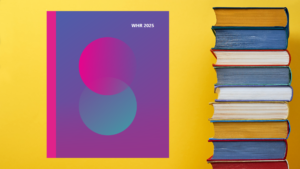
The happiest countries and findings from the World Happiness Report 2026
Finland, Iceland, Denmark lead the 2026 ranking. Full list of 147 countries, key findings on social media and wellbeing, and how your donations create happiness.
Project Manager and Copywriting
Reading Time: 3 min.
A platform that claims to direct your donations to charities with the greatest impact. It almost sounds too good to be true. There’s got to be some trick, right? Somewhere, someone is profiting from it? We’re offering free advice… but then, who’s the product? Perhaps the financial interests of the people who work at Mieux Donner, who hope to get massively richer, or those who fund us, who expect a return on their investment, or perhaps even contracts signed with the organisations we recommend, or who knows, hidden shares on the stock market, or personal requests we might make to you in the future…
Actually, no.
This is perhaps the thing that can most surprise the people who give to us.
Our aim is very simple: to make the world a better place, based on evidence and reason, as much as possible. We haven’t adopted this maxim for any kind of benefit in return, but because it is, ultimately, an aspiration we feel is worth pursuing. We truly believe that developing Mieux Donner is one of the best things we can do. Your donations go directly to the beneficiaries. We don’t take commission. We don’t sell your data, or goodies. We do not run advertising on our site. We expect nothing in return, neither personal favours nor financial support.
The people who work at Mieux Donner have chosen it because they want to help others, based solely on their altruism. We voluntarily choose a modest lifestyle. Our hope is to make the world a better place, and given its current state, we believe that the rational choice to make is to set aside consumerist aspirations and focus instead on making the world a better place, as much as possible, as rigorously as possible.
And there’s no question of assuming some trick that would reassure us about the beneficiaries or the real impact of the non-profits on our side. It’s about looking reality in the face, and refusing to assume hidden variables or odds in our favour. The whole equation is spelled out, and you can find it on our methodology page. There is no mystery term that would lead us to arbitrarily favour one non-profit over another. There is no automatic pilot in the org that would take over once we had made the pious wish to improve the world as much as possible. Ultimately, Donner remains the only body responsible for what is done or not done.
If a charity is more effective than one of those we recommend, we want to believe that it is. If it is not, we want to believe that it is not. We are willing to evolve our recommendations and are actively looking for elements that can change our understanding of effectiveness. When it comes to global health and the fight against poverty, the variations in impact are so great and so well supported by evidence, that even new evidence in favour of the effectiveness of certain charities or against those identified by international evaluators could have only a minimal impact on our conclusions.
We don’t really differ from the people who put their trust in us: we want a world with fewer avoidable deaths, less animal suffering, less climate disruption, a promising and sustainable world for future generations. We’ve just decided to give ourselves the means, and not stop halfway.
At the end of the day, maybe that is ‘the trick’: our transparency and sincerity.

Finland, Iceland, Denmark lead the 2026 ranking. Full list of 147 countries, key findings on social media and wellbeing, and how your donations create happiness.


Human life is precious. It is natural to want to mobilise all our resources to save a life, even if it only prolongs a life by a week. But what happens when other people are also in danger, and our resources are not enough to help them all? As a society, we face practical limits that force us to make difficult decisions.

It’s easy to feel discouraged by the dramatic retreat of glaciers in the Alps and the scale of climate change can easily leave us feeling powerless. This article will equip you with the knowledge to take meaningful climate action, in both your personal life and through your charitable donations.
Assessing the climate impact of donations: between modelling and uncertainty At Mieux Donner, we sometimes use a calculation that is strikingly simple: “€1 = 1
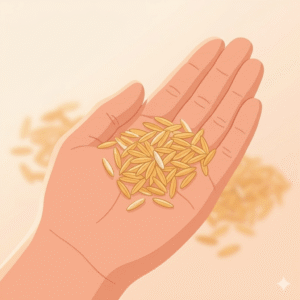
When Greenpeace celebrated a court ruling against Golden Rice, scientists warned of thousands of preventable deaths. What this case reveals about evidence-based giving.
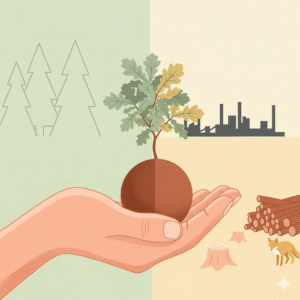
You want to donate to support biodiversity. You’re thinking about a rewilding project near you. However, in some cases, these local restoration efforts can do five times more harm to global biodiversity than good. So how can you avoid causing harm, and where will your donation have the greatest impact on the planet?