Global inequality: median income, GDP and the Gini index
Half the French population lives on less than €26,740 a year, far below GDP per capita of €43,350. Where the gap comes from, and what it means for your giving.
Every day, thousands of children die as a result of extreme poverty. It doesn't have to be this way: even a small donation to the best charities can make a huge difference.
Your donations can make a significant difference to the lives of people in extreme poverty, but it’s important to choice wisely where to donate. The most effective charities are 100 times more impactful than the average. This means that every euro you donate to the most effective organisations, achieves 100x more good! So what makes an organization effective? The most effective organizations in global health meet two essential criteria:
Most of us agree with the statement that every human life has equal value. Therefore, if we want to help people, it shouldn’t matter whether they live in our own town, or on the other side of the world. In wealthy countries like France and Switzerland, the problems that are easy and inexpensive to address, have already been solved. The problems that remain are often extremely costly and difficult to solve. In poor countries, many people still suffer and die from problems that are simple and cheap to solve. Examples include deaths from preventable diseases due to lack of access to vaccinations, or deaths from malaria due to an inability to afford mosquito nets. By donating to charities that focus on easy, low-cost problems in poorer countries, you can help more people with every euro that you donate.
Over the past decade, significant research has been carried out on the most effective actions to reduce poverty and improve health. In 2019, three economists, Esther Duflo, Abhijit Banerjee and Michael Kremer, were awarded the Nobel Prize in Economics for their work on the most effective approaches to development. This research is refined every year by hundreds of researchers conducting randomized controlled trials. We base our recommendations on the most recent studies reviewed by top independent charity researcher, GiveWell.
GiveWell spends 50,000+ hours of research reviewing hundreds of charities each year. Only four, including Against Malaria Foundation, Helen Keller International and New Incentives currently meet it’s high bar.
Malaria is one of the leading causes of child mortality, killing around half a million children every year. That’s 1,320 preventable child deaths every day [1]. Against Malaria Foundation distributes insecticide-treated mosquito nets in developing countries, saving lives in the process. Between 2004 and 2019, the use of mosquito nets prevented around 816 million cases of malaria and saved around 4.8 million lives [2].
Cost effectiveness
For just $5, an insecticide treated mosquito net protects two people against malaria for two years. Since 2009, Against Malaria Foundation is a Top Charity according to the world’s leading charity evaluator, GiveWell [3].
Quality of evidence
Exceptionally strong. Numerous high-quality studies on mosquito nets have consistently demonstrated a significant impact. Against Malaria Foundation carries out continuous, highly transparent monitoring.
According to the World Health Organization, vitamin A deficiency leads to blindness in 250,000 to 500,000 and half of them die within 12 months [4] Helen Keller Intl supports government programs that provide high-dose vitamin A capsules to at-risk infants. A single vitamin A capsule administered twice a year to children for the first five years of life can literally save their eyesight and their lives.
Cost effectiveness
Supplying a child with vitamin A supplements for a year costs less than 2 €[5]. Since 2017, Helen Keller International is a Top Charity according to the world’s leading charity evaluator, GiveWell [6].
Quality of evidence
Very solid. Numerous high-quality studies on vitamin A supplementation show a significant impact. Helen Keller International’s ongoing monitoring is very rigorous.
Nigeria is one of the countries with the highest mortality rate for children under the age of five. Low vaccination rates are one of the main reasons for this: it is estimated that 40% of under-five deaths are due to vaccine-preventable diseases. New Incentives boosts vaccination rates by offering small financial incentives to Nigerian families to take their children to clinics for routine vaccinations.
Cost effectiveness
Enrolling a child in New Incentives’ vaccination program costs approximately €20. Since 2020, New Incentives is a Top Charity according to the world’s leading charity evaluator, GiveWell [7].
Quality of evidence
Exceptionally strong. A high-quality study of the New Incentives program revealed a significant positive impact on outcomes for children. New Incentives continually monitor their impact through high-quality ongoing follow up studies.
[1] Malaria: one of the leading causes of child death, but progress is possible and you can help (Our World in Data) [Accessed 10/07/2024]
[2] Effectiveness of insecticide-treated mosquito nets (The Lancet) [Accessed 12/07/2024]
[3] Against Malaria Foundation (GiveWell) [Accessed 10/07/2024]
[4] Vitamin A deficiency (World Health Organisation) [Accessed 10/07/2024]
[5] Impact of funding granted to GiveWell’s main charities (GiveWell) [Accessed 10/07/2024]
Note: $2 is the amount estimated by GiveWell in 2022 for a child to receive vitamin A supplementation for one year.
[6] Impact des subventions accordées aux principales organisations caritatives de GiveWell (GiveWell) [Accessed 10/07/2024]
Note : 5,000 dollars is the average overall cost per life saved thanks to funding granted or recommended by GiveWell to Helen Keller International in 2022.
[7] New Incentives, Conditional Cash Transfers to Increase Infant Vaccination (GiveWell) [Accessed 10/07/2024]
Tax deductions in France are currently only available for donations to four of our recommended charities: Against Malaria Foundation, Good Food Institute, Helen Keller International, and Centre pour la Sécurité de l’IA
If you are taxable in France, you will benefit from a tax reduction of 66% of the amount of your donation up to the limit of the tax due or 20% of your taxable income.
In practice, this means that if you were planning to donate €100, you can triple this amount to reach a donation of €300 that you will declare, with a real cost of only €102 after tax reduction. This allows you to multiply the impact of your donation without increasing your planned expenditure.
You can read our full article on tax relief in France for more information.
We are able to offer tax deductibility for this association and all the organisations we recommend through our partners, Effektiv Spenden. If your tax residence is in Switzerland, please make your donations via this link, so that you can receive your tax receipt at the end of the tax year.
We work with partners around the world and can offer tax deductibility in many countries. Please contact us if you would like to make a donation from another country and we will discuss the tax options available to you. If you would like to donate and do not require a tax receipt, you can make a donation via Mieux Donner regardless of your country!
Charities that prioritise the final outcome of their action and not indicators of impact. When talking about impact, it is essential to focus on the desired final outcome, such as improved opportunities and quality of life, rather than focusing on intermediate outcomes such as the number of books distributed.
It’s surprising how few charities measure their impact. Our top recommended charities use scientific methods to evaluate the results of their actions, ensuring that their interventions produce the desired effects.
They save or improve the most lives per euro donated to them. Eg) our top recommended global health charities can save a life for as little as 3,000 euros, our top climate charities can avoid one ton of carbon emissions for just 1 euro and our top animal welfare charities can spare thousands of animals from factory farming for the same price of saving one animal in a refuge.
All of our top charities are independently evaluated by world leading charity evaluators. See more information below.
A life is valuable whether it is based in France or the developing world.
Our top recommended charities are all tax deductible in Switzerland, but not in France. This is because French tax law dictates that a charity must operate from France in order to be tax deductible. We always prioritise the impact of a charity over its tax deductible status.
Some of our charities such as Against Malaria Foundation have very low overhead costs, and some such as Clean Air Task Force – have much higher overhead costs. To explain why we don’t take overhead costs into account in our recommendations, imagine two charities:
In the above examples Charity A saves 1 life for every 10,000 spent on it, whereas Charity B saves 1 life for every 3,300 euros spent on it. In this example – it’s clear to see that it’s not overhead costs that are important – but in fact the ratio of overhead costs to the desired impact. Research suggests that there is not much of a correlation at all between overhead and effectiveness.
Finding the best aid organisations isn’t that easy. That’s why we work closely with experts who have been conducting extensive and in-depth research on the subject for many years. These experts are completely independent and work at the cutting edge of charity evaluation in their respective cause areas. They conduct rigorous tests on hundreds of charities to find out as precisely as possible how much good their programs achieve per euro spent. By comparing the cost effectiveness of so many charities, they are able to short list the most effective charities to donate to in order for your donations to have the biggest impact.
GiveWell is the world’s leading research organisation that studies global health and development charities.
‘We search for the charities that save or improve lives the most per dollar. Our goal is to produce the world’s top research on where to give. Free, for everyone. We recommend a small number of charities that do an incredible amount of good’ (GiveWell)
GiveWell was founded in 2007 by Holden Karnofsky and Elie Hassenfeld, two former hedge fund employees. They wanted to do as much good as possible with their donations and found that there was little solid information available on how to do this. GiveWell invests more than 40,000 hours of research each year and has raised more than €1 billion for high-impact charities, saving an estimated 150,000 lives.
The EA Animal Welfare Fund was rated as the top animal charity evaluator by GWWC’s ‘evaluating the evaluators project’ in 2024. They are therefore the primary charity evaluator we defer to in order to choose our top animal charities. We meet with them every few months to get up to date recommendations. They conduct thorough research into various animal welfare organisations to find those that help the most animals per dollar.
Giving Green is a nonprofit organisation that spends thousands of hours each year reviewing studies and climate charities to find the most cost effective interventions to combat climate change. From this research, they publish their top recommendations each year. Their team is made up of climate scientists, economists and impact evaluation experts with decades of experience working at the intersection of evidence-based policy and the environment. We meet regularly with Giving Green to discuss our climate recommendations and run climate workshops in collaboration with eachother.
Although we primarily defer to GiveWell, Giving Green and EA Animal Welfare Fund, we also read the research of other top charity evaluators including LongView Philanthropy, Founders Pledge and Animal Charity Evaluators to ensure we are not overly-reliant on any one source of research. When choosing our top charities we prefer organisations whose effectiveness is corroborated by multiple independent evaluators.
Yes, the team at Mieux Donner offers free donation advice for both english and french speakers. You can book an appointment here.

Half the French population lives on less than €26,740 a year, far below GDP per capita of €43,350. Where the gap comes from, and what it means for your giving.

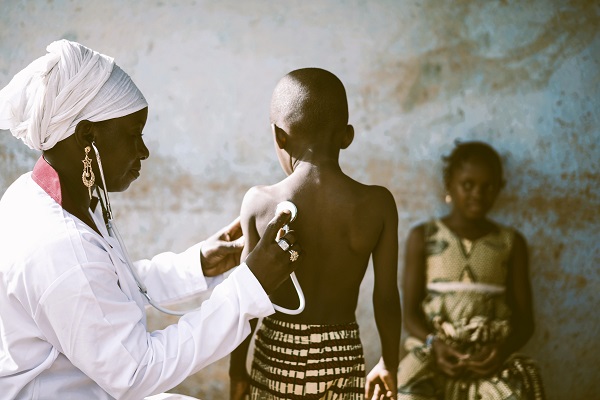
Two capsules a year at around €1 a dose: vitamin A supplementation is among the best-documented health programmes in the world. Here’s what donations to Helen Keller Intl actually fund, with the figures, the sources and the limits.

It can make sense to want to advance medical research, especially to prevent diseases rather than cure them. Cancer is often the first disease that comes to mind. Are donations to medical research, or to cancer-related causes, among those that help the most? We look at the question and offer some comparisons in numbers.

Global health Against Malaria Foundation: what happens between your donation and the bednet Against Malaria Foundation has a simple mission: protecting people from malaria (a
Why doesn’t Mieux Donner recommend organizations that help people in France? The answer lies in three factors: a value framework based on impartial altruism, data on global inequality, and a significant difference in effectiveness depending on where a euro is directed.
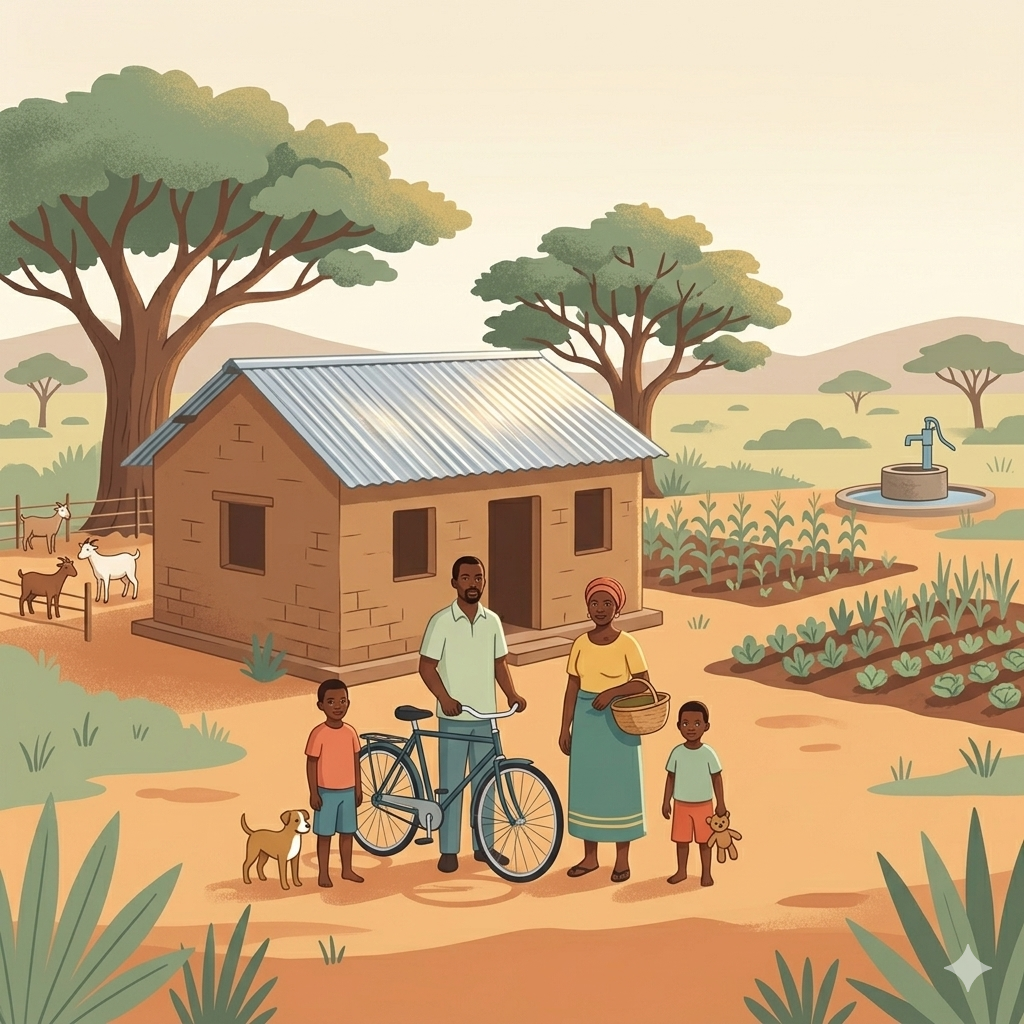
GiveDirectly sends $1,000 directly to households in extreme poverty — no conditions, no intermediaries. What the research shows, how GiveWell rates the programme, and why French tax relief isn’t available.