

The happiest countries and findings from the World Happiness Report 2026
Finland, Iceland, Denmark lead the 2026 ranking. Full list of 147 countries, key findings on social media and wellbeing, and how your donations create happiness.

Finland, Iceland, Denmark lead the 2026 ranking. Full list of 147 countries, key findings on social media and wellbeing, and how your donations create happiness.
Human life is precious. It is natural to want to mobilise all our resources to save a life, even if it only prolongs a life by a week. But what happens when other people are also in danger, and our resources are not enough to help them all? As a society, we face practical limits that force us to make difficult decisions.


It’s easy to feel discouraged by the dramatic retreat of glaciers in the Alps and the scale of climate change can easily leave us feeling powerless. This article will equip you with the knowledge to take meaningful climate action, in both your personal life and through your charitable donations.

The myth of impact assessment in France: a costly illusion Table of Contents Introduction It would seem that in France, impact measurement has become the

Cost-effectiveness analysis (CEA) is one of the most powerful tools we have for guiding our donations. They enable us to evaluate and compare different interventions by measuring results against costs. But while cost-effectiveness analyses are an essential tool, they should not be taken at face value. This article explores our approach.

France now aims to “refocus its actions where they are most useful and renew its support for the most effective organisations.” Several unique opportunities in public policy in 2025, such as the renewal of multilateral funds and changes in U.S. policy, provide France with opportunities to optimise its aid and strengthen its position as a global leader.


Where should you give your zakat for maximum impact? Certified funds, direct transfers, effective charities: what Islamic jurisprudence says and what the evidence shows.
An effective giving initiative channels your donation to the world’s most effective charities and multiplies its impact. How does it work, and where does Mieux Donner fit in?

Repainting someone’s car blue without asking them seems absurd. Yet a share of aid works exactly that way. How to shift from our own preferences to the real needs of the people we want to help.
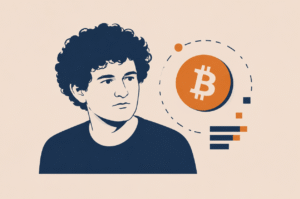
In November 2022, FTX collapsed and its founder, who identified with effective altruism, became the face of a multi-billion-dollar fraud. Here are the facts of what happened, what he was convicted of, and why his conduct betrayed the very principles he claimed to serve. And why a method is not judged by the man who abused its name.
Climate change Giving Green: how top climate charities are chosen When people think about acting on climate, two instincts usually kick in: offsetting your own
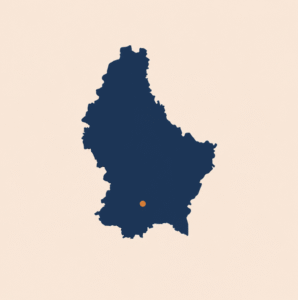
Luxembourg residents can reclaim between 39% and 42% of their donations on their tax return. This guide explains which charities are available with full deductibility, how to donate via Giving Europe in practice, and what the EU equivalence rule could open up for the full effective giving portfolio.
Where should you give your zakat for maximum impact? Certified funds, direct transfers, effective charities: what Islamic jurisprudence says and what the evidence shows.
An effective giving initiative channels your donation to the world’s most effective charities and multiplies its impact. How does it work, and where does Mieux Donner fit in?
Repainting someone’s car blue without asking them seems absurd. Yet a share of aid works exactly that way. How to shift from our own preferences to the real needs of the people we want to help.
Luxembourg residents can reclaim between 39% and 42% of their donations on their tax return. This guide explains which charities are available with full deductibility, how to donate via Giving Europe in practice, and what the EU equivalence rule could open up for the full effective giving portfolio.

Every year, health scares circulate with the same mechanics: a detected compound, an alarming headline, a wave of anxiety. But virality does not measure severity. Here is how to tell the difference, illustrated by the case of cadmium in France.

Democratic backsliding is accelerating worldwide, but can effective giving help? Power for Democracies applies the same rigorous prioritisation tools used in global health to democracy: a 4-index framework, 120 countries analysed, 5 organisations recommended.
Why doesn’t Mieux Donner recommend organizations that help people in France? The answer lies in three factors: a value framework based on impartial altruism, data on global inequality, and a significant difference in effectiveness depending on where a euro is directed.
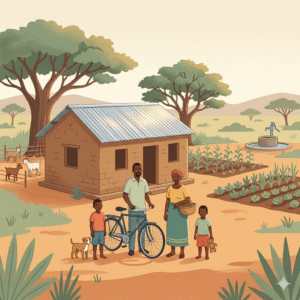
GiveDirectly sends $1,000 directly to households in extreme poverty — no conditions, no intermediaries. What the research shows, how GiveWell rates the programme, and why French tax relief isn’t available.

Alarming headlines, conflicting studies — what does the best available evidence actually say about scented candles? Romain Barbe examines the science and puts the risks in perspective.

Why can some lives be changed for a few euros? Doing Good, Better: 5 Keys for More Effective Generosity We often think that generosity is

Formalising efficiency can (and must) be ‘for good’ “Formalising efficiency would not be compatible with a ‘for good’ approach.” This is an idea that

Find out how your donations can support tomorrow’s agriculture in the face of the challenges posed by the Duplomb-Menonville law: preserving competitiveness, public health and the environment.
Climate change Giving Green: how top climate charities are chosen When people think about acting on climate, two instincts usually kick in: offsetting your own
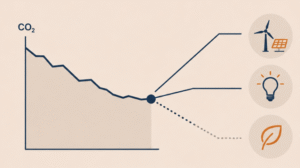
Between 2005 and 2015, eighteen developed economies saw their CO2 emissions fall. When researchers decomposed those declines, they identified two main drivers: substitution of fossil fuels by renewables, and reduced energy consumption. Sufficiency, despite its ethical value, does not appear as an explanatory factor. This article looks at what the data actually shows about climate levers, and where a donation has the largest impact.
31 confirmed deaths, or nearly a million? Romain Barbe examines what the data actually say about Chernobyl’s human toll — and why the fear it generated may have killed far more than the radiation itself.

Assessing the climate impact of donations: between modelling and uncertainty At Mieux Donner, we sometimes use a calculation that is strikingly simple: “€1 = 1
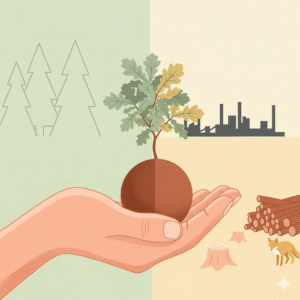
You want to donate to support biodiversity. You’re thinking about a rewilding project near you. However, in some cases, these local restoration efforts can do five times more harm to global biodiversity than good. So how can you avoid causing harm, and where will your donation have the greatest impact on the planet?

What if climate change was one of the most neglected causes? Doing Good, Better: 5 Keys for More Effective Generosity We often think that generosity

What if helping animals was among the most urgent causes? Doing Good, Better: 5 Keys for More Effective Generosity We often think that generosity is
Find out how your donations can support tomorrow’s agriculture in the face of the challenges posed by the Duplomb-Menonville law: preserving competitiveness, public health and the environment.
Being selected by independent assessors is a major challenge. But when an organisation manages to be recommended for two different causes – in this case, climate change and animal suffering – by several renowned assessors, it becomes a unique case. This is exactly what the Good Food Institute (GFI) has achieved, an organisation that stands out for its innovative approach to combating both climate change and animal suffering.
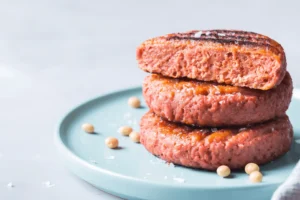

Plant-based ham, soya steaks, seaweed-based salmon – these products are gradually appearing all around us. But what about their economic viability, and are they good for the animals? I was lucky enough to interview Tom Bry-Chevalier, a doctoral student in economics at the University of Lorraine, on the subject of alternative proteins.
When we talk about animal protection, the first image that comes to mind is that of an abandoned dog. In the minds of the general public, animal protection is first and foremost dedicated to those who live with them. But animal suffering does not stop at the doorstep.
Intensive and extensive livestock farming raise questions. These types of farming call into question our ecological limits and animal welfare.
Where should you give your zakat for maximum impact? Certified funds, direct transfers, effective charities: what Islamic jurisprudence says and what the evidence shows.
An effective giving initiative channels your donation to the world’s most effective charities and multiplies its impact. How does it work, and where does Mieux Donner fit in?
Repainting someone’s car blue without asking them seems absurd. Yet a share of aid works exactly that way. How to shift from our own preferences to the real needs of the people we want to help.
Luxembourg residents can reclaim between 39% and 42% of their donations on their tax return. This guide explains which charities are available with full deductibility, how to donate via Giving Europe in practice, and what the EU equivalence rule could open up for the full effective giving portfolio.
Every year, health scares circulate with the same mechanics: a detected compound, an alarming headline, a wave of anxiety. But virality does not measure severity. Here is how to tell the difference, illustrated by the case of cadmium in France.
Democratic backsliding is accelerating worldwide, but can effective giving help? Power for Democracies applies the same rigorous prioritisation tools used in global health to democracy: a 4-index framework, 120 countries analysed, 5 organisations recommended.
Why doesn’t Mieux Donner recommend organizations that help people in France? The answer lies in three factors: a value framework based on impartial altruism, data on global inequality, and a significant difference in effectiveness depending on where a euro is directed.
GiveDirectly sends $1,000 directly to households in extreme poverty — no conditions, no intermediaries. What the research shows, how GiveWell rates the programme, and why French tax relief isn’t available.
Alarming headlines, conflicting studies — what does the best available evidence actually say about scented candles? Romain Barbe examines the science and puts the risks in perspective.
Why can some lives be changed for a few euros? Doing Good, Better: 5 Keys for More Effective Generosity We often think that generosity is
Formalising efficiency can (and must) be ‘for good’ “Formalising efficiency would not be compatible with a ‘for good’ approach.” This is an idea that
Find out how your donations can support tomorrow’s agriculture in the face of the challenges posed by the Duplomb-Menonville law: preserving competitiveness, public health and the environment.
Climate change Giving Green: how top climate charities are chosen When people think about acting on climate, two instincts usually kick in: offsetting your own
Between 2005 and 2015, eighteen developed economies saw their CO2 emissions fall. When researchers decomposed those declines, they identified two main drivers: substitution of fossil fuels by renewables, and reduced energy consumption. Sufficiency, despite its ethical value, does not appear as an explanatory factor. This article looks at what the data actually shows about climate levers, and where a donation has the largest impact.
31 confirmed deaths, or nearly a million? Romain Barbe examines what the data actually say about Chernobyl’s human toll — and why the fear it generated may have killed far more than the radiation itself.
Assessing the climate impact of donations: between modelling and uncertainty At Mieux Donner, we sometimes use a calculation that is strikingly simple: “€1 = 1
You want to donate to support biodiversity. You’re thinking about a rewilding project near you. However, in some cases, these local restoration efforts can do five times more harm to global biodiversity than good. So how can you avoid causing harm, and where will your donation have the greatest impact on the planet?
What if climate change was one of the most neglected causes? Doing Good, Better: 5 Keys for More Effective Generosity We often think that generosity
What if helping animals was among the most urgent causes? Doing Good, Better: 5 Keys for More Effective Generosity We often think that generosity is
Find out how your donations can support tomorrow’s agriculture in the face of the challenges posed by the Duplomb-Menonville law: preserving competitiveness, public health and the environment.
Being selected by independent assessors is a major challenge. But when an organisation manages to be recommended for two different causes – in this case, climate change and animal suffering – by several renowned assessors, it becomes a unique case. This is exactly what the Good Food Institute (GFI) has achieved, an organisation that stands out for its innovative approach to combating both climate change and animal suffering.
Plant-based ham, soya steaks, seaweed-based salmon – these products are gradually appearing all around us. But what about their economic viability, and are they good for the animals? I was lucky enough to interview Tom Bry-Chevalier, a doctoral student in economics at the University of Lorraine, on the subject of alternative proteins.
When we talk about animal protection, the first image that comes to mind is that of an abandoned dog. In the minds of the general public, animal protection is first and foremost dedicated to those who live with them. But animal suffering does not stop at the doorstep.
Intensive and extensive livestock farming raise questions. These types of farming call into question our ecological limits and animal welfare.
Where should you give your zakat for maximum impact? Certified funds, direct transfers, effective charities: what Islamic jurisprudence says and what the evidence shows.
An effective giving initiative channels your donation to the world’s most effective charities and multiplies its impact. How does it work, and where does Mieux Donner fit in?
Repainting someone’s car blue without asking them seems absurd. Yet a share of aid works exactly that way. How to shift from our own preferences to the real needs of the people we want to help.
In November 2022, FTX collapsed and its founder, who identified with effective altruism, became the face of a multi-billion-dollar fraud. Here are the facts of what happened, what he was convicted of, and why his conduct betrayed the very principles he claimed to serve. And why a method is not judged by the man who abused its name.
Climate change Giving Green: how top climate charities are chosen When people think about acting on climate, two instincts usually kick in: offsetting your own
Luxembourg residents can reclaim between 39% and 42% of their donations on their tax return. This guide explains which charities are available with full deductibility, how to donate via Giving Europe in practice, and what the EU equivalence rule could open up for the full effective giving portfolio.