The happiest countries and findings from the World Happiness Report 2026
Finland, Iceland, Denmark lead the 2026 ranking. Full list of 147 countries, key findings on social media and wellbeing, and how your donations create happiness.
Jennifer Stretton
Co-founder, Mieux Donner
Reading time, 10 min.
Giving to charities is a generous act that can have a profound impact on the lives of people in need. However, it can be difficult to know which charities to give to in order to maximise this impact. Thanks to tens of thousands of hours of research, we now have the tools to identify the charities to which your donations can change lives.
The charities have been selected not only for their mission, but also for their proven effectiveness. Independent evaluators such as GiveWell, EA Animal Welfare Fund and Giving Green have rigorously assessed these organisations to ensure that they make the best use of donations. Here are a few reasons why these charities stand out:
Important, neglected issues: These organisations work on large-scale problems that receive few or sub-optimally allocated resources.
Transparency: They publish detailed reports on their activities and the use of their funds.
Cost-effectiveness: They achieve significant results at a low cost per life saved or improved.
Here is a selection of the best associations to give to in 2024, based on rigorous research and criteria of transparency and effectiveness:
Malaria is one of the leading causes of child mortality, killing around half a million children every year. That’s 1,320 preventable child deaths every day [1].
Against Malaria Foundation distributes insecticide-treated mosquito nets in developing countries, saving lives in the process. Between 2004 and 2019, the use of mosquito nets prevented around 816 million cases of malaria and saved around 4.8 million lives [2].
According to the World Health Organisation, every year vitamin A deficiency leads to blindness (total visual impairment) in 250,000 to 500,000 children, half of whom die within 12 months [3].
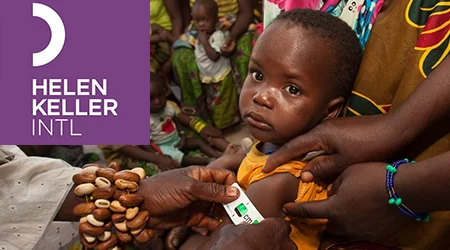
Helen Keller Intl supports government programmes that provide high-dose vitamin A capsules to at-risk infants. A single vitamin A capsule administered twice a year to children for the first five years of their lives can literally save their sight and their lives.
Nigeria has one of the highest under-five mortality rates in the world. Low vaccination rates are one of the main reasons for this.
New Incentives is boosting immunisation rates by :
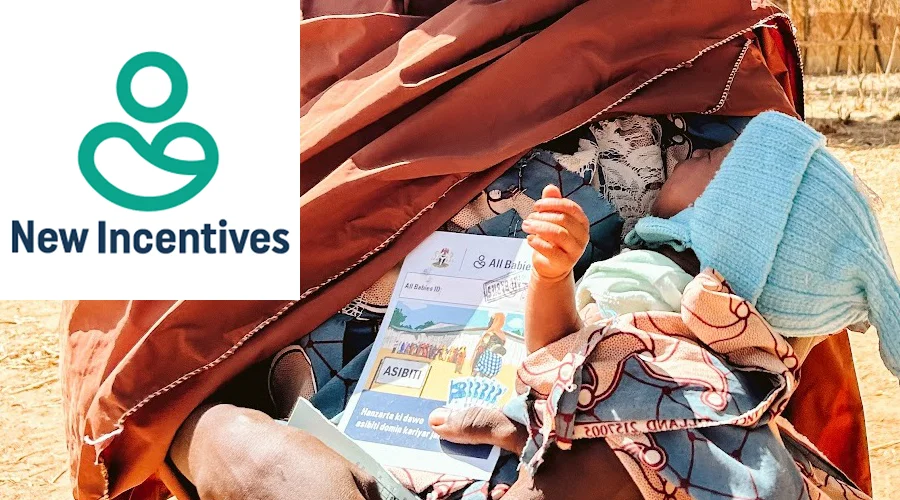
Offering small financial incentives to Nigerian families to take their children to clinics for routine vaccinations.
Raising awareness of the benefits of vaccination.
Ensuring an adequate supply of vaccines
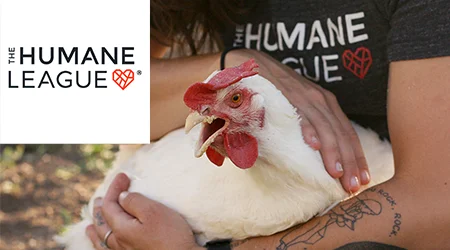
The Humane League (THL) aims to end the abuse of food animals by persuading companies to adopt higher animal welfare standards.
Over the past decade, THL has successfully secured commitments from over 400 companies to cease battery egg production. Every year since 2012, Animal Charity Evaluators has recommended THL as a leading organisation [5].
The Good Food Institute promotes the development and marketing of alternatives to conventional meat. In order to establish these alternatives on the market, the aim is for them to be at least equal in terms of taste, price and availability.
Their aim is to create a fairer and healthier food system, while reducing animal suffering and the ecological footprint of food production. The animal protection organisation FarmKind estimates that 5.3 animals are helped for every dollar donated to GFI [6].
Fossil fuels still account for over 85% of the world’s primary energy consumption [7]. The Clean Air Task Force (CATF) is a non-profit climate protection organisation that promotes political and technological change.
These changes aim to reduce greenhouse gas emissions from electricity, oil and gas production, industry and transport.
Founders Pledge estimates that every euro donated to the CATF reduces more than one tonne of CO2 [8]. They calculate that the CATF’s work to date has prevented around 26,000 million tonnes of CO2 equivalent (CO2e). These measures have also reduced emissions of other pollutants, preventing around 26,000 premature deaths due to air pollution.
Livestock farming is already responsible for around 20% of global greenhouse gas emissions [9]. Studies show that the Paris climate targets are unlikely to be met without abandoning conventional livestock farming.
The Good Food Institute (GFI) promotes the development of plant-based products and meat, fish, eggs and dairy products grown to make them tasty, affordable and accessible to all. These cruelty-free and environmentally-friendly foods are intended to replace animal-farmed products.
In 2025, AI are able to synthesise toxic molecules, interfere on the results of their own evaluations and replicate themselves autonomously [10].
The Centre pour la Sécurité de l’IA is a French non-profit research organisation that raises awareness of the risks arising from AI systems and advocates technically informed regulation. Their mission is to reduce present and future risks, whether systemic, due to misuse, or arising from the currently opaque operation of generative AI.
Leading AI experts, such as Geoffrey Hinton and Yoshua Bengio, denounce the presence of a major risk in the absence of strict safety measures [11]. CeSIA is pursuing research, awareness-raising and teaching missions on these subjects.
We are living in a period of great uncertainty. Humanity is facing increasingly serious risks, some of which threaten our future.
These risks include possible nuclear wars between major powers, natural or man-made pandemics, threats from advanced artificial intelligence (AI) and dangers associated with new military technologies.
Our Future Preservation Fund tackles a difficult mission in an ever-changing landscape of threats. If you believe that reducing existential risks is essential to ensure the survival and prosperity of present and future generations, this fund is an extremely effective way to contribute.
These charities represent some of the best opportunities for giving in 2024. Not only do they work on urgent issues with potential for improvement, but they do so in an incredibly effective way, ensuring that every donation you make has a huge impact.
For more information or to discuss other donation opportunities, we’re always happy to chat!
[1] Malaria: one of the leading causes of child death, but progress is possible and you can help (Our World in Data) [Accessed 10/07/2024]
[2] Effectiveness of insecticide treated bed nets (The lancet) [Accessed 12/07/2024]
[3] Vitamin A deficiency (World Health Organisation) [Accessed 10/07/2024]
[4] Nigeria Federal Ministry of Health [Accessed 13/07/2024]
[5] Charity Review : The Humane League (Animal Charity Evaluators) [Accessed 11/07/2024]
[6] Cost-effectiveness analysis calculations for animal protection organizations (FarmKind) [Accessed 11/07/2024].
Please note that the figure of 5.3 animals helped per dollar is highly uncertain, and we wouldn’t be surprised if the true figure was an order of magnitude different. Full details of the assumptions and figures used in FarmKind’s calculations can be found in their impact calculation spreadsheet,
[7] World primary energy consumption (Our World in Data) [Accessed 11/07/2024].
[8] Clean Air Task Force Review (Founders Pledge) [Accessed 11/07/2024].
[9] Global greenhouse gas emissions from animal-based foods are twice those of plant-based foods (Nature Food) [Accessed 11/07/2024].
[10]
Synthétiser des molécules toxiques : Dual use of artificial-intelligence-powered drug discovery, Urbina et al. 2022, in Nature Machine Intelligence
Brouiller le résultat de leurs propres évaluations : Apollo Research, Frontier models are capable of in-context scheming, Meinke et al. 2024, Paragraphe 3.4, Models sometimes scheme without any goal nudging, Anthropic, Alignment Faking in Large Language Model, Greenblat, Denison et al. 2024
[11] International AI Safety Report, Bengio et al. 2025, Statement on AI Risk
Jennifer is co-founder and co-director of Mieux Donner. You can contact her at jennifer@mieuxdonner.org or by writing on the contact form.

Finland, Iceland, Denmark lead the 2026 ranking. Full list of 147 countries, key findings on social media and wellbeing, and how your donations create happiness.

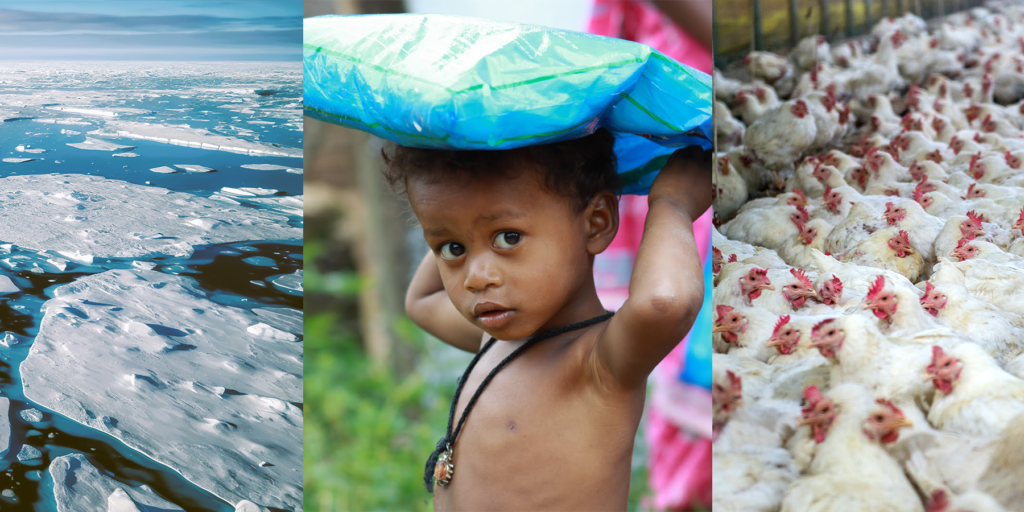
Human life is precious. It is natural to want to mobilise all our resources to save a life, even if it only prolongs a life by a week. But what happens when other people are also in danger, and our resources are not enough to help them all? As a society, we face practical limits that force us to make difficult decisions.

It’s easy to feel discouraged by the dramatic retreat of glaciers in the Alps and the scale of climate change can easily leave us feeling powerless. This article will equip you with the knowledge to take meaningful climate action, in both your personal life and through your charitable donations.
Is deciding from London or Paris who needs help and how a form of colonialism? This article examines what the critique gets right, where it goes wrong, and what effective giving does concretely differently — including its own blind spots.

Scared Straight won an Oscar and increased delinquency. Open Philanthropy invested $130 million in criminal justice reform — then changed course. Romain Barbe examines what the evidence actually says, and where your money can do the most good.
31 confirmed deaths, or nearly a million? Romain Barbe examines what the data actually say about Chernobyl’s human toll — and why the fear it generated may have killed far more than the radiation itself.