How climate change is affecting the Alps and what we can do about it
Tuesday 27th August 2024, Reading time: 10 mins
It’s easy to feel discouraged by the dramatic retreat of glaciers in the Alps and the scale of climate change can leave us feeling powerless. This article will equip you with the knowledge to take meaningful climate action, in both your personal life and through your charitable donations.
Introduction
As individuals, we have an important role to play in mitigating climate change. The decisions we make regarding how we travel, the food we eat, who we vote for and how we donate all have an impact. Moreover, by setting a positive example, we can inspire others—amplifying our own impact far beyond our personal footprint. Encouraging just one person to adopt a climate-conscious lifestyle can double your positive lifetime impact. The effect continues to multiply, creating a ripple effect that could have a far-reaching positive impact.
In this article we will explore the most effective actions we can take to combatc climate change. But first, we’ll begin by understanding the science behind climate change, using the Alps as a case study.
What is the current outlook for climate change?
The ten hottest years in the 174-year climate record have all occurred within the last decade (2014 to 2023) [1]. In the Paris Agreement, nations around the world committed to the goal of keeping the global average temperature rise “well below 2°C” while also “pursuing efforts to limit warming to 1.5°C.” This agreement reflects the urgent need to minimise the impacts of climate change by reducing global emissions and mitigating temperature rise.
The carbon budget to keep global temperatures below 1.5°C is less than a decade’s worth of emissions at current levels. For the 2°C threshold, the window is only slightly larger, with less than three decades of emissions remaining [2].
How is climate change affecting the Alps?
The Alps are warming about twice as fast as the global average, according to the Intergovernmental Panel on Climate Change. In the past two years alone, Swiss glaciers have lost 10 percent of their water volume — as much as melted in the three decades from 1960 to 1990 [3].
Over the 20th century, temperatures in France have increased by 2.5°F (1.4°C). However, in the European Alps, this rise has been even more significant, with temperatures climbing by 3.6°F (2°C) [4]. This warming is particularly pronounced in mountainous areas due to the melting of snow cover, which exposes darker rock surfaces that absorb more heat from the sun.
In addition to this gradual rise in temperatures, climate change is also leading to more frequent extreme weather events. By 2100, it is projected that every second summer could be as hot as the 2003 European heatwave, which set temperature records not seen since 1540 [4].
The Alps are not only suffering from extreme heat, but also periods of drought. Nowhere is this more obvious than in ski resorts. The duration of snow cover in the Alps is now 36 days shorter than the long-term average [5]. Since the 1970s, Alpine snowpack has decreased by 5.6% per decade, and snow depth by over 8.4% [6].
1) Glacial Retreat and Climate Change in the Alps
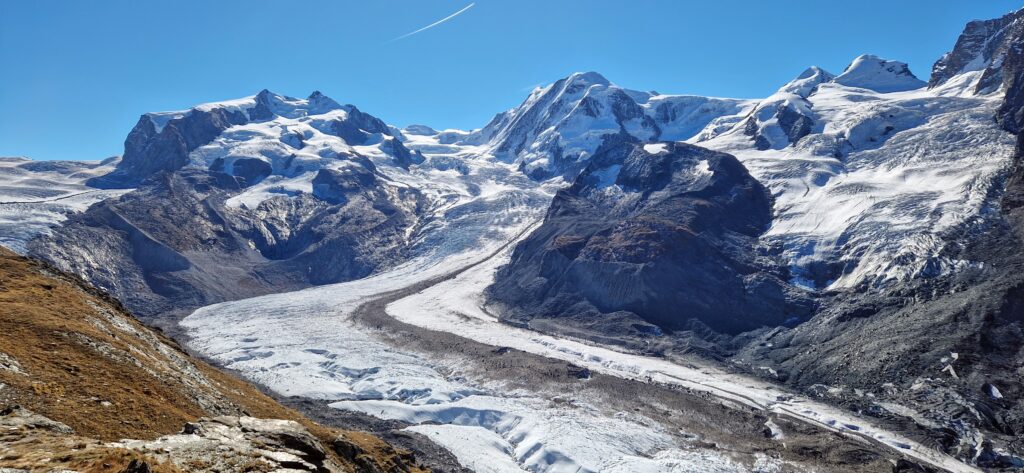
Since 1900, Alpine glaciers have lost about half their volume and the rate of retreat is accelerating —20% of their volume has vanished since 1980 [7]. Even with significant efforts to address climate change in the Alps, projections suggest that most glaciers could be gone by 2100 [8]. This is worrying because glaciers are not only iconic features of the Alpine scenery but also crucial reservoirs of freshwater, holding more water than all lakes, soils, rivers, and plants combined.
Glaciers regulate water flow by storing it during colder, wetter months and releasing it during the hotter, drier summer periods. The loss of glaciers will lead to reduced river flows and potentially dry up small streams, impacting Alpine ecosystems and agriculture.
A striking example of how climate change is affecting agriculture in the Alps is its impact on traditional dairy farming. Dairy cows need 100 litres of water a day. For the past several years, this water has had to be transported to Alpine pastures by helicopter and trucks, calling into question the long term sustainability of this traditional way of life.
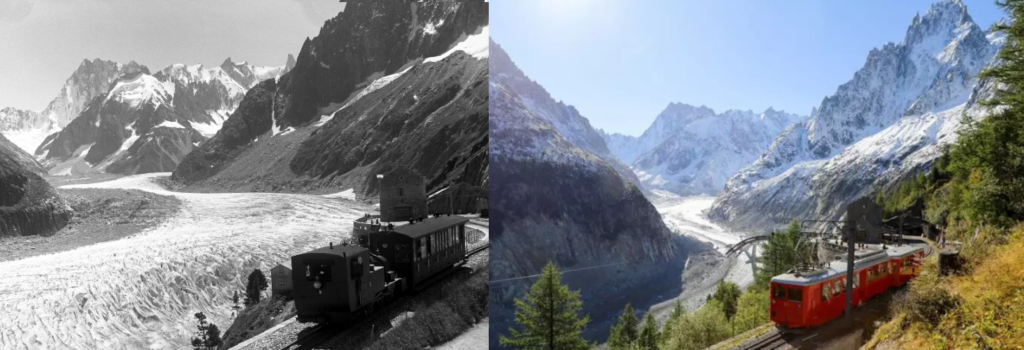
A century ago, the first tourists began visiting the Mer de Glace glacier from Chamonox via the Montenvers cog railway. In 1880, when the Montenvers Hotel was built at the top of the railway, guests could step right out of the hotel and onto the glacier with ease. Fast forward to today, and the Mer de Glace is retreating at a staggering rate of 4 metres each year. The situation has worsened so dramatically that a new gondola was constructed in 2023 to avoid the gruelling descent down 550 steps to reach the glacier.
2) Climate change is leading to species migration
Alpine flora and fauna are called “glacial relics.” They evolved to survive in conditions from the last glacial period. When the glaciers began to retreat around 10,000 years ago, alpine species retreated with the glaciers to mountain regions.
As temperatures increase and glaciers retreat, alpine species have to migrate higher and higher up the mountain in order to find cooler climatic conditions. Because mountains are conical, there is less land available at higher altitudes, meaning alpine species are steadily losing habitat and will eventually disappear.
One example is the ptarmigan, which is at risk of losing 60% of its habitat by 2050 and could be extinct by 2090 [9]. Alpine flowers are also being forced to migrate upwards but are struggling to keep pace with the rapid rate of change.
3) Climate Change is altering seasonal cycles
CREA Mont Blanc is a research centre for alpine ecosystems based in Chamonix, in the French Alps. As part of their citizen science project, they monitor the seasonal patterns of common tree and bird species to see whether they are being affected by climate change. Initial data suggests that trees are flowering earlier, and birds are breeding earlier due to spring temperatures arriving earlier. This is maladaptive because it’s not uncommon for warm temperatures in February and March to be followed by a cold snap and snow in April. Mortality rates for the coal tit bird, for example, are much higher when they begin laying earlier in the season [10].
4) Climate Change is melting permafrost and increasing rock fall
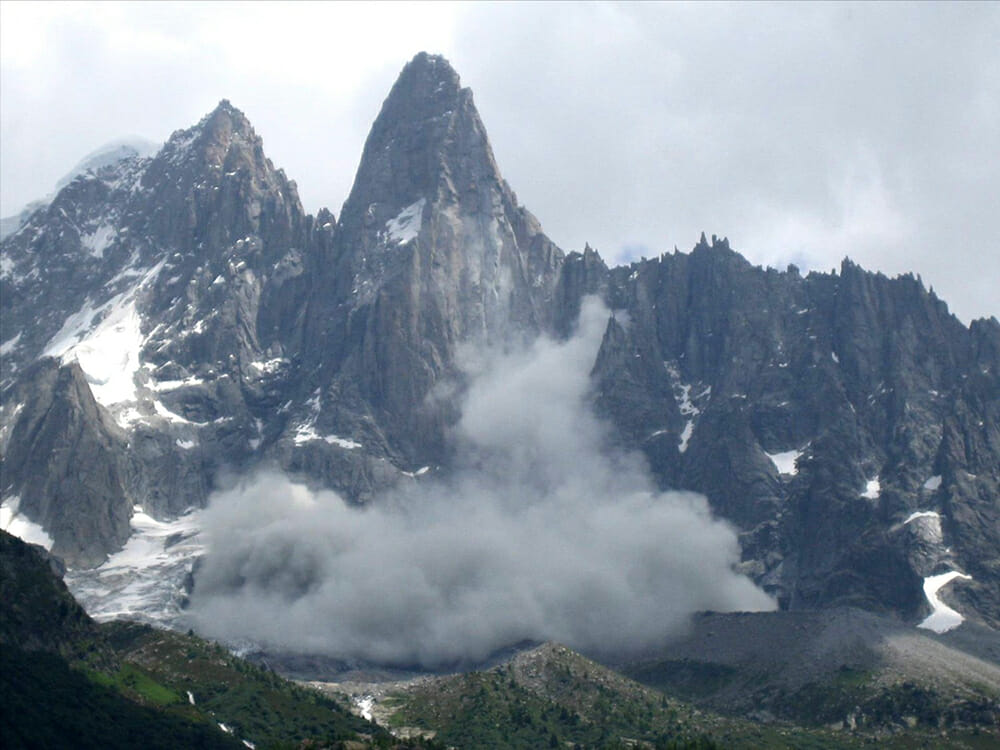
Permafrost acts like a glue binding rock, soil, and ice together. As temperatures rise, permafrost thaws, leading to an increase in rock falls and landslides.
This process not only reshapes the physical landscape but also poses significant risks to human safety, infrastructure, and ecosystems in the affected regions. As the climate continues to warm, it is likely that these occurrences will become more frequent and intense, posing a growing challenge for Alpine communities
What can we do about climate change?
It’s easy to feel overwhelmed by the rapid retreat of glaciers and the scale of climate change. However there are real concrete steps we can all take to reduce our footprint and make a positive impact on the climate.
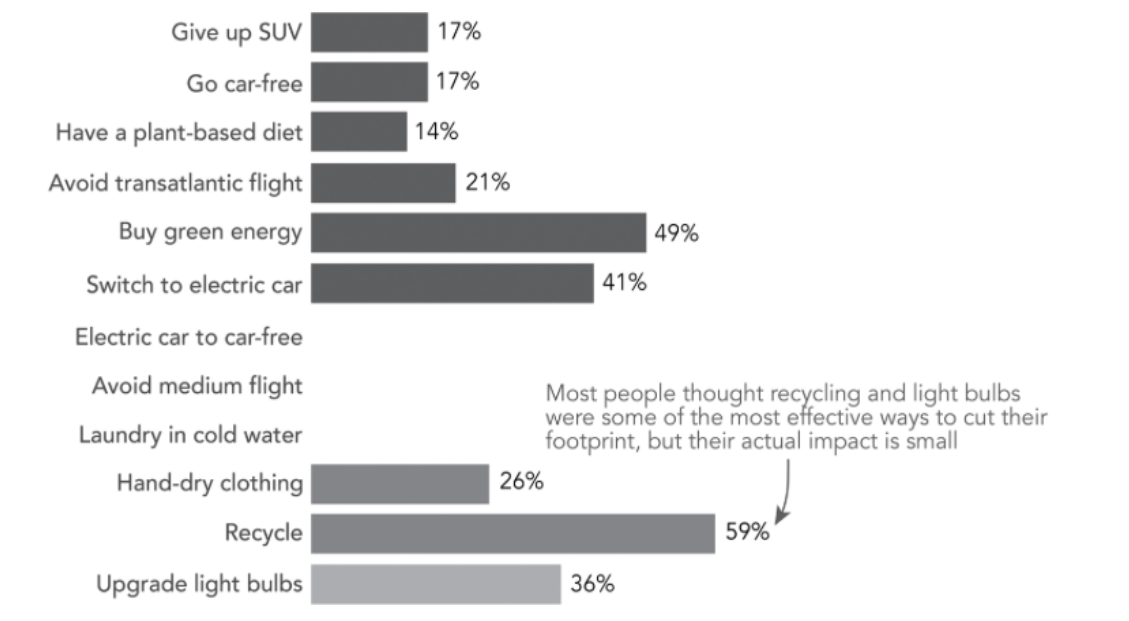
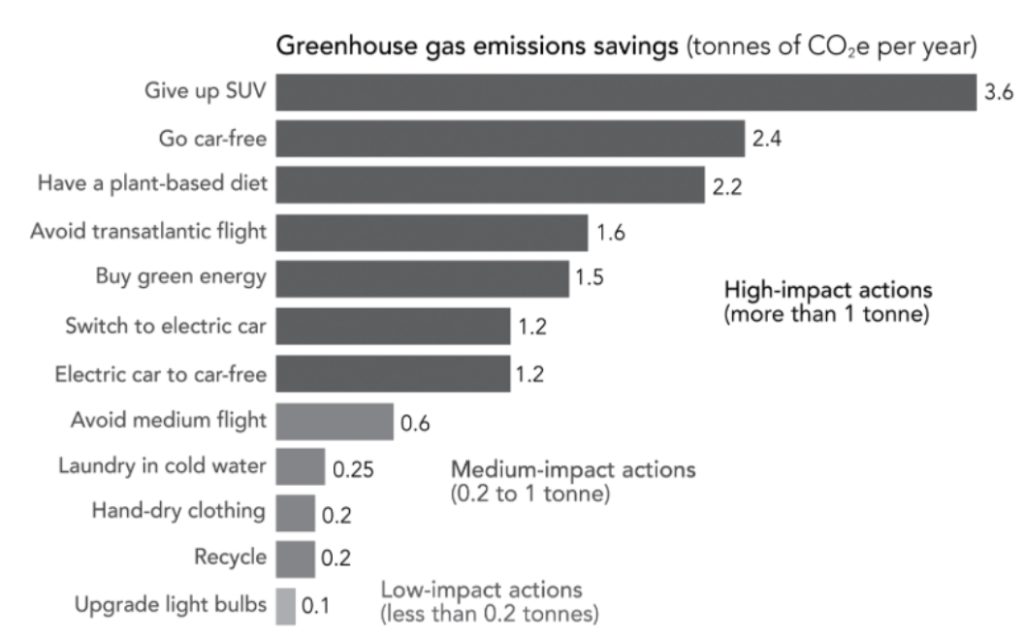
In terms of personal lifestyle choices, some actions are much more impactful than others. The problem is that there’s a huge mismatch between what most people think is effective at reducing climate change, and what’s actually effective:
What people think is most effective vs what is actually effective
Source: Hannah Ritchie, Not the end of the world, 2024
As shown above, most people think that recycling is one of the most effective things they can do, but in fact – recycling only reduces your carbon footprint by a tiny amount (0.1 tons per year). Of course there are other reasons to recycle, but if what you truly care about is reducing your climate impact, it is much more effective to give up your car, stop eating meat and fly less.
It’s clear that many of us would be unwilling/unable to do this. Even if an individual was able to live a completely carbon neutral life, the amount of emissions they would save per year is a drop in the ocean compared to the scale of the climate crisis.
If we truly care about being effective, we need to think beyond our own ‘footprint’ and influence change on the entire system.
Donations are the biggest lever to address climate change
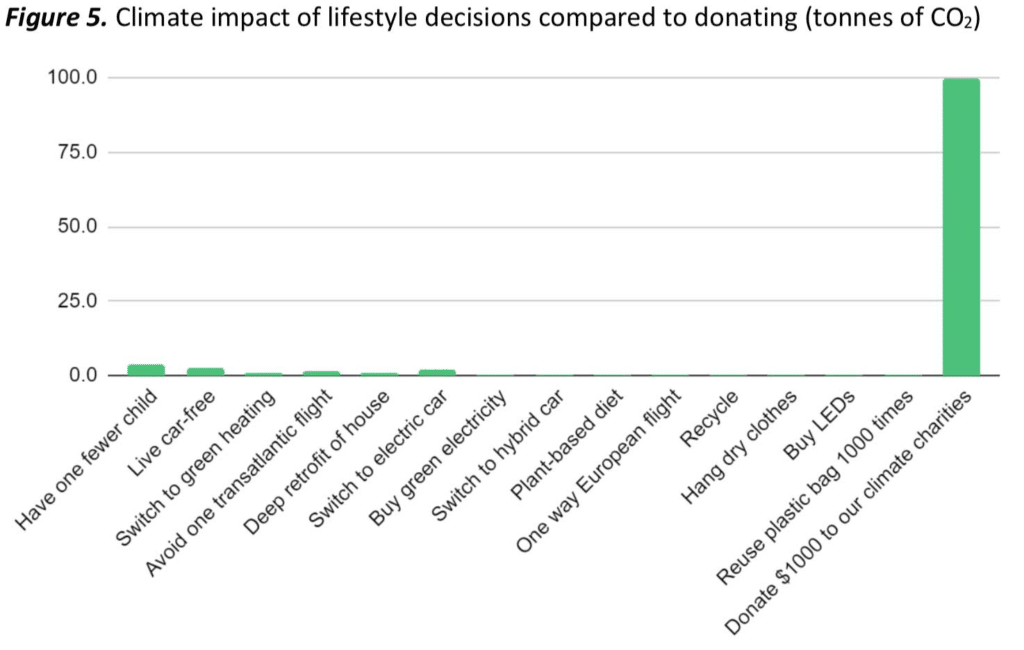
To tackle the climate crisis we need to take action that couples individual action with broader systems change. By far the biggest lever we have to enact systemic change is to donate to the most effective charities. This is because the most effective charities leverage policy change and technological innovation which can impact millions of people, or even entire continents.
Relative impact of lifestyle choices compared to donating to effective climate charities (Source: Founders Pledge – Climate and lifestyle report).
As an example, one of our top recommended charities – Clean Air Task Force worked closely with the European Commission to ensure the bloc adopted its first EU methane regulations last year.
‘According to our analysis, a regulation that requires imported fossil fuels to meet the same standards as domestic supplies could achieve a staggering 30% reduction in global emissions from the oil and gas sector, helping partner countries save roughly the quantity of Germany’s annual consumption of gas from being wasted.’ (Clean Air Task Force)
Another one of our top charities, the Good Food Institute, is working to promote the development of plant based and lab grown meats. Alternative proteins are a particularly promising way of addressing climate change because:
Both Clean Air Task Force and the Good Food Institute are independently evaluated by climate researchers Giving Green and Founders Pledge to avoid 1 ton of carbon for every euro donated to them.
Does this mean I can just offset my emissions by donating to these top charities?
Although donations are one of the most impactful actions we can take, we would encourage you not to think of donations as ‘offsets’.
If we only donate to offset our personal emissions and no further, then we hugely restrict our own potential impact. A typical person in the developed world emits 5-20 tonnes of CO2. If you assume that the most effective climate charities can abate a tonne of CO2 for 1 euro, then on the offsetting approach, the most you could donate would be 20 euros per year.
Many of us can afford much more than that, and in fact those of us who are fortunate enough have the capacity to make large and sustained funding to the very best climate charities. The Clean Air Task Force for example has an annual budget of less than $8m per year, but for this relatively small amount they have played a leading role in political campaigns which have had a huge impact on global climate policy.