
Methane, an invisible enemy: why we must fight now
Interview by Romain Barbe, co-founder of Mieux Donner
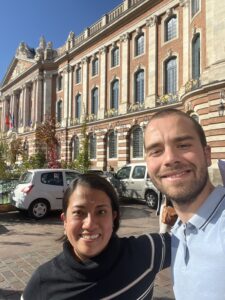
I recently interviewed Zitely Tzompa Sosa, a Research Manager at the Clean Air Task Force now based in my hometown, Toulouse. Her dedication and expertise show that there are indeed effective ways to tackle climate change. Her insights left me feeling motivated and hopeful.
What is your background, and how did you come to work in the field of climate change mitigation?

Since I started my career, I always aspired to bridge the gap between science and policy making. I focused on environmental science because it’s essential to deeply understand these technical processes to then provide a science-based perspective. That’s why I pursued a PhD in atmospheric science. I wanted to apply that knowledge to real-world solutions, particularly for environmental issues.
Growing up in Mexico City, I experienced first-hand the impacts of poor air quality. I was born when Mexico was considered the most polluted city in the world. I remember having air purifiers in my classroom and constant grey skies.
This experience deeply influenced me to want to understand air quality better and explore ways to improve it. This was the major reason I studied Environmental Engineering and later decided to pursue a Ph.D. in this field.
Since I started my career, I always aspired to bridge the gap between science and policy making. I focused on environmental science because it’s essential to deeply understand these technical processes to then provide a science-based perspective. That’s why I pursued a PhD in atmospheric science. I wanted to apply that knowledge to real-world solutions, particularly for environmental issues.
Growing up in Mexico City, I experienced first-hand the impacts of poor air quality. I was born when Mexico was considered the most polluted city in the world. I remember having air purifiers in my classroom and constant grey skies. This experience deeply influenced me to want to understand air quality better and explore ways to improve it. This was the major reason I studied Environmental Engineering and later decided to pursue a Ph.D. in this field.
Could you explain why methane is particularly critical to address climate change?
Methane has over 80 times the warming potential of CO₂ over a 20-year period, making it a potent greenhouse gas. Compared to CO₂, which can linger in the atmosphere for hundreds to thousands of years, methane stays for around 9 to 12 years. This short lifetime means that reducing methane emissions can yield substantial benefits in the near term. It’s like hitting the brakes when you’re close to a crash—you can still lessen the impact if you act now.
When it comes to prioritising efforts, what approach does the Clean Air Task Force take?
Our goal is to bring together knowledge from around the world and identify the most efficient actions that governments have implemented. We review actions from different jurisdictions, focusing on those with the highest proven impact in reducing methane. By bringing together the latest scientific findings, we help paint a clear picture for decision-makers, empowering them with effective strategies.
For example, when talking about methane mitigation strategies, we often hear, “Oh, is it really that simple?” And yes, it really can be that simple— sometimes it’s all in how you explain and prioritize solutions. When complex things are set out in a complicated way, they seem hard. But they don’t have to be.
What does a typical day look like for you?
Well, I start my day a bit late due to our coordination with colleagues in the US. My time goes into reviewing reports and managing various projects, such as leading a project on tropospheric ozone and also co leading another one in the EU looking at the Methane Intensity of oil and gas production. Much of the work involves project management, coordinating with government representatives worldwide, and meeting with partner organizations that support our mission on the ground.
Our meetings always have specific goals, where we engage with strategic individuals in ministries, or in Europe, with officials from the Parliament or European Commission to enhance their understanding of technical issues. We identify “champions”—people who share our values and goals—and we work to empower them to have a stronger impact within their organizations. At the same time, we collaborate constructively with individuals who may not fully share our perspectives, fostering dialogue and mutual understanding to drive meaningful progress.
Could you share a specific example of legislation or European regulation that you have influenced in your role at CATF?
Certainly. One example is our involvement with the EU methane regulation. Clean Air Task Force worked closely with the European Commission, European Parliament, and Member States to ensure the bloc adopted its first major methane regulation. This is incredibly important because a large portion of the EU’s gas supply—above 90%—is imported, giving the EU significant buying power.
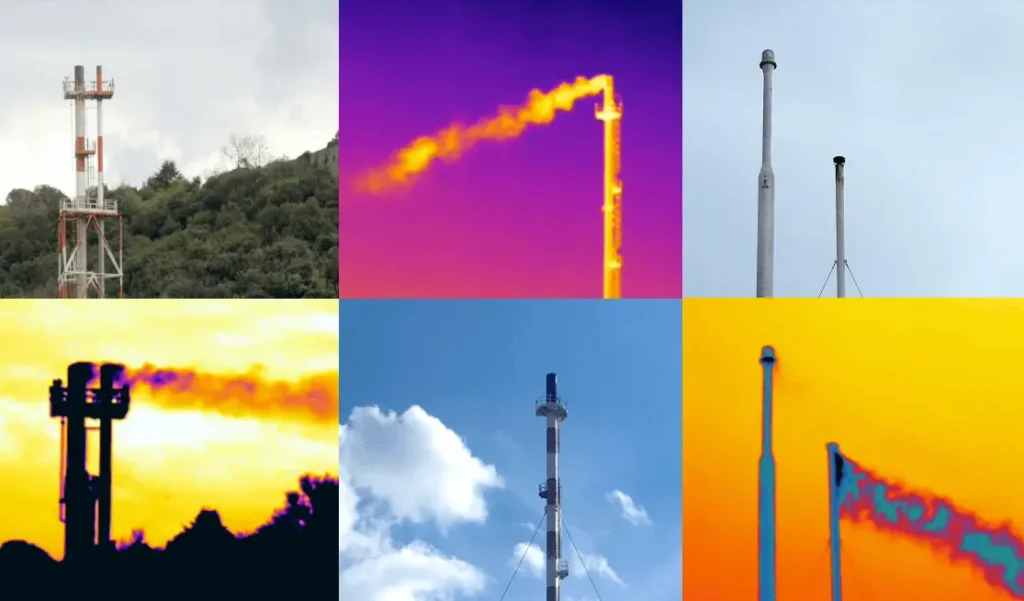
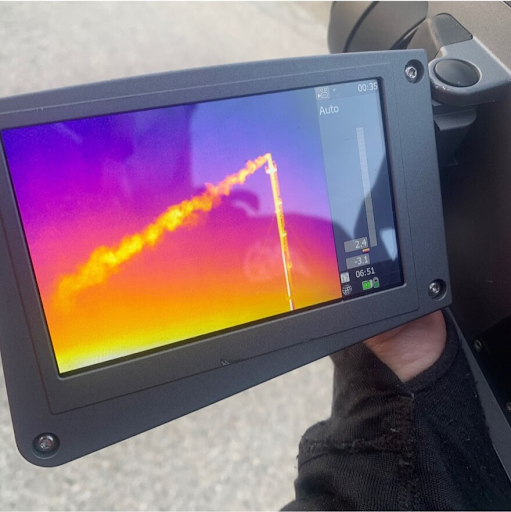
Our goal is that every single time you turn on the heater in your house or apartment, the gas you use has been certified to meet strict emission standards and produce the least amount of emissions, helping to minimise warming effects. Methane emissions are massive and some of them are so substantial that can even be detected from satellites. If people could see methane emissions, they’d be shocked at the levels. If our eyes could detect the same wavelengths that satellites do, we would never have allowed this industry to operate to this extent. It’s just that we can’t see them, and that’s part of the challenge.
Are there similar projects in France?
In France, we are working to ensure that the EU methane regulation is being implemented, focusing on technical assistance for the methane import standard and methane intensity. We have reached out to French representatives from ISO involved in setting these critical standards, and we maintain an open door for future conversations and follow-ups.
How do donations help in reducing these emissions and combating climate change?
Donations are crucial. They allow us to stay involved, as close as possible, where policy discussions happen globally. For example, we recently started working in Brazil to reduce methane emissions from waste sources like landfills.
We organised a workshop with 16 municipalities across Brazil, we had a really good experience – they were very eager to get that expertise and experience, which they don’t have in-house. It’s not that there aren’t knowledgeable people, but rather that these people aren’t reaching those in the government.
That’s what’s missing; they’re not at the table, discussing solutions directly and collaborating. We’re in frequent discussions with the Ministry of Environment among other strategic collaborations with Brazilian institutions, and this is only one project.
Donations are crucial. They allow us to stay involved, as close as possible, where policy discussions happen globally. For example, we recently started working in Brazil to reduce methane emissions from waste sources like landfills.
We organised a workshop with 16 municipalities across Brazil, we had a really good experience – they were very eager to get that expertise and experience, which they don’t have in-house. It’s not that there aren’t knowledgeable people, but rather that these people aren’t reaching those in the government.
That’s what’s missing; they’re not at the table, discussing solutions directly and collaborating. We’re in frequent discussions with the Ministry of Environment among other strategic collaborations with Brazilian institutions, and this is only one project.
Donations fund these workshops and enable us to offer technical assistance, foster collaborations, produce reports, and create a country-wide impact. We were also present at COP29 in Baku, Azerbaijan. We want to be part of impactful discussions, where stakeholders and government officials are, and we hosted a series of events on methane, other pollutants, decarbonization, and net-zero actions. We need funds to be at the table, to talk to them, and to engage directly with policymakers.
Romain Barbe
Romain est co-fondateur et co-directeur de Mieux Donner. Vous pouvez le contacter à l’adresse romain@mieuxdonner.org ou en utilisant le formulaire de contact.
Tags : English Article