The idea of saving animals often conjures up images of threatened or endangered species. When I was a child, I was deeply focused on the idea of protecting certain species from extinction. I was fascinated by elephants, butterflies, monarch butterflies and bees, and even worried about the end of pollination. The disappearance of certain species, like the great penguin or the dodo, left me with a deep sense of regret.
But when I look back at that time, something strikes me. We can certainly be attached to the existence of these animals because of their beauty – for example, a cormorant taking flight in a setting sun, struggling to find its food.
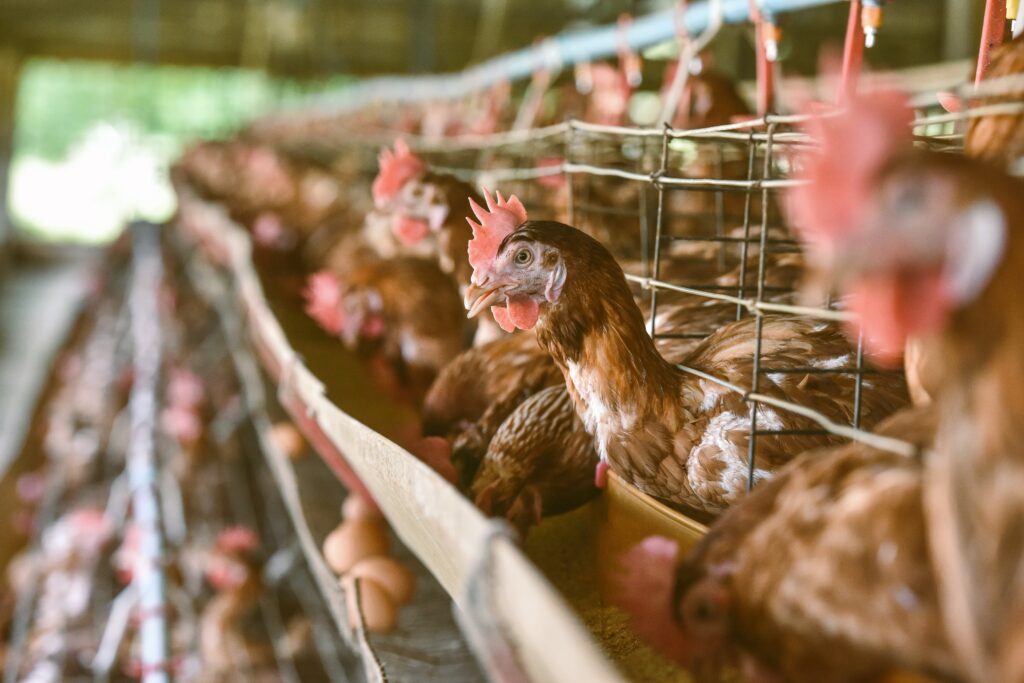
Yet there are tens of millions of birds in a far more advanced state of suffering than a cormorant struggling to adapt to climate change: farmed chickens.
I was so caught up in the plight of nature that I forgot to look at my plate: it’s just as important not to neglect the many domesticated species that suffer directly from human activities.
Protecting animals: supporting effective organisations
Animal protection non-profits work tirelessly to improve the living conditions of farmed animals and endangered wildlife. The Humane League stands out as a remarkably effective charity: over the last ten years, it has succeeded in convincing 400 companies to end the rearing of laying hens in cages. Better still, Donner estimates that €50 donated to THL saves 58 animals from intensive farming, making it an exceptional charity.
Why laying hens? Among terrestrial species, farmed chickens and laying hens, which number in the tens of billions, already account for 90% of the many animals exploited. Next in line are pigs and ducks.
Marine species such as fish and shrimp are even more dramatically overexploited by human activities. There are hundreds of billions of fish and trillions of crustaceans. By taking part in awareness-raising campaigns or supporting these associations, you can help them to protect the most vulnerable species – species other than those we imagine.
Climate action to save endangered species
Protecting natural habitats also involves combating climate change. Reducing our carbon footprint, whether through our food choices or our energy consumption, contributes directly to preserving the ecosystems on which endangered species depend.
In this respect, the Good Food Institute is a double champion: it helps to reduce meat consumption and CO2 emissions while offering certified plant-based alternatives that respect animals and the environment. For €50, that’s 16 tonnes of carbon avoided and 265 farm animals saved. If you love animals, adopting animal-friendly food products or becoming vegetarian is an effective way of reducing your negative impact. GFI makes this transition easier and easier for many people.
Yet our era is facing an unprecedented biodiversity crisis. According to the list of endangered species published by the IUCN, more than 40,000 plant and animal species are threatened with extinction. Big cats such as the tiger and rhinoceros illustrate the urgent need for action.
These efforts must not be limited to emblematic species: essential insects, such as pollinators, or vulnerable marine species, such as corals, also play an indispensable role in the food chain. At a marine level, these conservation efforts include initiatives such as safeguarding reefs to protect marine species or creating nature reserves to preserve the habitats of certain animals such as marine mammals.
Saving animals: understanding the dual urgency
Species conservation requires a global approach. While saving emblematic species such as the Sumatran orang-utan and elephants remains crucial, it is just as urgent to reduce the suffering of farmed animals. Although they are not endangered, farmed animals endure considerable suffering. If you have special skills, for example in animal husbandry, or if you would like to become a volunteer, you can make a valuable contribution by helping to improve their living conditions.
But beyond helping to preserve species, there is a fundamental issue at stake: animal suffering. Recent scientific discoveries about animal sentience – their capacity to feel emotions and pain – are forcing us to rethink our relationship with farm animals. An intensively farmed chicken, while not threatened with extinction, suffers just as much as an endangered tiger. If you love animals, the staggering number of farmed animals does not justify automatically favouring the many species on the brink of extinction.
This observation is also valid for wild animals: a pet is protected from predators, but wild fauna has to contend with the destruction of habitats. Even close to humans, so-called “liminal” animals, such as pigeons, endure considerable suffering as a result of their violent regulation by control services, where alternatives exist through sterilisation and environmental adaptation[1]. Efforts to help animals are not limited to endangered species: other animals count too.
Taking concrete action for animals
Faced with these challenges, there are several ways in which we can defend the animal cause:
1. Donations: If you direct your donation to the right charities, it can have an impact a hundred times greater than the average. Visit
our donations page to find out which charities you can support.
2. Civic involvement: Sign a petition, support local initiatives or take part in awareness-raising campaigns to draw attention to the threats facing animals.
3. Raising awareness: Inform those around you about the impact of meat consumption on biodiversity and animal suffering, and about the organisations working for animal welfare. Make sure that the information you share is based on solid facts.
4. Everyday choices: Reducing your consumption of animal products or favouring animal-friendly food products helps to preserve ecosystems and reduce suffering.
Conclusion: the urgent need for action
Whether it’s protecting wildlife, preserving ecosystems or improving the living conditions of farm animals, every gesture counts. If you love animals, you can take action today by supporting effective animal protection associations, changing your consumer habits or raising awareness among your friends and family. Together, we can combat the alarming rate of extinction of species, protect natural habitats and build a future that is more respectful of different animal species. Every species counts.