In our society, generosity is often taboo. The idea of giving to an important cause, of acting for the good of others, is often perceived as a private gesture, reserved for the personal sphere. But if we never talk about our generous actions, how can we expect this generosity to become the norm?
At Mieux Donner, we believe that sharing our generous actions openly can positively transform social norms.
"That would be virtue-signalling".
Some people fear the possibility of falling into a decried practice known as“virtue-signalling“. In fact, there are cases where people or organisations display their good deeds for personal gain – to associate themselves with the “right camp”, or to benefit from it. This may remind us of Greenwashing or Charity-washing –making superfluous good deeds visible in order to compensate for a negative reputation.
It is important to note that the philosophy of effective giving that we defend, its focus on the final, measured impact, and our concern to find the best opportunities for impact, are aimed at the real well-being of the beneficiaries. What we are talking about here is a different practice: talking about your commitments to share your experience, in all humility, and hoping to motivate others to take action in this way. There is no question here of decrying the immorality of others or compensating for irreparable acts.
Why talking about generosity is essential
The idea of displaying our commitment may seem paradoxical: how can we make a generous act visible without falling into the trap of seeking personal recognition? Yet it is by making our actions visible that we have the best chance of changing behaviour on a large scale. If generous actions remain discreet, they do not create a social model or the inspiration needed to bring about profound change.
The role of social norms in our behaviour
Social norms are the implicit rules that guide our actions in society. They have a profound influence on our behaviour, sometimes more so than our personal convictions. For example, in contexts where corruption is commonplace, even initially honest individuals may conform to this practice, not out of moral agreement, but out of social pressure. Conversely, in environments where corruption is rare and severely punished, honest behaviour predominates. This shows that our actions are often aligned with what we perceive to be the social norm.
Displaying your commitment: a tool for spreading positive standards
Displaying our commitment means making positive actions visible in the hope of influencing collective behaviour. Although some fear that this may be perceived as vanity, sharing our commitments can have a beneficial domino effect. For example, by publicly pledging to donate 10% of our income to worthy causes, we establish generosity as a social norm, encouraging others to follow suit.
You only have to look at the changes that have taken place over time to understand the impact of showing your commitment. Take homophobia, for example: a few decades ago, it was widely tolerated in some societies. Today, a great deal of homophobic behaviour is unacceptable in the public arena, and this change is due to visible and collective action. We all have a role to play in ensuring that generosity, commitment and solidarity become values shared by everyone.
The 🔸10% Pledge: A simple yet powerful approach
At Mieux Donner, we encourage people to commit to donating 10% of their income to worthy causes, not only as a way of multiplying the impact of our generosity, but also as a way of publicly signalling that generosity is an essential value. The more visible we make this commitment, the more likely we are to inspire others to do the same.
It’s important to stress that talking about our generosity is not a way of seeking personal recognition. On the contrary, it’s a way of creating a collective dynamic where generosity becomes the norm. By choosing to share our actions openly, we encourage those around us to follow our example and take part in this movement for change.
Why lift the taboo on generosity?
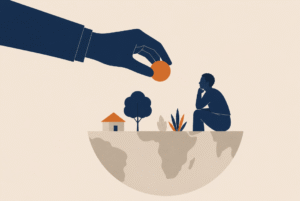
It‘s time to break the taboo around generosity. Too often, we keep our philanthropic actions secret, thinking that they would lose their value if they were shared publicly. But in reality, talking about our donations and commitments is essential to changing social norms. Generosity must become a visible norm, a behaviour that is valued and adopted by many.
Conclusion
At Better Giving, we believe that every gesture counts, but that it’ s together, collectively, that we can have the biggest impact, which is why we encourage you to share your generous actions and start discussions around the importance of effective generosity. Visit our site to find out more about the 🔸10% Pledge and discover how your donations can transform the world.