
How to set up an NGO that makes a difference: a step-by-step guide

Romain Barbe
Founder of Mieux Donner
Reading time: 15 minutes
At Mieux Donner, our primary mission is to help people direct their donations to the most effective charities. But behind this mission lies an even greater ambition: to make a positive impact. And although we do not offer personalised advice on this subject, we wanted to share some resources that we have found useful and that can help people launch high-impact charities or help existing charities radically improve their strategy.
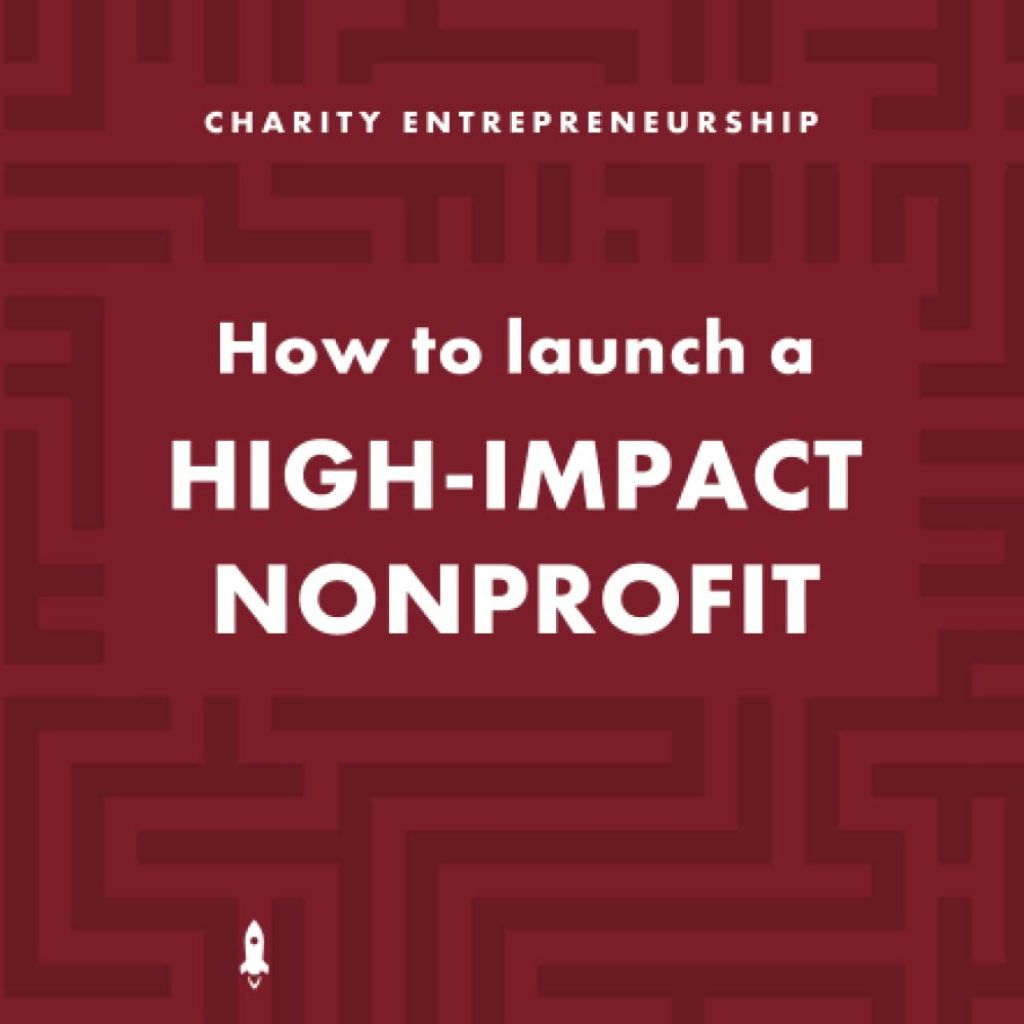
With this in mind, we warmly recommend reading How to Launch a High-Impact Nonprofit, a guide produced by Charity Entrepreneurship, the incubator that supported the creation of Mieux Donner.
Why is this guide worth your attention?
- Are you wondering whether setting up an association could be the right course of action for you?
- Are you already working in an organisation and want to rethink your strategy based on available data?
- Would you like to learn how to make more effective decisions to help others?
It is not only aimed at people interested in social entrepreneurship, but at all morally ambitious individuals who want to devote their time, energy or money to bringing about real, meaningful and lasting change.
We would like to point out that this is a demanding approach, pursued by very few actors whose explicit goal is to help as much as possible. This approach, which is still relatively new, aims to profoundly transform part of the non-profit sector by creating a new segment entirely dedicated to making a big difference.
These resources were not available in French. We therefore offer an audio version of this guide in the form of a podcast, automatically generated by NotebookLM. It contains some repetitions and some translations are imperfect, but it is an excellent introduction.
👉 Listen to the generated French audio summary of the book:
You can download the complete guide in English free of charge from the Charity Entrepreneurship website, and you can also contact us if you have any questions about directing resources to effective organisations.
Finally, if the idea of launching a high-impact association inspires you, you may wish to consider applying to the Ambitious Impact programmes.
The first step takes only 30 minutes and is the best way to find out if this adventure is right for you. Admittedly, the entire process is long, but it is also incredibly rich in learning opportunities.
It’s an experience I recommend 100%. In fact, most of the people who were selected initially thought they didn’t stand a chance… but they did! It’s definitely worth a try.
Establishing a high-impact association: for whom, why, and at what cost?
In this first part of the guide How to Launch a High-Impact Nonprofit, Charity Entrepreneurship explores a fundamental question: is founding an association the right path for me? Far from selling a miracle solution, the guide offers rigorous reflection based on experience supporting more than 50 projects.
Why consider setting up an association?
Creating an organisation can have an extraordinary impact, sometimes far beyond what an individual could achieve alone. When an organisation tackles a neglected cause with an evidence-based strategy, the results can be transformative. Some organisations launched by Charity Entrepreneurship have saved thousands of lives, reduced the suffering of millions of animals, or changed public health policies on a large scale. This is largely because these projects were designed from the outset with high impact ambitions and a rigorous methodology.
The role of founder also brings a certain amount of freedom. By defining the organisation’s strategy, priorities and values yourself, you can focus your efforts directly on what you believe to be most useful. For many, this strategic autonomy reinforces the meaning they derive from their work.
Finally, it is possible to multiply your impact. An effective association allows you to bring together a team, raise funds, and build leverage: one hour of work can trigger impacts far beyond what a single person could achieve.
Limitations and risks to consider
But this path is neither easy nor guaranteed. Most community projects fail to have a real impact. Founding an association requires time, energy, and a high tolerance for uncertainty. You have to be prepared to face criticism, re-evaluate your assumptions, and pivot along the way. It also means dealing with practical challenges such as fundraising, operational management, recruitment, and communication. These challenges are particularly intense in the early months, when results are uncertain and legitimacy has yet to be established.
The risk is not only personal: by directing resources towards an ineffective or poorly targeted structure, you may miss opportunities to make a real difference. That is why the guide emphasises discipline in evaluating your idea and the importance of testing it quickly before investing fully.
We must also bear in mind an often underestimated reality: every euro, every hour, every resource mobilised for a new project is a resource that could have been allocated to other organisations. Some of these organisations have already proven their impact, such as programmes that save lives in an extraordinarily effective way, or could be redirected towards emerging projects that are still uncertain but have immense transformative potential. Committing to a new project means betting that this new structure will ultimately represent a better use of these resources.
This challenge requires humility and a genuine motivation to serve impact above all else. It means being prepared to halt a project if, over time, the data shows that it will not achieve the desired impact. Closing a sub-optimal structure is not a personal failure; it is a logical step when your compass is set on the effectiveness of the good you produce.
Setting up an association may be your best contribution. But to do so, this decision must be based on a clear, demanding and lucid rationale: that of impact first.
Members who have the public interest at heart prefer to close their organisations (or some of their programmes) and transfer funds to where they can make a greater difference. Some organisations are therefore agreeing to take a completely different direction, as did Anima France, formerly Assiettes Végétales, when they realised that their campaign was not the most effective.
Being the right person to found an association
The guide offers a series of considerations to help individuals assess whether this role is right for them. The aim is not to establish an ideal profile, but rather to highlight certain useful qualities: the ability to learn quickly, intellectual flexibility, resilience in the face of difficulties, independence, and long-term motivation. It is not so much initial technical skills that matter as the ability to learn, question, and adapt.
Above all, founding an association should not be seen as the only valid option. Other options can have just as significant an impact: joining an existing high-impact organisation, financially supporting effective projects, or contributing your expertise as a strategic volunteer. The key is to choose a path that aligns with your skills, resources, and risk appetite.
The guide does not seek to convince everyone to take the plunge, but rather to enable those who are considering it to make an informed decision. Founding an association can be one of the most powerful ways to help others, but it is a demanding path that requires clarity, method and commitment.
What tools can be used to make rigorous decisions?
Launching a high-impact organisation requires more than just good intuition. It involves making complex decisions in an uncertain environment, with little data available at the outset. The second part of the guide presents the intellectual and methodological tools that can maximise your chances of success.
Making decisions based on multiple criteria
Using “Meta tools” introduces frameworks, methods and mental reflexes that help individuals think better and therefore act better. These are not execution tools (such as CRM or spreadsheets), but rather conceptual tools. They are ways of structuring one’s thoughts, asking the right questions and taking a step back from one’s intuitions. These “meta tools” help to avoid the cognitive pitfalls that are common in social entrepreneurship: being guided by enthusiasm, placing too much weight on anecdotal data, neglecting orders of magnitude, or ignoring alternatives.
The guide identifies several, such as:
- Counterfactual analysis (what would have happened if I had done nothing?)
- Cost-effectiveness ratios (how much impact does each euro invested produce?)
- Multi-criteria weighted scoresWeighted-factor Model (comparing several options according to different factors)
- The Fermi method (quickly estimating orders of magnitude)
- Decision trees (modelling possible scenarios and their probabilities)
The aim is not to formalise everything, but to gain clarity in crucial decisions, particularly when data is incomplete or time is short. These tools enable faster, more accurate decision-making and make reasoning transparent, which is essential for mobilising support, raising funds or recruiting allies.
The chapter also emphasises that these tools do not replace common sense or intuition: they complement them, helping to structure uncertainty. They are particularly useful when comparing several project ideas, identifying bottlenecks, or prioritising strategic priorities.
The goal is not to have a perfect algorithm, but to make its assumptions explicit, avoid cognitive biases, and make better decisions in the face of uncertainty.
Cultivating rationality in everyday life
The chapter on rationality revisits a key idea of the effective altruism movement: thinking better means acting better. Being rational does not mean being cold or insensitive, but actively seeking to align one’s actions with one’s ethical goals.
This involves getting into the habit of questioning your intuitions, looking for counterexamples, asking for critical feedback, and doing serious research. The guide reminds us that our intuitions evolve over time and that this process of adjustment is healthy. Cultivating this intellectual flexibility is essential for building a learning organisation.
Use a scientific method suited to the field
The guide suggests adopting a pragmatic version of the scientific method. This does not mean conducting randomised experiments in a laboratory, but rather thinking like a researcher: formulating hypotheses, designing simple tests, observing the results, and repeating the process.
In the early months of a project, this means, for example, testing a prototype with beneficiaries, comparing two different approaches, and measuring preliminary indicators. Even imperfect data can help you make better choices. What matters is maintaining a mindset of continuous learning and documenting your actions.
Understanding the approach of effective altruism
Effective altruism is not a closed doctrine, but a methodological framework for amplifying its positive impact. It is based on the idea that good intentions are not enough: we must seek out the most effective interventions for the most serious problems, using a rigorous approach.
The guide presents the fundamental principles of this approach: prioritisation, transparency, scientific rigour and the AAN framework (ampleur, potential for improvement and neglected nature). It also shows that this way of thinking can be applied to a wide variety of fields: health, climate, animal welfare, AI safety, etc. It is not a question of quantifying everything, but of not settling for what “feels good” if we can do much better elsewhere.
Seeking assistance from specialists
A useful reflex is to seek the opinion of outsiders, who can spot mistakes that you cannot see yourself. The guide emphasises the importance of consulting independent specialists, including those outside your immediate circle. This may include researchers, practitioners in the field, or founders of other associations.
Seeking early feedback helps avoid months of misguided effort. This requires being able to take criticism, ask the right questions, and remain open to radical adjustments. It is also a way to gain credibility with future partners or funders.
Structure your days and decisions
Finally, the guide returns to an aspect that is often underestimated: the practical management of daily work. Planning tasks, organising time, following up on decisions, documenting experiments… These elements are crucial to the success of a project, particularly in a context of great uncertainty.
Rather than striving for maximum productivity, the guide recommends flexible discipline: setting aside time for strategic tasks, allowing time for review, and maintaining balance to stay clear-headed and motivated in the long term. Managing mental energy becomes a lever for success in its own right.
Solving the right problems, the right way
Many projects fail not because they are poorly executed, but because they address a poorly defined problem. The chapter on problem-solving emphasises the importance of clearly defining problems before attempting to solve them.
This involves distinguishing symptoms from root causes, clarifying the real objectives of the intervention, and remaining open to the idea that the problem initially identified may not necessarily be the most important one to solve. This is a skill that is developed over time, but also with tools such as cause trees, exploratory interviews and critical reviews.
Stimulate creativity without compromising rigour
Establishing a high-impact organisation does not mean following a single model. It also requires innovation: identifying blind spots, devising original approaches, and combining existing ideas. The chapter on creativity shows that this process can be systematised.
Effective creativity relies on broad exploration followed by rigorous selection. For example, the guide recommends generating a large number of ideas (more than 50 in some cases) without initial judgement, then evaluating them using impact criteria. It also emphasises the importance of feeding your imagination with reading, cross-sector exchanges, or unusual examples.
Think in decades, act today
Long-term planning is another key skill. It is not about setting a ten-year plan in stone, but rather asking the following question: if this project is truly successful, what will it look like in five or ten years? This reflection allows us to anticipate obstacles, define a realistic trajectory, and guide short-term decisions.
The guide recommends setting intermediate milestones, developing scenarios, and remaining aware of growth dynamics. This helps to avoid sacrificing long-term potential for immediate but superficial results.
Analyse cost-effectiveness
The concept of cost-effectiveness is central to the approach advocated by Charity Entrepreneurship. It involves comparing different interventions not on their intention, but on their cost per unit of impact (e.g. cost per life saved, per year of schooling gained, per animal spared).
The chapter shows how to estimate these ratios even with limited data. It emphasises the transparency of assumptions, the importance of orders of magnitude, and the acceptance of uncertainties. This analysis makes it possible to avoid costly and unhelpful projects and to prioritise those with the greatest impact per euro invested.
Measure to progress
Impact measurement is often overlooked or addressed too late. However, it is essential for learning, persuading, and improving. The guide encourages defining simple indicators from the outset, even if they are imperfect, and refining them over time.
This may include surveys, randomised testing, beneficiary feedback, or before-and-after comparisons. What matters is linking this data to concrete decisions: adjusting a programme, abandoning a strategy, or reinforcing an action that works. Measurement thus becomes a living tool, serving to drive impact.
The impact measurement promoted by the book, an approach widely shared by Mieux Donner, is very different from what we may hear on the subject. We have published an analysis (of the myth) of impact measurement in France.
Making the right decisions to lay solid foundations
A high-impact organisation is not built on a single good idea, but on a series of fundamental decisions. This section of the guide helps future founders navigate five key choices: their values, their field of action, their specific idea, their partnership (or lack thereof), and the country of establishment.
Clarify your values to make better choices
The chapter on values encourages us to identify from the outset what really matters to us. An organisation inevitably experiences tensions, dilemmas and uncertainties. Having explicit values helps us to stay aligned in difficult times.
These values may relate to the type of impact sought (saving lives, reducing suffering, preserving the future), the manner of action (prioritising efficiency, transparency, experimentation, etc.), or even the audiences one wishes to serve. The guide recommends formulating them in concrete terms and bringing them to life in strategic choices: which causes to choose, which compromises to accept, which priorities to define.
Selecting an area of action methodically
Many projects fail not because they are poorly executed, but because they were launched in areas that are already saturated or have little potential for improvement. The guide devotes a chapter to the importance of choosing the right area of action. It proposes a simple framework: focus on areas that are important, neglected and solvable.
This may include global health, animal welfare, climate change, or other emerging causes such as artificial intelligence safety. The important thing is to analyse the available data, cross-reference multiple assessment sources (GiveWell, Founders Pledge, etc.), and avoid impulsive or overly emotional choices.
This chapter also encourages us to consider what we are willing to learn: an important field may be worth the effort of learning, even if we are not familiar with it at first.
To enable individuals to support the most effective charities, we use similar selection principles. You can view these on our dedicated page.
Finding a good idea... or testing several
Once the cause has been chosen, it is still necessary to select an idea for action. The guide recommends avoiding getting too attached to a single idea too quickly, especially if it comes from personal intuition. It is better to generate several options, test them quickly, and compare them rigorously.
The chapter details criteria for evaluating a project idea: potential impact, cost per unit of impact, scalability, local feasibility, alignment with the best available data. The aim is to move away from the idea of a “passion project” and adopt a more experimental approach, without losing sight of the mission.
To partner or not to partner: the role of the co-founder
Starting an association alone or with a partner is a life-changing decision. This chapter discusses the advantages and risks of a co-founding partnership. A good duo can bring complementarity, moral support and diversity of views. But a bad partnership can slow down the project, generate conflicts or block key decisions.
The guide recommends assessing compatibility in terms of values, pace, working style and strategic vision. It also suggests practical tools: trial periods, explicit division of roles, exit agreements. It is not symmetry that counts, but trust, communication and a shared desire to maximise impact.
Choosing the country of intervention: a decision with significant leverage
The location where action is taken can radically change the effectiveness of an intervention. The same project, in a different context, can cost ten times more for the same effect. The guide encourages choosing a country where the cost-impact ratio is high, where the political environment allows for implementation, and where needs are significant but poorly met.
It is not a question of choosing where we already have contacts or where we speak the language, but where the marginal impact will be greatest. Tools such as the Human Development Index, the coverage rate of existing interventions, or the ease of administrative implementation can guide this choice. In some cases, a local partnership is the best route. In others, a transnational intervention (such as an advocacy campaign or digital action) can avoid certain barriers.
Building momentum around your project
The impact of an association does not depend solely on its founding idea. It also depends on the ability of its founder to get other people on board: employees, funders, partners, beneficiaries. This last part of the guide highlights the cross-cutting skills that enable a project to come to life.
Cultivating genuine relational intelligence
The chapter on human relations offers a simple and pragmatic approach: you don’t need to be extroverted or charismatic to surround yourself with the right people. But it is crucial to know how to listen, make clear requests, give useful feedback, and above all, build relationships based on trust and reciprocity.
In the early months, your ability to interact with others will be one of the driving forces behind the project. You will need to convince funders, solicit feedback, and recruit allies. The guide encourages you to cultivate an attitude of openness, nurture relationships, and, if necessary, learn interpersonal communication skills.
Writing to be read and understood
Being able to write well is not a luxury for an association founder, it is a strategic skill. Whether it is for an email, a funding application, a home page or an impact description, clarity and persuasion are extremely important.
The guide offers simple principles: get straight to the point, avoid jargon, think about the reader first and foremost. It reminds us that good projects sometimes fail because they have not been explained properly. Effective writing greatly increases your chances of raising funds, attracting support and making people want to join you.
Creating a credible online image with limited resources
You don’t need a communications team or a £10,000 website to look professional. The chapter The 90/10 of looking good online shows that a few key elements, executed well, are enough to convey a professional image: a clear website, a clean email address, a well-written “About” page, and a few consistent visuals.
The guide emphasises the importance of not appearing amateurish, even if you are just starting out. A polished online presence makes you more credible in the eyes of funders, partners, or journalists. This is not marketing in the traditional sense: it is a tool for building trust.
Learning to slow down to see further
The chapter on wisdom may seem surprising in a guide that is very action-oriented. But it reminds us of an essential point: making better decisions means creating space to think. This involves rest, meditation and taking a step back. An impact project is a marathon, not a sprint. Taking care of your mental energy allows you to be more lucid, more strategic, and more resilient.
The guide cites several useful practices: keeping a journal, taking regular breaks, talking with peers, mentoring, etc. Wisdom here does not refer to vague spirituality, but rather a form of strategic discernment.
Work well, not just a lot
It is not enough to work hard. You have to work on the right things, at the right time, using the right methods. This chapter provides very practical advice: prioritise high-impact tasks, avoid distractions, alternate between concentration and logistics, and regularly review your schedule.
The goal is to build a sustainable and effective rhythm, not to exhaust yourself trying to prove your commitment. An effective association needs founders who can last, not burn out after six months.
Surround yourself with financial resources to support the project
Finally, the last chapter addresses the role of money, not as an end in itself but as a tool for impact. It encourages us to consider financial resources in a clear-headed and strategic manner. It is legitimate to seek a salary, build up reserves, or raise ambitious funds.
The guide provides advice on interacting with funders, building sound budgets and anticipating long-term needs. It also encourages an ethical approach: transparency, intelligent frugality and alignment with the mission. Having financial ambition is not incompatible with an altruistic approach – provided that resources are used wisely.
Operating an association with rigour and sustainability
Starting an association is a founding act. But managing it effectively, responsibly and sustainably is another challenge. This last part of the guide offers a toolkit for structuring your organisation without losing sight of its impact.
Being legally compliant without drowning
The chapter on legal compliance addresses a tension that is well known to founders: doing what is necessary from an administrative standpoint without getting lost or going overboard. The guide emphasises the importance of compliance (articles of association, registration, tax obligations, compliance with labour law, etc.), but recommends an approach that is tailored to the size and stage of development of the organisation.
The goal is not to over-engineer a still-young structure, but to ensure that the organisation is in good standing, protects its beneficiaries, donors and team, and can grow without legal obstacles. The chapter offers standard resources (statutes, internal policy templates, points to watch out for), but above all encourages the adoption of a culture of vigilance without bureaucratisation.
Manage your finances responsibly and transparently
He also emphasises the importance of transparency: not only to comply with legal obligations, but also to gain the trust of donors, partners and beneficiaries. The chapter also addresses topics that are often taboo: should you pay yourself a salary? At what level? How should surpluses or deficits be managed? What type of audit should be planned? How can conflicts of interest be avoided? The aim is to professionalise financial management without sacrificing agility.
Building and maintaining a team
A project does not rely solely on one or two individuals: it takes off when a cohesive and complementary team is established. This final chapter offers a realistic approach to team management in a growing organisation.
It deals in particular with role definition, progressive delegation, organisational culture and internal communication. It emphasises the importance of recruiting slowly but rigorously, and creating an environment that supports commitment, rigour and well-being.
Team management is also a skill that can be learned. The guide offers practical tools: regular meetings, structured feedback, clarification of expectations, collaborative planning. Finally, it addresses the issue of conflicts: avoiding them is unrealistic, but dealing with them maturely can strengthen cohesion.
What we remember at Mieux Donner
At Mieux Donner, we understand that simply wanting to help is not enough: you have to figure out how best to help if you want to have a significant impact. Founding an effective organisation can be one of the most powerful ways to achieve this, but it requires rigour, clarity and ethical ambition.
The guide How to Launch a High-Impact Nonprofit is not just a manual for social entrepreneurs: it is a valuable resource for anyone who wants to make a real difference, with method and courage. It offers concrete tools, clear criteria, and a structured framework for making better decisions, whether you are starting from scratch or looking to improve an existing organisation.
We hope that this reading will fuel your thoughts and perhaps your commitment. Because the impact you can have depends more on your approach than on your intentions, and choosing a demanding but effective path is sometimes the most beautiful act of altruism.
You can explore other articles on our website to discover the associations we recommend, or learn more about decision-making tools. And if you think this guide could inspire someone you know, feel free to share it.
Tags : English Article