Why can some lives be changed for a few euros?
Doing Good, Better: 5 Keys for More Effective Generosity
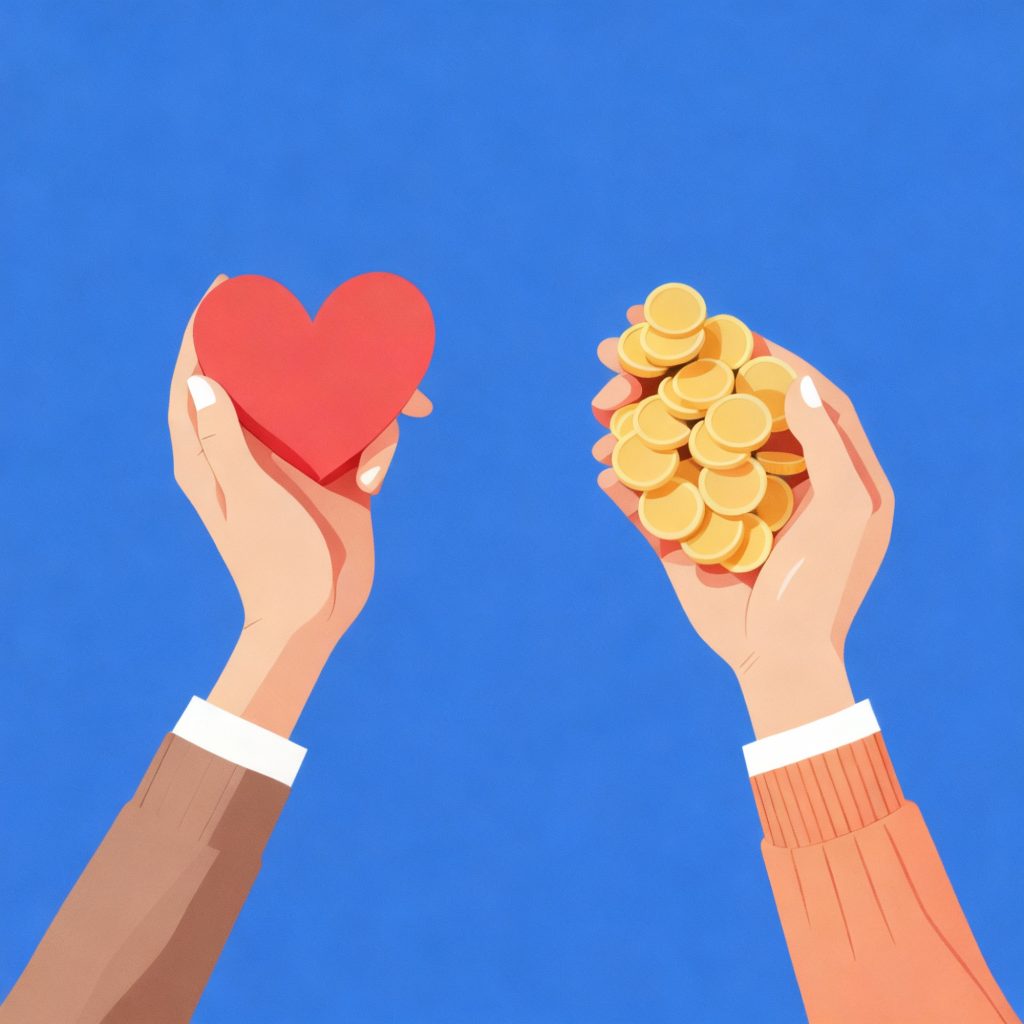
We often think that generosity is about intentions. What if it was also about results? This is the question William MacAskill poses in his book Doing Good, Better, dedicated to a movement still relatively unknown in France: effective altruism.
Its principle is simple: if we want to help, let’s do it where our impact is greatest. This involves going beyond the obvious, questioning our intuitions, and sometimes exploring neglected or counter-intuitive causes with high transformative potential.
This book challenges without guilt. It invites a step back, to measure the real effect of our donations, and to give not only with the heart but also discerningly.
We offer a series of 5 thematic summaries to discover the book’s ideas, illustrated with concrete examples, and better understand how they can change our way of acting.
Health and poverty are universal issues. But their solutions do not all have the same cost or the same effect. In Doing Good Better, William MacAskill shows that certain gestures, simply, can have spectacular effects if we are willing to turn our eyes to the most neglected areas.
The same donation, impact multiplied by 100
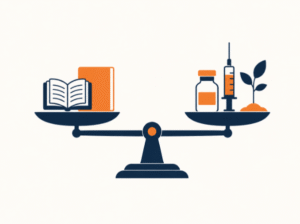
The cost differences between interventions are sometimes dizzying. The book compares two cases: training a guide dog for a blind person, which costs around 40,000 euros in a developed country, and a cataract operation, which restores sight for only 80 euros in certain regions of the world. In other words, even if the effects are not strictly comparable, one is offering partial support and the other a lasting cure, the impact of the same budget can be up to 500 times greater in some contexts.
William MacAskill explains that, depending on the economic context in which you operate, the impact of a donation can vary by a ratio of 1 to 100. What he calls an “effect multiplier” is not so much the method as the relative power of money: the same amount can radically transform the life of a family in extreme poverty, whereas it would only have a marginal effect in a rich country. For example, a cash transfer can double the income of a household in Kenya, whereas it would only cover a recurring expense in a developed country.
This intuitively allows us to grasp the idea that our donations can have an amplified effect, not by acting harder, but by choosing better where and how to act.
This reasoning does not deny local needs, but highlights the potential of a place where it is most powerful.
These interventions are all the more strategic as they target immense needs that are often invisible. Every day, around 13,000 children die from preventable causes. It is a silent tragedy, but also a field for immense action for anyone who wants to change things wisely.
Another key point: these interventions are measurable. Public health has robust indicators such as DALYs (disability-adjusted life years), mortality rate, or long-term earnings. It is a field where data allows you to objectively measure the impact.
Two striking examples from the book
Example 1: Deworming
The first example is deworming, popularized by the work of Michael Kremer, Nobel Prize in Economics. Initially, he sought to identify the best ways to improve education in low-income countries. He tested the classic avenues: funding uniforms, building classrooms, paying more teachers, providing textbooks… But the results were often disappointing.
It was by testing a very different intervention, a simple antiparasitic treatment, that he found a spectacular and unexpected effect: up to a 25% reduction in school absents, one school day gained for only five cents invested, and even measurable economic benefits twenty years later.
What was meant to be a health program thus became one of the most effective educational policy ever tested.
Example 2: Cataract Surgery
The second example is one of the most striking stories in Doing Good Better. It highlights the transformative power of a simple and inexpensive intervention: cataract surgery. This intervention restored sight to nearly 900,000 people.
Mathieu Ricard, in the preface to the book, recounts the true story of a man in Nepal, almost blind, living in extreme isolation and distress. To the point where he considered ending his life. Thanks to a surgical procedure costing around 80 euros, conducted by Dr. Sanduk Ruit and his team, he regained his sight.
The day after the operation, he danced with joy in front of the doctor and the villagers. He could see his wife’s face again, the mountains, the birds. It was not just a comfort: it was a return to life, dignity, and human connection.
Why are these interventions underfunded?
They are not “sexy”: no cutting-edge technology, no spectacular storytelling. Intestinal worms or rural ophthalmology are rarely discussed. And yet, that’s where a huge potential impact lies.
They are distant. Our cognitive biases favor proximity, visibility, personal connection. These interventions, often conducted in Africa or Asia, suffer from not being within our daily field of vision.
Finally, they contradict our intuitions. We often think that helping here is easier, more obvious. But as MacAskill shows, what seems simple is not always what transforms the most lives.
What it changes for us
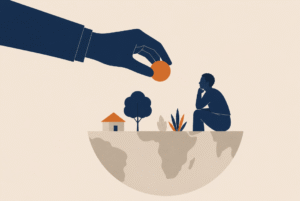
This invites a new understanding of generosity. A 50-euro donation will not have the same impact depending on how it is used. It’s not about ranking lives, but rather recognizing each at their true worth and accepting that some actions have a much greater transformative power.
To find your way, organizations like GiveWell or Mieux Donner in France offer accessible analyses. The book encourages comparison, not to make you feel guilty, but to better guide you
This also requires accepting a certain discomfort. Going against your instincts, choosing effectiveness over familiarity, is not always easy. But it’s a deeply humanistic approach.
A new ethics of giving?
Redefining “effectiveness” does not mean giving in to a cold or accountant-like logic. It’s about taking your intention to help seriously. It’s about giving yourself the means to have a real impact.
Doing good is not just about acting. It’s acting where the need is greatest, where your action is the most transformative.
And now?