
The happiest countries and findings from the World Happiness Report 2026
Finland, Iceland, Denmark lead the 2026 ranking. Full list of 147 countries, key findings on social media and wellbeing, and how your donations create happiness.
Par Cyril Cavichioli
Project Manager
Reading time: 3 min.
While we readily recognise that giving can improve the state of the world, it is not certain a priori that this is preferable to investing in order to give better. Rather than answering this question in a universal way, we will ask ourselves how to give well according to our situation and skills. We will first look at the reasons why it is possible to start giving today, and then at the conditions that will enable you to give over time.
One good reason to start giving to effective charities today is to make a definite impact rather than an uncertain one. Without denying that the investment can be beneficial in the long term, this requires good knowledge and real skills. So it makes more sense to donate to effective charities before you have the skills to make effective and ethical investments.
Having a safety capital is essential for giving. It is generally advisable to have the equivalent of six months’ salary set aside, which will enable you to deal with unforeseen difficulties. The amount you need to set aside can be estimated on the basis of the time it will take you to find a new job, bearing in mind that it is better to have more than less.
It is perfectly possible to give whatever our situation, but it is important to look for a virtuous profession that will enable us to have sufficient income to give. While giving is always a generous act, giving more than we can afford may not be as effective as we would like, because our resources are also necessary for our security and therefore our ability to give.
Reducing expenditure is a good way of creating monetary value. For example, buying raw food and paying a reasonable rent are essential to better giving and saving. But it’s also important to buy virtuous, ethically produced consumer goods, because being consistent with yourself is important in the long term.
It’s important to feel ready before you give, so that you don’t give to make a guilty conscience go away. Starting by giving small amounts can be a good way to get started. You can then increase the amount when you feel ready.
While it seems preferable to give today rather than tomorrow, we also believe that a balance between giving and accumulating is necessary. It would therefore be sensible to set aside the equivalent of six months’ income before starting to make small donations each month, aiming to increase them over time. Those who would like to invest in order to give more can do so, but this requires learning to analyse market fluctuations and the altruistic impact of companies. Giving remains the simplest and most effective way of making an impact outside your career.

Finland, Iceland, Denmark lead the 2026 ranking. Full list of 147 countries, key findings on social media and wellbeing, and how your donations create happiness.


Human life is precious. It is natural to want to mobilise all our resources to save a life, even if it only prolongs a life by a week. But what happens when other people are also in danger, and our resources are not enough to help them all? As a society, we face practical limits that force us to make difficult decisions.

It’s easy to feel discouraged by the dramatic retreat of glaciers in the Alps and the scale of climate change can easily leave us feeling powerless. This article will equip you with the knowledge to take meaningful climate action, in both your personal life and through your charitable donations.
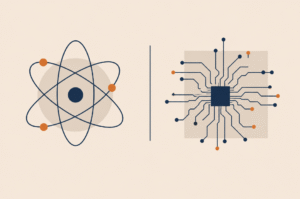
€8,920 collected through Mieux Donner, €746,000 in total with Effektiv Spenden: here is how the Safeguarding the Future Fund allocated its H2 2025 donations across three projects in nuclear security and AI safety.

The Smart Buys Alliance brings together government agencies, research centres and philanthropic organisations to produce and disseminate lists of the most cost-effective development interventions. An overview of the initiative, its methodology and its key areas of focus.
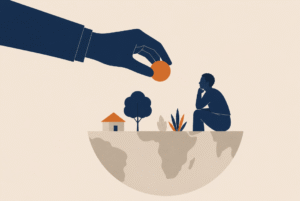
Is deciding from London or Paris who needs help and how a form of colonialism? This article examines what the critique gets right, where it goes wrong, and what effective giving does concretely differently — including its own blind spots.