Assessing the climate impact of donations: between modelling and uncertainty
Assessing the climate impact of donations: between modelling and uncertainty At Mieux Donner, we sometimes use a calculation that is strikingly simple: “€1 = 1
23 Janvier 2025, Temps de lecture : 2 min.
The film One Life tells the true story of Nicholas Winton, who helped save 667 children from Czechoslovakia before the German invasion of 1940. The story highlights not only Winton’s courageous actions, but also those of the many people who worked behind the scenes to make these rescues possible.
On the ground, men and women took immense risks to organise the children’s departure. Others have raised the necessary funds to finance repatriation operations. Some families opened their doors and took in one or more children, offering a safe haven away from danger. Each of these gestures, however small, was an act of resistance against the Nazi oppressors, but above all an act of kindness.
Nicholas Winton took few personal risks. He continued to work and drew little or nothing from his own fortune to finance his work. Compared to the people on the ground or those who took up arms in the resistance, his level of danger was much lower. Yet his role was crucial, as was that of all those who contributed, directly or indirectly, to saving those innocent lives.
Today, we are not facing the advance of Waffen-SS troops, but children are still dying from preventable diseases. We could save more of them by volunteering for the associations that have the greatest impact, by organising collections or making donations.
Watching this film, it’s easy to think that you’d like to be one of those heroes who saved lives. But in reality, statistically, we’d probably be among the millions of Brits who read about it in the papers, thought it was wonderful and then moved on without taking any action.
It’s easy to get carried away by the heroic idea of being on the side of the resistance in the past. In reality, the majority of us often find ourselves in the passive mass – like the millions of Britons who read Winton’s articles in the newspapers and moved on to the next page. But every act of generosity, every donation directed to the best charity, is an action that can save lives today, just as the heroes of yesteryear changed the destinies of the children they saved.
Romain Barbe
Romain is co-founder and co-director of Mieux Donner. You can contact him at romain@mieuxdonner.org or by using the contact form.

Assessing the climate impact of donations: between modelling and uncertainty At Mieux Donner, we sometimes use a calculation that is strikingly simple: “€1 = 1

When Greenpeace celebrated a court ruling against Golden Rice, scientists warned of thousands of preventable deaths. What this case reveals about evidence-based giving.
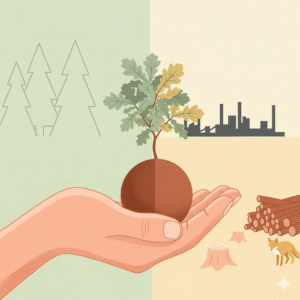
You want to donate to support biodiversity. You’re thinking about a rewilding project near you. However, in some cases, these local restoration efforts can do five times more harm to global biodiversity than good. So how can you avoid causing harm, and where will your donation have the greatest impact on the planet?
Finland, Iceland, Denmark lead the 2026 ranking. Full list of 147 countries, key findings on social media and wellbeing, and how your donations create happiness.
Our tips for communicating about a fundraising campaign Mieux Donner offers you a free tool to collect donations for the most effective charities of your

Giving brings relief… and can be ‘cleansing’. Understand moral licence, the biases of giving, and a simple method for achieving real and measurable impact.