
85% of carbon offsets don’t work - here’s where to donate instead
It’s better to decarbonise the future, not just offset the past.


Jennifer Stretton
Co-founder and volunteer
Reading time: 14 min.
Despite our best efforts, many parts of modern life are still hard, or even impossible, to fully decarbonise. Even those of us who live simply and consciously still produce some unavoidable emissions. So once we’ve reduced our footprint as much as we can, what’s the next step? Is it possible to reach net zero – or even go beyond, and have a positive impact on the climate? This article explores why carbon offsetting often falls short, why real change requires both lifestyle shifts and systemic action, and which charities are most effective in driving climate impact.
Is carbon offsetting the answer?
The idea of buying back the emissions we produce is certainly appealing—it offers a simple way to ease our guilt. But is it truly effective? Unfortunately, the reality is more complicated.
Studies show that 85%-90% of carbon offset projects fail to deliver real results [1].
Even 40% of UN carbon credits don’t hold up under scrutiny [2].
There is no requirement for offsets to be independently certified leading to their effectiveness to be overstated and evaluated on limited evidence [3].
Even certified offsets have received a lot of criticism. For instance, the investigative journalism organization ProPublica looked into a large sample of forest conservation offset projects, and came to the following conclusion [3b] :“In case after case, I found that carbon credits hadn’t offset the amount of pollution they were supposed to, or they had brought gains that were quickly reversed or that couldn’t be accurately measured to begin with. Ultimately, the polluters got a guilt-free pass to keep emitting CO₂, but the forest preservation that was supposed to balance the ledger either never came or didn’t last.”
Why don’t most carbon offsets actually work?
For a carbon offset to truly cancel out emissions, it has to meet two key conditions: it must be counterfactual and additional. Unfortunately, many offsets fail on both counts.
1. Counterfactual – “What would have happened without the project?”
Offsets only make sense if they lead to emissions cuts that wouldn’t have happened otherwise. But that’s really hard to prove.
Take forest conservation as an example:
It only reduces emissions if the trees were actually going to be cut down. But in many cases, there’s no real proof that was going to happen. Certifiers often rely on shaky assumptions, and developers have strong incentives to exaggerate the project’s impact. So, a lot of offsets are issued to protect forests that wouldn’t have been cut down anyway.
2. Additionality – “Would the project have happened without offset money?”
Let’s say someone builds a wind farm…
In some places, wind power is already profitable. That means the wind farm would’ve been built no matter what. Selling offsets in this case doesn’t actually fund anything new—it just puts a “green” label on something that was happening anyway.
But in other places, a wind farm might not be financially viable unless it can also sell carbon offsets. In that case, the offsets actually help the project happen—and that’s when they’re truly additional.
The problem is, it’s often hard to tell which situation you’re in. Developers want to sell offsets, so they might claim the money was essential to fund their project – even when it wasn’t. And certifiers usually can’t fully verify that claim.
Beyond greenwashing - how to donate where it really makes a difference
Although the majority of carbon offsets are ineffective, it doesn’t mean that there’s nothing we can do. In fact there are some highly effective charities working to mitigate climate change, it’s just important to choose the right ones.
In comparison to traditional carbon offsets, which have little independent oversight, the world’s most effective climate charities have been rigorously vetted by climate researchers.
The best charities are 100 more effective than the average. That means that while an average charity might save 1 ton of carbon emissions for every euro you donate, the top charities can save 100 tons with the same donation.
How do we find these super effective charities?
At Mieux Donner, we collaborate with climate experts at Giving Green to identify the most cost-effective charities working on climate change – those that prevent the most emissions per euro donated.
Our recommendations are completely independant and based on thousands of hours of research every year.
Our top recommended climate charities for 2025 are Clean Air Task Force and Good Food Institute
We are independently funded and don’t take a cut of any donations to the charities we recommend.
We recommend the Clean Air Task Force and Good Food Institute simply because the best available evidence shows they are currently the most effective climate charities to donate to.
Top Charity Recommendation: Clean Air Task Force
Who is the Clean Air Task Force?
Clean Air Task Force (CATF) is a non-profit climate protection organisation that promotes policy and technology changes to reduce greenhouse gas emissions from electricity, oil and gas production, industry, and transportation. Targeting fossil fuels is exceptionally important to mitigate climate change because fossil fuels still account for over 85% of the world’s primary energy consumption [4].
Top Rated by independent evaluators: Clean Air Task Force has been ranked as one of the world’s most effective climate charities since 2020.
Maximizing Impact: Every €1 donated helps prevent 1 ton of carbon emissions – 25x more effective than most gold-standard offsets [4].
Proven Results: CATF drives policy reform, scientific advocacy, and clean energy innovation to combat climate change.
CATF’s pushes for ambitious climate policies
2024: Helped establish EU methane regulations on imported fossil fuels which will reduce the equivalent emissions of Germany every single year. [5]
2022: Advised on clean energy tax credits in the U.S. Inflation Reduction Act. [6]
2021: Played a key role in the Global Methane Pledge, securing commitments from 100+ countries to reduce methane emissions by 30% by 2030. [6]
2020: Secured $125 billion in U.S. federal funding for climate technologies. [6]
1996: Led efforts to cut coal-fired power plant emissions in the U.S. by 70%. [6]
CATF is pioneering advancements in renewable technology
CATF is pioneering next generation renewable energy including fusion energy, advanced nuclear and most importantly super-hot rock geothermal power.
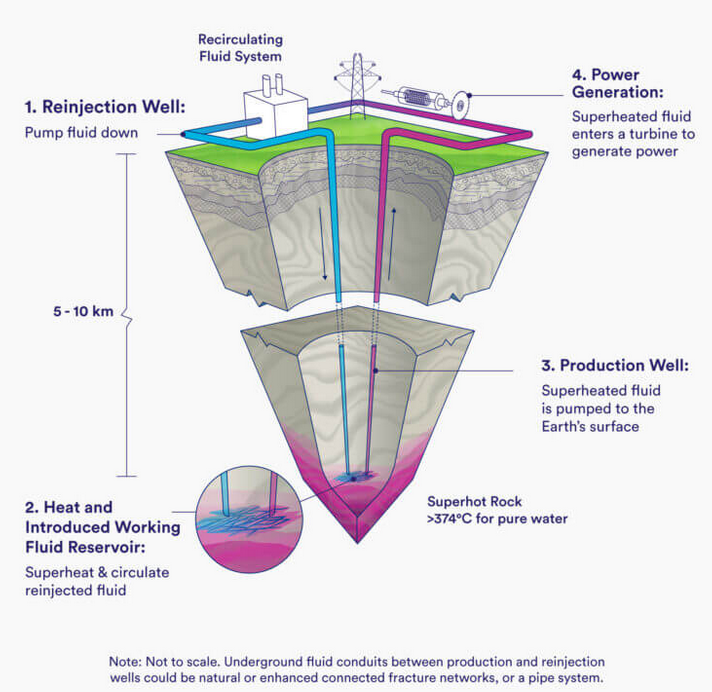
Super hot rock geothermal is one of the most promising future energy sources [7]:
Similar to traditional geothermal, SHR creates electricity by using steam produced by water heated by the temperature of the earth to drive turbines.
Traditionally geothermal power has only been possible in a few countries on earth, such as Iceland, that have naturally heated reservoirs of water near the surface.
However, thanks to advances in drilling technology, we are now able to drill much deeper into the earth, unlocking many areas of the world for geothermal energy.
Super hot rock geothermal involves drilling up to 15km deep to heat water to up to 400.C
This is capable of producing 5-10 times the megawatt (MW) output of a typical commercial geothermal well.
Super hot rock technology is a game changer for clean energy. In 2024, geothermal supplied less than 1% of global energy demand. However, as super hot rock technology becomes viable, it’s estimated that geothermal could meet 15% of global energy demand growth by 2050. [8]
Why your donations to CATF matter
Philanthropic support for geothermal energy can play a critical role in accelerating the development of next-generation technologies like super hot rock geothermal, which have the potential to provide reliable, clean, 24/7 power and complement wind and solar on the path to decarbonization. Unlike solar and wind, geothermal has struggled to attract private investment due to its high upfront costs and project risks, and even public funding for geothermal research lags behind other clean energy sources – especially when compared to its potential as a stable baseload power source, similar to nuclear.
Philanthropy can help fill this gap by funding policy work, early-stage research, and de-risking efforts that reduce barriers for companies, unlock traditional financing, and accelerate cost declines. In short, individual donations can help geothermal energy reach its potential far faster than relying on market forces alone.

Donate 100 euros and mitigate 100 tons of carbon [9]
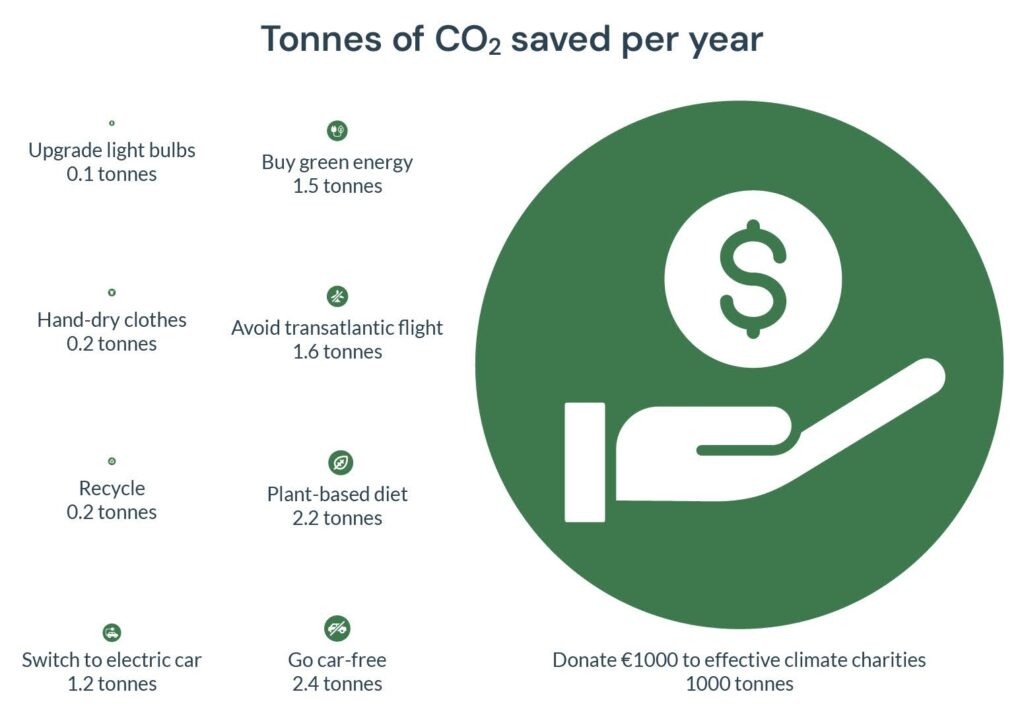
= more emissions than 125 transatlantic flights [10].
Top Charity Recommendation: The Good Food Institute
Who is The Good Food Institute?
The Good Food Institute (GFI) promotes plant-based, fermentation-derived, and cultivated meat alternatives. Their goal is to make alternative proteins as tasty, affordable, and available as conventional meat. This is important because livestock farming contributes to 20% of global greenhouse gas emissions [11], making it a major driver of climate change.
Top Rated by independent evaluators: GFI has been recognised by leading independent charity evaluators, Giving Green and Founders Pledge as one of the most effective organizations fighting climate change.
Maximizing Impact: 100 euros donated to GFI avoids 33 tons of carbon emissions [12] = approximately equivalent to 20 transatlantic flights [13]
Why are animal products so bad for the climate?
Meat production contributes significantly to greenhouse gas emissions due to land use changes, animal digestion, and fertilizer use.
Livestock farming contributes to 20% of global greenhouse gas emissions [12]
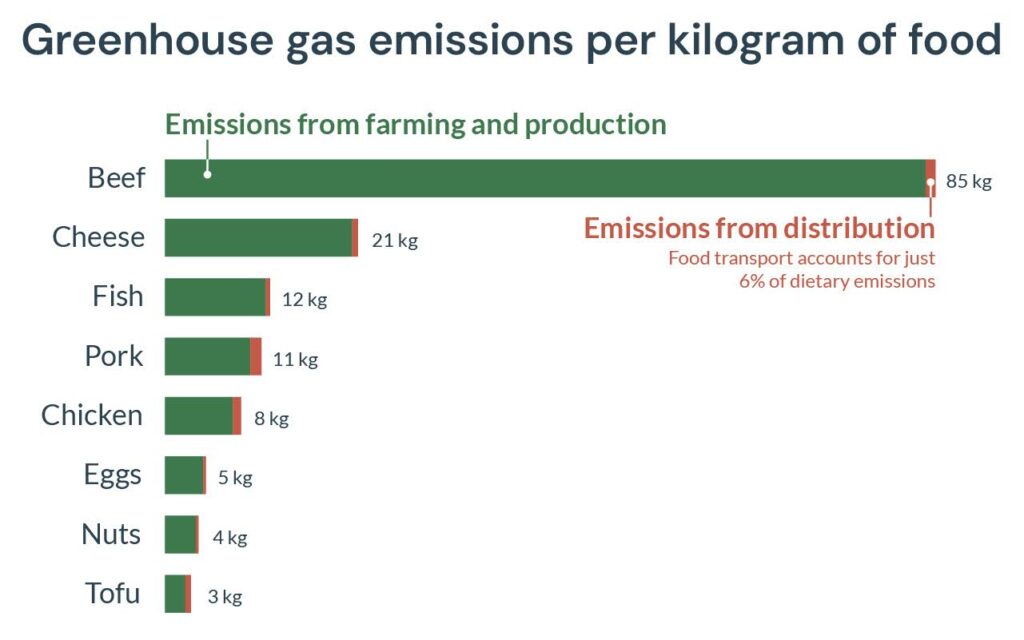
There are massive differences in the GHG emissions of different foods: producing a kilogram of beef emits 60 kilograms of greenhouse gases (CO2-equivalents). In contrast, peas emit just 1 kilogram per kg. [14]
Overall, animal-based foods tend to have a higher footprint than plant-based. Lamb and cheese both emit more than 20 kilograms of CO2-equivalents per kilogram. Poultry and pork have lower footprints but are still higher than most plant-based foods, at 6 and 7 kg CO2-equivalents, respectively. [14]
But isn’t it better to eat local meat than plant based alternatives shipped from far away?
What you eat is much more important than where it’s from
It’s a common myth that a vegan diet is worse for the environment than eating locally sourced meat, often due to concerns about transport emissions and deforestation linked to plant-based foods, especially soy. But there are a few important points to consider:
Over 96% of soy produced in South America is actually used for animal feed or turned into vegetable oil, not for direct human consumption. [15]
Transport makes up only a small fraction of a food product’s total emissions. One EU-wide study found that food transport accounted for just 6% of dietary emissions, while meat, dairy, and eggs were responsible for 83%. [14]
A study published in Environmental Science & Technology by Christopher Weber and Scott Matthews (2008) explored the climate impact of both food transport (“food miles”) and dietary choices in U.S. households. Their research found that simply replacing less than one day’s worth of beef and dairy calories each week with chicken, fish, eggs, or plant-based alternatives would cut greenhouse gas emissions more than switching to an entirely locally sourced diet.
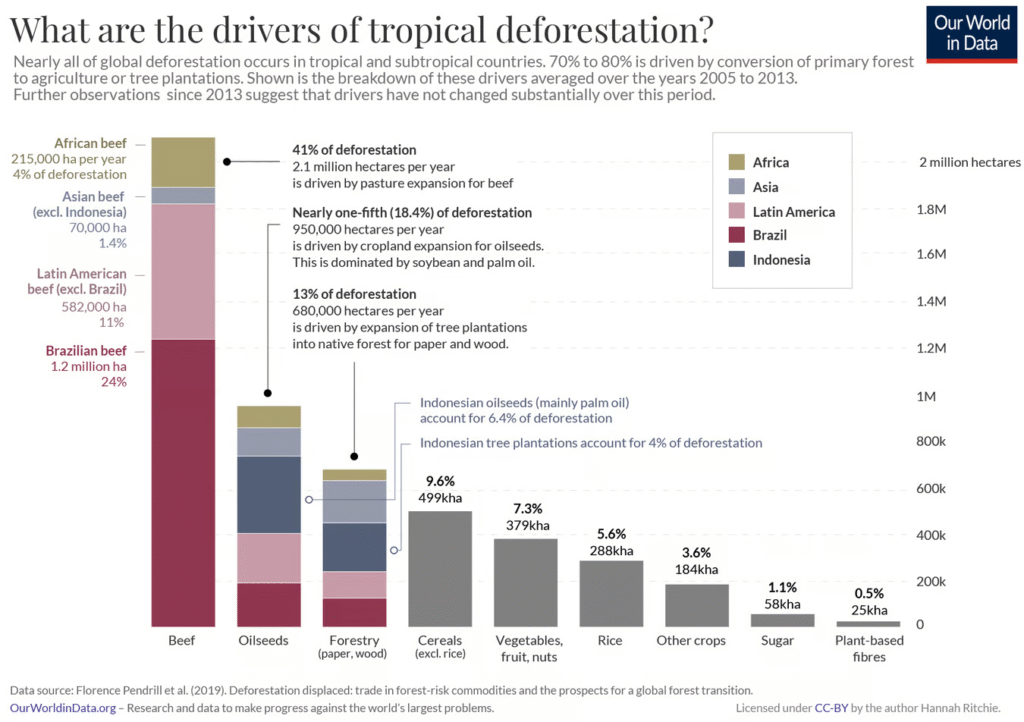
41% of tropical deforestation is a direct result of beef production. [16]
Why your donations to Good Food Institute can help transition the world towards a plant based diet
Despite decades of vegan advocacy, global meat consumption has tripled over the past 50 years [17]. Changing individual eating habits is notoriously difficult, which is why developing plant-based and cultivated alternatives offers one of the most practical pathways to reducing meat consumption.
We recommend the Good Food Institute (GFI) because of its strong track record in advancing alternative proteins — and 2024 was no exception. GFI helped secure a $100 million partnership with the Bezos Earth Fund to establish three global alternative protein research centers, worked with Singapore’s Islamic council to pave the way for cultivated meat to be certified halal, and expanded its global reach by opening a new office in Japan. GFI also continues to unlock millions in public funding for alternative protein innovation, push for alternative proteins to be recognized as national priorities, and challenge cultivated meat bans across Europe and the U.S [18].
100 euros donated to GFI avoids 33 tons of carbon emissions [19] = approximately equivalent to 20 transatlantic flights [20]
FAQs
But what about lifestyle choices? Surely they matter too?
If you were to follow the top three most effective lifestyle choices and you gave up your car, switched to a plant based diet and didn’t take a transatlantic flight, you would save approximately 6.2 tons of carbon per year. All of these actions are great initiatives and set a positive example for a better future. However, we need to couple lifestyle change with systemic change if we are to make a difference that matches the scale of the climate crisis. By far the biggest levers we have to enact systemic change are voting and donating to climate charities.
You said that 85% of climate offsets are ineffective, what about the other 15% - should I consider donations to them?
It is much better to decarbonise the future, than it is to offset the past. Although some carbon offsets do ‘work’ – they still aren’t the most cost effective way for you to reduce your emissions. We estimate that high-impact climate donation opportunities in policy advocacy and technology advancement, such as Clean Air Task Force and Good Food Institute are an order of magnitude more effective than the best carbon offsets. If you own a business that has philanthropic restrictions, we recommend funding catalytic carbon removal technologies, and purchasing high-quality carbon offsets only if the business is constrained to net-net accounting. If this applies to you, we are able to recommend the best available carbon offset options.
I own a company and would like advice on corporate sustainability
We offer free advice to companies looking to develop effective climate action plans. Thanks to independent funding from philanthropists, we’re able to provide this support at no cost. Our mission is to help reduce emissions as much as possible by raising awareness of the most impactful actions individuals and businesses can take for the climate.
Our work with companies includes; donation advice, impact measurement, presentations for staff and customers, assistance with writing sustainability policy and marketing.
I finally feel confident that we’re making a real difference. Knowing exactly what steps to take and how to align our business with climate action has been a game-changer.
Sophie Nolan, Founder of Sidetracked Adventure
Why should I trust your recommendations?
Our climate recommendations are based on the research of our partners at Giving Green. Their research team is composed of experts in climate, policy, and impact evaluation. They spend thousands of hours each year assessing climate impact strategies and finding organizations that are making a difference.
How does Giving Green choose its top charity recommendations?
Giving Green follows a five-step research process: identifying and assessing impact strategies, longlisting organizations, evaluating funding opportunities, and publishing recommendations. They use a mix of metrics and heuristics to guide their evaluations. An overview of the process is available on their How It Works page, with more details on the full research process.
How often do you update your charity recommendations?
We update our charity recommendations once every year in line with when the latest research is released by Giving Green.
I’m interested in a specific organization; have you or Giving Green assessed it?
We don’t disclose all of the organisations we assess. Instead of highlighting those not recommended, we focus on advocating for the most impactful ones. That said, we have lots of experience of
Notes and references
[1] 85% figure: How additional is the Clean Development Mechanism?
90% figure: 90% of carbon capture projects fail our criteria – but why? (Compensate) [Accessed 07/04/2025]
[2] Is the UN really climate neutral? No. (The New Humanitarian) [Accessed 07/04/2025]
[3] Overview of the voluntary carbon market (Giving Green) [Accessed 07/04/2025]
[3b] ProPublica enquiry on Carbon Offsets
[4] Clean Air Task Force (Mieux Donner) [Accessed 07/04/2025]
[6] Our History and Impact (Clean Air Task Force [Accessed 15/05/2025]
[7] Superhot rock geothermal (Clean Air Task Force [Accessed 15/05/2025]
[8] The future of geothermal energy (International Energy Agency)
[9] Rationale for our estimation of 1 ton of carbon mitigated per euro donated to Clean Air Task Force (CATF).
While it’s difficult to put a number on tons of carbon avoided as a result of policy work, the most rigorous available evaluation of CATF gives us confidence that 1 ton of carbon avoided per euro spent is conservative, and not an overestimation of their impact.
Here’s our rationale for CATF’s impact estimation:
(Note: We use a conservative conversion rate of 1 USD: 1 EURO in our impact calculations).
Founders Pledge, a leading evaluator of climate charities, conducted an in-depth analysis of CATF. Their evaluation estimated the cost of CO2e reduction at $0.10-$1. For full assumptions and reasoning behind why $1 per ton is considered conservative and acceptable as a figure, refer to page 116 onward of their report.The following is taken from page 119 of the report:
“While this estimate will clearly be wrong, the assumptions are chosen such that it is likely that this estimate is too conservative — it could easily be the case that the actual cost-effectiveness is 10x or 100x of that estimate, while it seems significantly less likely that the estimate is too optimistic. Of course, not every project of CATF is as impactful as their work on 45Q, we should not take the conservative estimate of this work as the conservative guess of their work in general. Rather, it makes sense to assume that the average project is 10x less cost-effective than this project, resulting in a cost of USD 1/tCO2e as a conservative guess.”
Although the Founders Pledge report dates back to November 2021, CATF has continued to drive significant policy successes since then, such as the EU methane regulation and the Inflation Reduction Act. These achievements demonstrate a sustained impact, leading us to believe that CATF’s effectiveness remains consistent with the findings of the Founders Pledge report—if not even greater, given the substantial scale of these two policies.
CATF is one of Giving Green’s top charity recommendations for for 2025. The bench mark for their top charities is 1 ton of carbon avoided per 1 USD donated.
The estimation of one ton per dollar is shared by our German colleagues, Effektiv Spenden, the most successful and well regarded effective giving initiative in mainland Europe. (They have internal researchers who independently verify impact estimates for charities.)
[10] Not the end of the world, Hannah Ritchie (2024)
Each round trip transatlantic flight emits an average of 1.6 tons of CO2 equivalent therefore one way emits 0.8 tons of carbon.
[11] Global greenhouse gas emissions from animal-based foods are twice those of plant-based foods (Nature Food) [Accessed 11/07/2024]
[12] Good Food Institute (Mieux Donner) [Accessed 11/07/2024]
[13] Not the end of the world, Hannah Ritchie (2024)
Each transatlantic flight emits an average of 1.6 tonnes of CO2 equivalent.
[14] You want to reduce the carbon footprint of your food? Focus on what you eat, not whether your food is local (Our World in Data [15/05/2025]
[15] Less meat is nearly always better than sustainable meat, to reduce your carbon footprint (Our World in Data [15/05/2025]
[16] Drivers of deforestation (Our World in Data [15/05/2025]
[17] Meat and dairy production (Our World in Data [15/05/2025]
[18] GFI Deep Dive (Giving Green) [15/05/2025]
[19] The Good Food Institute, Deep Dive (Giving Green) [Accessed 11/07/2024].
Giving Green’s best guess for GFI’s cost-effectiveness is $2.98 per metric ton of CO2-eq in expectation. (We have used a conservative conversion of $2.98 : €3 for our impact calculation).
[20] Not the end of the world, Hannah Ritchie (2024)
Each transatlantic flight emits an average of 1.6 tonnes of CO2 equivalent.
Tags : English Article