

The happiest countries and findings from the World Happiness Report 2026
Finland, Iceland, Denmark lead the 2026 ranking. Full list of 147 countries, key findings on social media and wellbeing, and how your donations create happiness.

Finland, Iceland, Denmark lead the 2026 ranking. Full list of 147 countries, key findings on social media and wellbeing, and how your donations create happiness.
Human life is precious. It is natural to want to mobilise all our resources to save a life, even if it only prolongs a life by a week. But what happens when other people are also in danger, and our resources are not enough to help them all? As a society, we face practical limits that force us to make difficult decisions.


It’s easy to feel discouraged by the dramatic retreat of glaciers in the Alps and the scale of climate change can easily leave us feeling powerless. This article will equip you with the knowledge to take meaningful climate action, in both your personal life and through your charitable donations.

The myth of impact assessment in France: a costly illusion Table of Contents Introduction It would seem that in France, impact measurement has become the

Cost-effectiveness analysis (CEA) is one of the most powerful tools we have for guiding our donations. They enable us to evaluate and compare different interventions by measuring results against costs. But while cost-effectiveness analyses are an essential tool, they should not be taken at face value. This article explores our approach.

France now aims to “refocus its actions where they are most useful and renew its support for the most effective organisations.” Several unique opportunities in public policy in 2025, such as the renewal of multilateral funds and changes in U.S. policy, provide France with opportunities to optimise its aid and strengthen its position as a global leader.
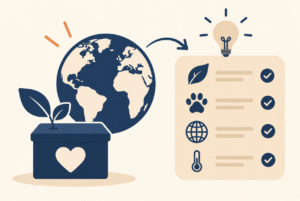
Giving Green has published its 2026 climate recommendations. Half the fund’s grants now go to low- and middle-income countries, three new sector reports rank the strategies, and the five recommended charities stay the same.

At least 7,900 excess deaths. Ninety-four thousand people cut off from mains water. Two to three million birds dead in days. What the year cost France, and what it changes about where you give.
More than 230 million land animals are slaughtered every day, nine in ten of them chickens. The 2024 figures by species, including fish and France.
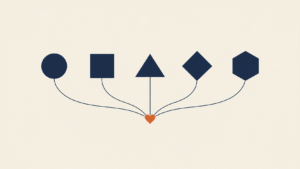

The five dimensions of the Impact Management Project: what impact finance measures, and how effective giving uses them to choose where to give.
Half the French population lives on less than €26,740 a year, far below GDP per capita of €43,350. Where the gap comes from, and what it means for your giving.
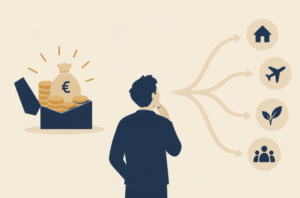
An unusual number of people in tech are about to go from a salary to a fortune within months. Philanthropy advisers Jack Lewars and Chloe Cockburn explain what that money changes, and the three decisions to make before it lands: choose your inner circle, see a tax adviser, and write down your giving and time commitments.
The five dimensions of the Impact Management Project: what impact finance measures, and how effective giving uses them to choose where to give.
An unusual number of people in tech are about to go from a salary to a fortune within months. Philanthropy advisers Jack Lewars and Chloe Cockburn explain what that money changes, and the three decisions to make before it lands: choose your inner circle, see a tax adviser, and write down your giving and time commitments.

More money makes people a little happier, and less so the more they have. What the evidence shows, and what it means for your giving.

Who receives the most donations in France? We rebuilt the ranking of the 20 most-supported charities from their latest financial reports, legacies included. The number one isn’t who you’d expect, and receiving the most doesn’t mean helping the most.

It can make sense to want to advance medical research, especially to prevent diseases rather than cure them. Cancer is often the first disease that comes to mind. Are donations to medical research, or to cancer-related causes, among those that help the most? We look at the question and offer some comparisons in numbers.

Child sponsorship appeals because of the bond it promises. But that bond is mainly a fundraising tool, and it isn’t always real. Here’s what sponsorship actually does, who offers it in France, and how to help children in ways you can measure.
Half the French population lives on less than €26,740 a year, far below GDP per capita of €43,350. Where the gap comes from, and what it means for your giving.

Two capsules a year at around €1 a dose: vitamin A supplementation is among the best-documented health programmes in the world. Here’s what donations to Helen Keller Intl actually fund, with the figures, the sources and the limits.
It can make sense to want to advance medical research, especially to prevent diseases rather than cure them. Cancer is often the first disease that comes to mind. Are donations to medical research, or to cancer-related causes, among those that help the most? We look at the question and offer some comparisons in numbers.

Global health Against Malaria Foundation: what happens between your donation and the bednet Against Malaria Foundation has a simple mission: protecting people from malaria (a
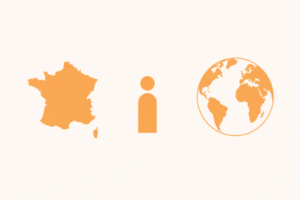
Why doesn’t Mieux Donner recommend organizations that help people in France? The answer lies in three factors: a value framework based on impartial altruism, data on global inequality, and a significant difference in effectiveness depending on where a euro is directed.
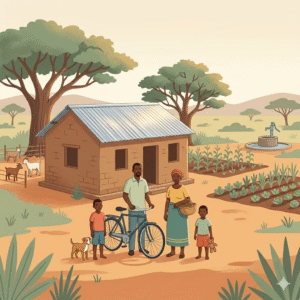
GiveDirectly sends $1,000 directly to households in extreme poverty — no conditions, no intermediaries. What the research shows, how GiveWell rates the programme, and why French tax relief isn’t available.
Giving Green has published its 2026 climate recommendations. Half the fund’s grants now go to low- and middle-income countries, three new sector reports rank the strategies, and the five recommended charities stay the same.
At least 7,900 excess deaths. Ninety-four thousand people cut off from mains water. Two to three million birds dead in days. What the year cost France, and what it changes about where you give.

An unprecedented wildfire is spreading towards Bordeaux. Ever since I read Factfulness, I’ve stopped following the news round the clock: it just makes me anxious without helping me in any way. Here’s what the data really tells us about climate-related disasters, why they claim far fewer lives than they did a century ago, and where I’m investing my money to reduce the risk of future fires.
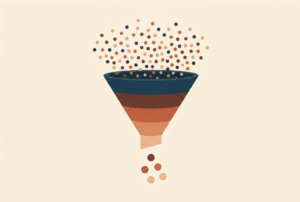
Climate change Giving Green: how top climate charities are chosen When people think about acting on climate, two instincts usually kick in: offsetting your own
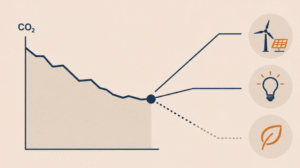
Between 2005 and 2015, eighteen developed economies saw their CO2 emissions fall. When researchers decomposed those declines, they identified two main drivers: substitution of fossil fuels by renewables, and reduced energy consumption. Sufficiency, despite its ethical value, does not appear as an explanatory factor. This article looks at what the data actually shows about climate levers, and where a donation has the largest impact.
31 confirmed deaths, or nearly a million? Romain Barbe examines what the data actually say about Chernobyl’s human toll — and why the fear it generated may have killed far more than the radiation itself.
More than 230 million land animals are slaughtered every day, nine in ten of them chickens. The 2024 figures by species, including fish and France.


What if helping animals was among the most urgent causes? Doing Good, Better: 5 Keys for More Effective Generosity We often think that generosity is

Find out how your donations can support tomorrow’s agriculture in the face of the challenges posed by the Duplomb-Menonville law: preserving competitiveness, public health and the environment.
Being selected by independent assessors is a major challenge. But when an organisation manages to be recommended for two different causes – in this case, climate change and animal suffering – by several renowned assessors, it becomes a unique case. This is exactly what the Good Food Institute (GFI) has achieved, an organisation that stands out for its innovative approach to combating both climate change and animal suffering.


Plant-based ham, soya steaks, seaweed-based salmon – these products are gradually appearing all around us. But what about their economic viability, and are they good for the animals? I was lucky enough to interview Tom Bry-Chevalier, a doctoral student in economics at the University of Lorraine, on the subject of alternative proteins.
When we talk about animal protection, the first image that comes to mind is that of an abandoned dog. In the minds of the general public, animal protection is first and foremost dedicated to those who live with them. But animal suffering does not stop at the doorstep.
The five dimensions of the Impact Management Project: what impact finance measures, and how effective giving uses them to choose where to give.
An unusual number of people in tech are about to go from a salary to a fortune within months. Philanthropy advisers Jack Lewars and Chloe Cockburn explain what that money changes, and the three decisions to make before it lands: choose your inner circle, see a tax adviser, and write down your giving and time commitments.
More money makes people a little happier, and less so the more they have. What the evidence shows, and what it means for your giving.
Who receives the most donations in France? We rebuilt the ranking of the 20 most-supported charities from their latest financial reports, legacies included. The number one isn’t who you’d expect, and receiving the most doesn’t mean helping the most.
It can make sense to want to advance medical research, especially to prevent diseases rather than cure them. Cancer is often the first disease that comes to mind. Are donations to medical research, or to cancer-related causes, among those that help the most? We look at the question and offer some comparisons in numbers.
Child sponsorship appeals because of the bond it promises. But that bond is mainly a fundraising tool, and it isn’t always real. Here’s what sponsorship actually does, who offers it in France, and how to help children in ways you can measure.
Half the French population lives on less than €26,740 a year, far below GDP per capita of €43,350. Where the gap comes from, and what it means for your giving.
Two capsules a year at around €1 a dose: vitamin A supplementation is among the best-documented health programmes in the world. Here’s what donations to Helen Keller Intl actually fund, with the figures, the sources and the limits.
It can make sense to want to advance medical research, especially to prevent diseases rather than cure them. Cancer is often the first disease that comes to mind. Are donations to medical research, or to cancer-related causes, among those that help the most? We look at the question and offer some comparisons in numbers.
Global health Against Malaria Foundation: what happens between your donation and the bednet Against Malaria Foundation has a simple mission: protecting people from malaria (a
Why doesn’t Mieux Donner recommend organizations that help people in France? The answer lies in three factors: a value framework based on impartial altruism, data on global inequality, and a significant difference in effectiveness depending on where a euro is directed.
GiveDirectly sends $1,000 directly to households in extreme poverty — no conditions, no intermediaries. What the research shows, how GiveWell rates the programme, and why French tax relief isn’t available.
Giving Green has published its 2026 climate recommendations. Half the fund’s grants now go to low- and middle-income countries, three new sector reports rank the strategies, and the five recommended charities stay the same.
At least 7,900 excess deaths. Ninety-four thousand people cut off from mains water. Two to three million birds dead in days. What the year cost France, and what it changes about where you give.
An unprecedented wildfire is spreading towards Bordeaux. Ever since I read Factfulness, I’ve stopped following the news round the clock: it just makes me anxious without helping me in any way. Here’s what the data really tells us about climate-related disasters, why they claim far fewer lives than they did a century ago, and where I’m investing my money to reduce the risk of future fires.
Climate change Giving Green: how top climate charities are chosen When people think about acting on climate, two instincts usually kick in: offsetting your own
Between 2005 and 2015, eighteen developed economies saw their CO2 emissions fall. When researchers decomposed those declines, they identified two main drivers: substitution of fossil fuels by renewables, and reduced energy consumption. Sufficiency, despite its ethical value, does not appear as an explanatory factor. This article looks at what the data actually shows about climate levers, and where a donation has the largest impact.
31 confirmed deaths, or nearly a million? Romain Barbe examines what the data actually say about Chernobyl’s human toll — and why the fear it generated may have killed far more than the radiation itself.
More than 230 million land animals are slaughtered every day, nine in ten of them chickens. The 2024 figures by species, including fish and France.
What if helping animals was among the most urgent causes? Doing Good, Better: 5 Keys for More Effective Generosity We often think that generosity is
Find out how your donations can support tomorrow’s agriculture in the face of the challenges posed by the Duplomb-Menonville law: preserving competitiveness, public health and the environment.
Being selected by independent assessors is a major challenge. But when an organisation manages to be recommended for two different causes – in this case, climate change and animal suffering – by several renowned assessors, it becomes a unique case. This is exactly what the Good Food Institute (GFI) has achieved, an organisation that stands out for its innovative approach to combating both climate change and animal suffering.
Plant-based ham, soya steaks, seaweed-based salmon – these products are gradually appearing all around us. But what about their economic viability, and are they good for the animals? I was lucky enough to interview Tom Bry-Chevalier, a doctoral student in economics at the University of Lorraine, on the subject of alternative proteins.
When we talk about animal protection, the first image that comes to mind is that of an abandoned dog. In the minds of the general public, animal protection is first and foremost dedicated to those who live with them. But animal suffering does not stop at the doorstep.
Giving Green has published its 2026 climate recommendations. Half the fund’s grants now go to low- and middle-income countries, three new sector reports rank the strategies, and the five recommended charities stay the same.
At least 7,900 excess deaths. Ninety-four thousand people cut off from mains water. Two to three million birds dead in days. What the year cost France, and what it changes about where you give.
More than 230 million land animals are slaughtered every day, nine in ten of them chickens. The 2024 figures by species, including fish and France.
The five dimensions of the Impact Management Project: what impact finance measures, and how effective giving uses them to choose where to give.
Half the French population lives on less than €26,740 a year, far below GDP per capita of €43,350. Where the gap comes from, and what it means for your giving.
An unusual number of people in tech are about to go from a salary to a fortune within months. Philanthropy advisers Jack Lewars and Chloe Cockburn explain what that money changes, and the three decisions to make before it lands: choose your inner circle, see a tax adviser, and write down your giving and time commitments.