Co2: the concentration of carbon dioxide and its dangers
Why CO2 is bad: a discreet gas with massive effects
Excess Co2 increases the planet’s temperature by preventing too much infrared radiation from escaping back into space. It acidifies the oceans and, in high concentrations, interferes with the body by acidifying and dilating blood and brain fluids.
But what exactly is this gas? It is a colourless, odourless gas that is naturally present in the air we breathe, but when it reaches significant quantities, it can have serious consequences for the environment and human health. Carbon dioxide (CO₂), also known as carbon dioxide or carbon dioxide anhydride, is at the heart of today’s climate and health challenges. Invisible but ubiquitous, this greenhouse gas plays a key role in global warming, indoor air quality and even health in the workplace.
Combating CO2
Supporting specialist organisations can reduce CO2 emissions on a large scale. At Mieux Donner, we identify organisations that are tackling the problem with evidence, reviewed by rigorous evaluators.
Clean Air Task Force is investing in the regulation of super-heating gases such as methane, as well as under-invested but promising technologies to replace our polluting energy sources, such as super hot rock geothermal energy. A pioneer in this field, the CATF is regularly involved in major legislation around the world, such as the Methane Reduction Act in Europe and theInflation Reduction Act in the United States.
Give 100 euros to the CATF and reduce 100 tonnes of carbon [1]
= more emissions than 125 transatlantic flights [2].
The Good Food Institute works to replace meat products with plant-based alternatives, reducing the carbon dioxide emissions associated with livestock farming, as well as water and land use. The GFI supports the research and marketing of all types of alternative proteins.
100 donated to GFI avoids 33 tonnes of carbon emissions [2] = roughly the equivalent of 20 transatlantic flights [4].
An essential gas in its natural state, but now a pollutant
Carbon dioxide is made up of one carbon molecule and two oxygen molecules. It is naturally present in the atmosphere, produced in particular by the respiration of living organisms and absorbed by plants during photosynthesis. In this context, its presence in very minute doses is beneficial: this is the principle of the natural greenhouse effect, which maintains a stable temperature on Earth.
But this fragile natural balance has been disturbed. Since the industrial era, carbon dioxide emissions have soared from around 280 parts per million (ppm) to over 400 ppm today. This increase in the concentration of CO2 in the air is due to human activities, in particular the burning of fossil fuels (coal, oil, natural gas), deforestation, certain agricultural practices and intensive livestock farming.
Why CO₂ is bad: a critical level for health and safety
In its natural state, Co2 is only dangerous to health in high concentrations, which is rare. But if it is present in large quantities, it becomes harmful. At concentrations of 2% or more in the air (i.e. 20,000 ppm), it can cause an increase in breathing rate, headaches and even loss of consciousness.
In classrooms, offices or the air inside buildings, poor ventilation can lead to a higher concentration of carbon dioxide than in the air outside, as it is produced when living beings breathe. This pollution affects human health, reduces productivity, disrupts sleep and raises questions about health in the workplace.
CO2 in the atmosphere is therefore a pollutant that needs to be monitored closely, like a conventional pollutant such as carbon monoxide, although it is non-toxic in small doses.
CO₂ and global warming: emissions with global effects
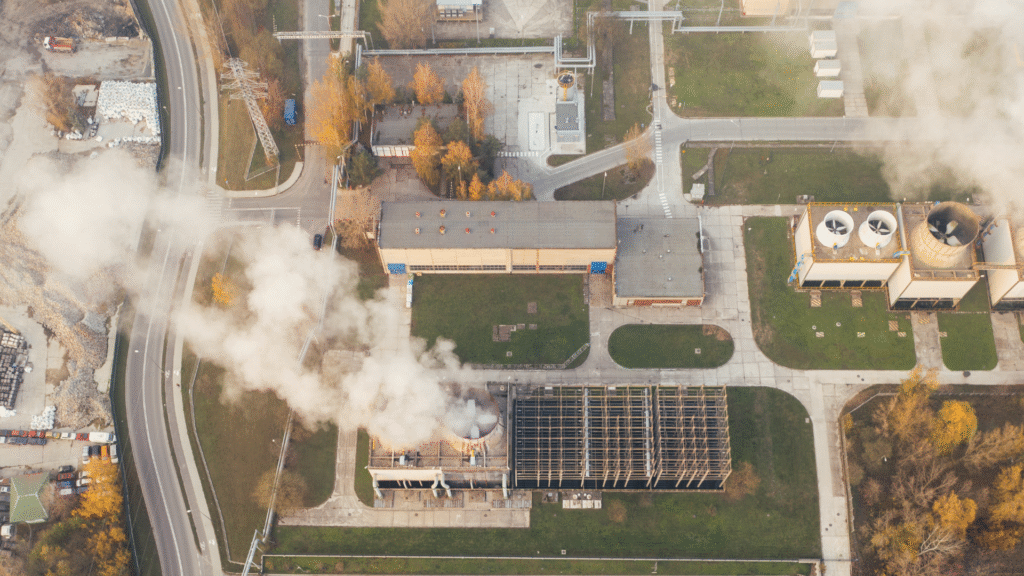
CO₂ emits heat by trapping infrared radiation in the atmosphere, accelerating global warming. This dynamic is amplified by the increase in the concentration of CO₂ in the atmosphere, particularly when organic materials such as fossil fuels are burnt, or even when wood is burnt. This process emits CO2 in large quantities. Even though the earth has its own carbon cycle, our emissions far exceed the natural rate of absorption.
The damage caused is already visible: melting glaciers, rising sea levels, ocean acidification, disappearing ecosystems and extreme weather events.
How can we reduce CO₂ emissions?
Major differences in impact
Lifestyle changes may at first sight seem important for preserving the climate. In this category, giving up flying and switching to a plant-based diet are among the most effective interventions. However, donating to the charities with the biggest impact is still the best way to avoid carbon emissions:
If you’re looking to direct your giving to make the biggest impact, Mieux Donner can help guide you. We also provide personalised advice for individuals and businesses.
Where did all this CO₂ come from?
Natural sources include respiration, volcanoes and the decomposition of organic matter. But it is human sources – industry, transport, agriculture – that cause the runaway emissions. For example, burning wood or coal directly releases carbon dioxide into the air. Livestock farming activities, via manure or soil transformation, also emit CO₂.
The other greenhouse gases are also of concern (such as methane or nitrous oxide), although CO₂ remains the main contributor in significant quantities in the air, as they can sometimes have a greater warming potential. This is why we often speak of “equivalent tonnes of CO2”, to take all these different gases into account.
In a nutshell
CO₂ in the atmosphere is a major pollutant today. Resulting from combustion, it affects our health, the air we breathe and the global climate. We urgently need to take action to reduce CO₂ emissions – even if reviewing our habits will be inevitable, supporting high-impact initiatives remains our best tool for doing so.