Mieux Donner

Category Climate

9 Apr

Assessing the climate impact of donations: between modelling and uncertainty

Assessing the climate impact of donations: between modelling and uncertainty At Mieux Donner, we sometimes use a calculation that is strikingly simple: “€1 = 1 tonne of CO₂ avoided.” This figure certainly catches the eye. It highlights, in a concise way, the considerable potential of well-targeted donations. But it also raises legitimate questions: Too good […]

READ MORE

26 Mar

Why can local rewilding harm the planet, and how can we protect biodiversity?

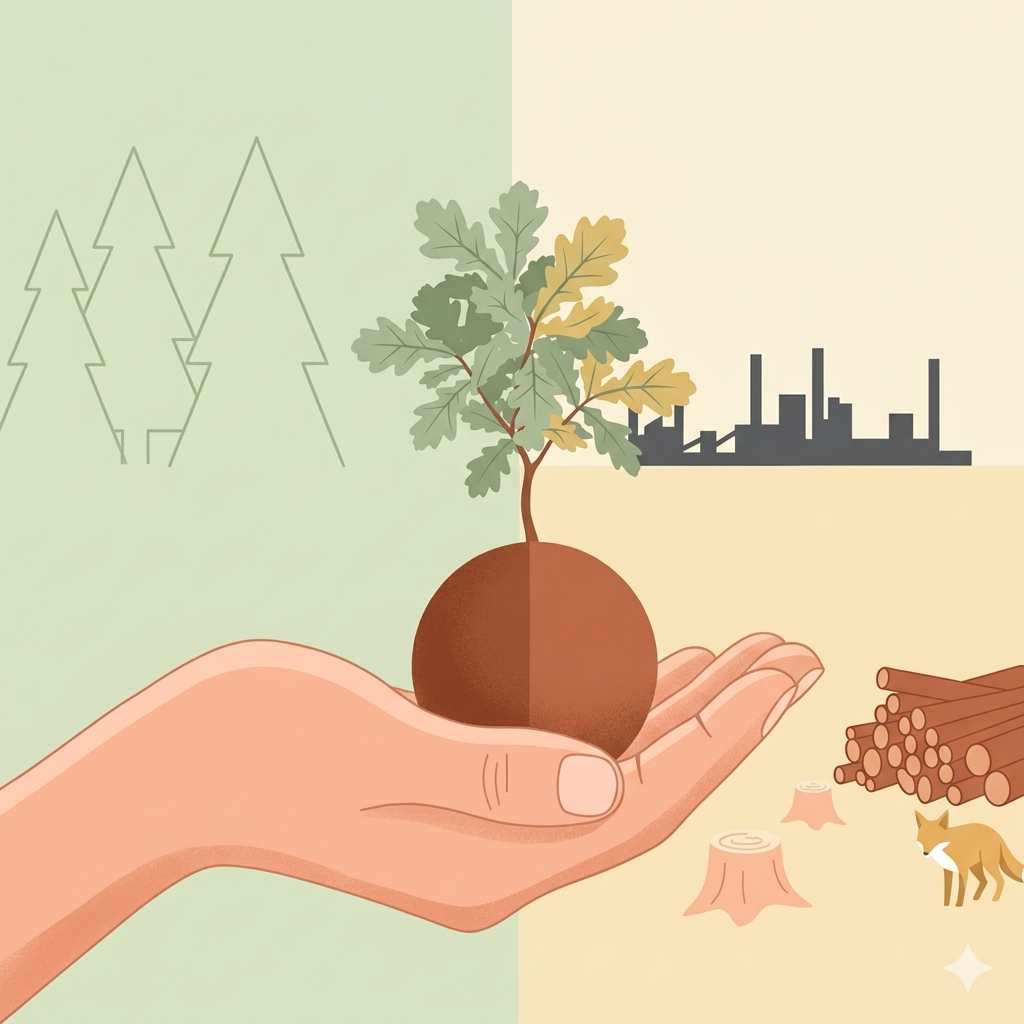
You want to donate to support biodiversity. You’re thinking about a rewilding project near you. However, in some cases, these local restoration efforts can do five times more harm to global biodiversity than good. So how can you avoid causing harm, and where will your donation have the greatest impact on the planet?

READ MORE

2 Dec

What if climate change was one of the most neglected causes?

What if climate change was one of the most neglected causes? Doing Good, Better: 5 Keys for More Effective Generosity We often think that generosity is about intentions. What if it was also about results? This is the question William MacAskill poses in his book Doing Good, Better, dedicated to a movement still relatively unknown […]

READ MORE

4 Aug

Supporting tomorrow’s agriculture: your donations to meet the challenges of the Duplomb Act

Find out how your donations can support tomorrow's agriculture in the face of the challenges posed by the Duplomb-Menonville law: preserving competitiveness, public health and the environment.

READ MORE

4 Jul

Is ChatGPT bad for the planet?

Is ChatGPT bad for the planet? TL;DR – Key Takeaways: Observation: Generative AI consumes electricity and water, mainly through model training and the operation of data centers (particularly for cooling). Order of magnitude: A typical query is around 0.3 to 3 Wh, depending on the model, infrastructure, and task complexity; the individual impact remains moderate […]

READ MORE

16 May

85% of carbon offsets don’t work – here’s where to donate instead

Despite our best efforts, many parts of modern life are still hard, or even impossible,  to fully decarbonise. Even those of us who live simply and consciously still produce some unavoidable emissions. So once we've reduced our footprint as much as we can, what's the next step? Is it possible to reach net zero - or even go beyond, and have a positive impact on the climate?

READ MORE

9 May

How can a charity be the most effective on both on climate and animal welfare ?

Being selected by independent assessors is a major challenge. But when an organisation manages to be recommended for two different causes - in this case, climate change and animal suffering - by several renowned assessors, it becomes a unique case. This is exactly what the Good Food Institute (GFI) has achieved, an organisation that stands out for its innovative approach to combating both climate change and animal suffering.

READ MORE

2 May

Co2: the concentration of carbon dioxide and its dangers

Co2: the concentration of carbon dioxide and its dangers Why CO2 is bad: a discreet gas with massive effects Excess Co2 increases the planet’s temperature by preventing too much infrared radiation from escaping back into space. It acidifies the oceans and, in high concentrations, interferes with the body by acidifying and dilating blood and brain […]

READ MORE

22 Apr

How we calculate the Impact of Carbon Reduction

We often share that donating €1 to Clean Air Task Force (CATF) or €3 to the Good Food Institute (GFI) can help avoid one tonne of CO₂ emissions. We explain how these numbers are calculated, their limitations, and why they still represent some of the most promising opportunities for individuals who want to support climate solutions based on evidence.

READ MORE

31 Mar

Planetary atmospheres: what the planets have to say about the climate

Planetary atmospheres: what the planets have to say about the climate Why planetary atmospheres matter When we think of planetary atmospheres, we immediately think of the vast gaseous envelopes that surround the planets of the Solar System, such as Venus, Mars and Jupiter. But these atmospheres are more than just layers of gas floating in […]

READ MORE