You can have 100 times more impact by donating to the best charities
Last updated March 2025, Reading time: 10 mins
When we decide to give, our intention is to improve the world. However, the real impact of your donation can vary enormously depending on the charity you choose to support. Did you know that your choice of charity can multiply the impact of your generosity by 100x? Understanding where to give is therefore essential to maximise the positive impact of your contributions.
Differences in cost-effectiveness: a striking observation
Many of us assume that all charities are more or less the same in terms of how effective they are. However, in reality the differences are considerable. A study conducted by Lucius Caviola and re-shared by Our World in Data reveals that the most effective charities can have 100 times more impact than the average.
Why such a difference in impact?
The difference in cost-effectiveness among various associations largely arises from the specific interventions they choose to fund. This is particularly evident in the realm of global health. For instance, data from the Disease Control Priorities (DCP2) project indicates that certain health interventions, such as distributing medicines or mosquito nets to combat malaria, are extremely cost-effective.
While many associations have good intentions, some may prioritize programs that are significantly less effective or even counterproductive. In contrast, the most effective organizations focus on low-cost, evidence-based interventions that can save lives and enhance quality of life on a large scale.
A prime example is the Against Malaria Foundation, which distributes insecticide-treated mosquito nets to at-risk populations, effectively preventing thousands of malaria cases at a minimal cost.
Variations in impact are not limited to one sector
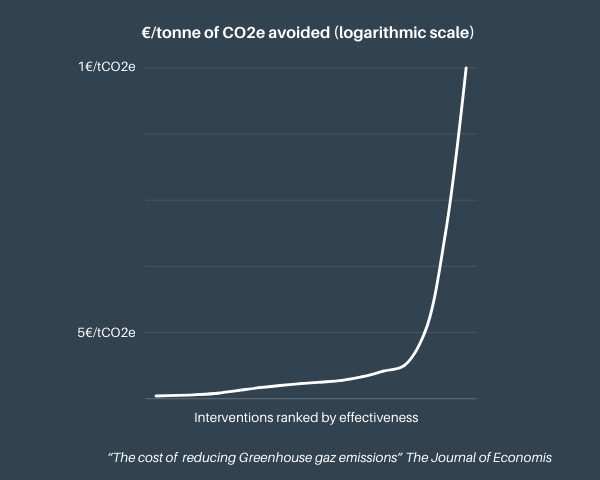
Beyond global health, effectiveness varies significantly in the fight against climate change. Interventions aimed at reducing greenhouse gas emissions can either be highly effective or yield limited impact per euro invested. Data indicates that certain actions, such as implementing public policies that influence environmental regulations or supporting technological innovation, can lead to substantial progress in mitigating climate change.
Here again, certain approaches make it possible to reduce emissions at lower cost, maximising the impact of each euro spent.
The Clean Air Task Force, for example, works to promote clean and innovative energy policies, helping to significantly reduce emissions at a lower cost.
The first-ever study of how much happiness charities create with donations
The World Happiness Report 2025, the world’s leading publication on global well-being and how to improve it, is published by the Oxford University Centre for Wellbeing Research, in partnership with Gallup and the United Nations Sustainable Development Solutions Network. The Happier Lives Institute, a wellbeing research organisation, also wrote a chapter of the report to find and review all pre-existing estimates of how much happiness associations create. The review found 24 estimates of charity effectiveness from four different evaluators.
When comparing the top five charities in the sample to the average UK charity (excluding guide dogs), the top five are around 150 times more successful. This means that a donation of €1,000 to a leading charity can have the same impact as a donation of around €150,000 to a more mainstream charity.
But all the charities in this sample had chosen to be assessed by the research teams, so the report notes that they are probably much better than average. Compared to the average of the quick analyses of guide dogs and help for the homeless, the best charity is ~3,500 times better than these popular destinations for our charitable euros.
A recurring phenomenon
While this article emphasizes global health and climate change, similar disparities in effectiveness exist in other areas, such as social policies, educational interventions, and criminal justice policies [1]. In each of these fields, certain interventions significantly outperform others in terms of impact. By directing your donations toward these high-impact initiatives, you can maximize your contribution to global well-being.
A morally crucial choice
Faced with these disparities in effectiveness, the question of where to give becomes a major ethical decision. By choosing to support an extraordinarily effective charity, you can multiply the impact of your donation. The difference can literally be saving hundreds of lives instead of just a few with the same amount of money.
Giving then becomes not only an altruistic act, but also a strategic one. As an individual, you have the power to maximise your contribution to global well-being by carefully choosing the associations you support.
An opportunity to be seized
The good news is that information on the effectiveness of charities is now more accessible than ever. Organisations like Mieux Donner are committed to providing you with recommendations based on solid evidence to help you make informed choices. So you can be sure that your donation is having a real and measurable impact.
Conclusion
At the end of the day, it’s not just about giving; it’s about giving effectively. By directing your donations to high-impact charities, you can create real, lasting change in the world. Every euro counts— you can make a huge difference by directing your donations to the top evidence-based interventions.
Let’s hold charities accountable and ensure our contributions truly matter. Together, we can harness the power of effective giving to transform lives. Join the movement—make your donation count today!
Romain Barbe
Romain is co-founder and co-director of Mieux Donner. You can contact him at romain@mieuxdonner.org or by using the contact form.
You might also enjoy reading :